For over a decade, Mr. Tinh endured severe ankylosing spondylitis and femoral head necrosis, leaving him unable to straighten his leg while lying down. This challenging condition was recently addressed through complex hip replacement surgery at Tam Anh General Hospital Ho Chi Minh City, offering him a new lease on life.
MRI scans at Tam Anh General Hospital Ho Chi Minh City revealed Mr. Tinh's spine, from neck to lower back, was inflamed and stiff, resembling a solid log. His two hip joints were also fused to the pelvis. The left hip joint was particularly problematic, fused in a flexed position, forcing his left leg to remain bent with the knee pointing towards the ceiling when he lay on his back. Consequently, for 10 years, he could only sleep on his side.
Doctor Le Dinh Khoa, Head of the Joint Reconstruction Department, described the case as exceptionally difficult. Mr. Tinh's progressive ankylosing spondylitis led to the fusion of his hip joints and subsequent femoral head necrosis, presenting a significant surgical challenge.
One of the primary hurdles was determining a suitable anesthesia method. Mr. Tinh's severely fused spine lacked the necessary space for a needle, making conventional spinal anesthesia impossible. Similarly, his stiff cervical spine prevented him from extending his neck backward, ruling out oral intubation. After extensive consultation with anesthesiology and respiratory specialists, the surgical team opted for general anesthesia via bronchial endoscopy through the nasal route, followed by endotracheal intubation. This intricate technique uses a flexible endoscope, guided through the nose and throat into the trachea to access the lungs, but carries risks such as injury to the mouth, teeth, tongue, vocal cords, reflux, infection, or atelectasis.
To ensure maximum precision, doctors performed 3D CT scans from the lumbar spine to the knee joint. They utilized two specialized orthopedic software programs, TraumaCAD and MediCAD 3D, to accurately determine the artificial joint size, approach direction, and placement angle down to the millimeter. This advanced planning allowed for the simulation of Mr. Tinh's movements in various positions, aiming to guarantee an optimal range of motion and prevent post-surgical dislocation. Such precision is crucial to avoid impacts on daily activities, extend the lifespan of the artificial joint, and minimize the risk of early revision surgery.
 |
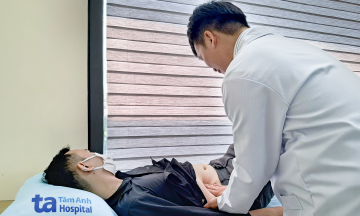
Doctor Khoa assessing Mr. Tinh's hip joint condition. Photo: Tam Anh General Hospital
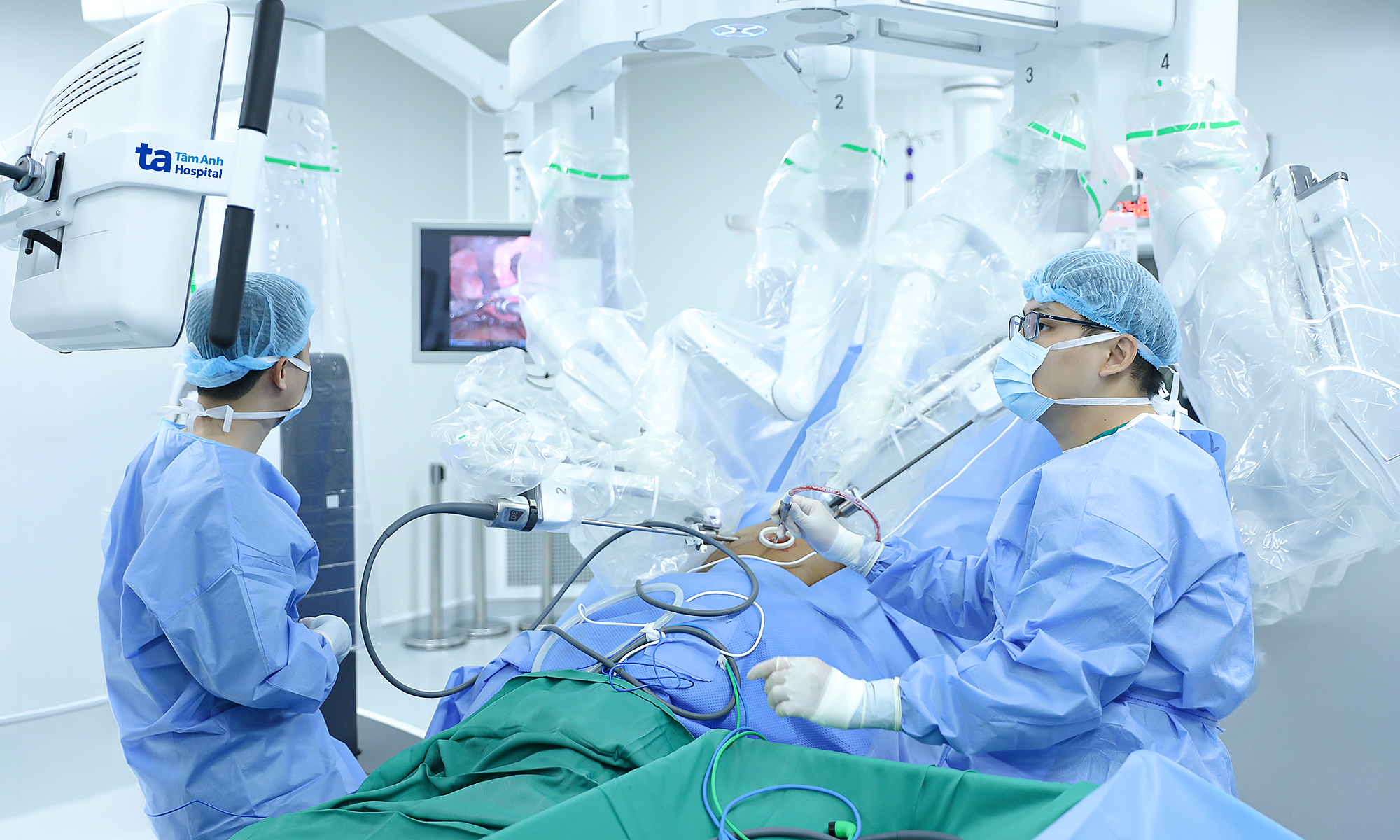
Mr. Tinh underwent hip replacement surgery using the minimally invasive anterior based muscle sparing (ABMS) approach. This technique allowed surgeons to access and replace the hip joint without cutting surrounding muscles. By preserving the integrity of these muscles, Mr. Tinh experienced reduced post-operative pain, a quicker recovery, and no longer faced movement limitations. This method also mitigated the risks of dislocation, nerve damage, and post-operative paralysis.
On the first day after surgery, Mr. Tinh reported significant pain relief and began walking. His health recovered well, leading to his discharge after three days. "For the first time in over 10 years, I can straighten my leg when sleeping", he shared. While the surgery brought immense relief, ankylosing spondylitis is a chronic condition that cannot be fully cured. Therefore, Mr. Tinh continues medication to manage the disease.
Ankylosing spondylitis is a chronic inflammatory disease that causes joint stiffness, pain, and restricted movement. Without timely treatment, it can lead to severe complications, including disability or damage to organs such as the heart and eyes. Doctors advise seeking immediate medical attention if warning signs appear, such as persistent back or lower back pain, especially if accompanied by morning spinal stiffness, or pain lasting at least three months that gradually worsens but improves with light exercise.
Phi Hong