According to the World Health Organization, glaucoma is among the top five leading causes of vision impairment and blindness globally. It ranks alongside refractive errors, cataracts, diabetic retinopathy, and age-related macular degeneration. This condition damages the optic nerve, tends to be progressive, and is irreversible. It often involves an imbalance in the production and drainage of aqueous humor within the eye.
Dr. Duong Minh Phuc, from the High-Tech Eye Center at Tam Anh General Hospital Ho Chi Minh City, highlights several common misunderstandings about glaucoma.
One common misconception is that 100% of glaucoma cases involve elevated intraocular pressure. Glaucoma is a group of eye diseases that can occur even when intraocular pressure is normal (11-21 mmHg), as well as when it is high. However, prolonged high intraocular pressure can lead to glaucoma. Many glaucoma patients experience unstable intraocular pressure, which fluctuates. Some individuals develop glaucoma without any increase in intraocular pressure; the disease progresses silently, causing no pain, redness, or severe headaches, making it easy to overlook. By the time vision significantly declines due to severe nerve damage, the disease is already in its late stages.
Another misunderstanding is that glaucoma can be cured. Dr. Phuc explains that many people are complacent and delay treatment because they believe glaucoma is curable. However, the disease causes optic disc cupping, optic nerve atrophy, and a narrowing of the visual field. These damages are irreversible if detected and intervened upon late. Treatment methods depend on the extent of optic nerve damage and focus on controlling intraocular pressure and slowing disease progression.
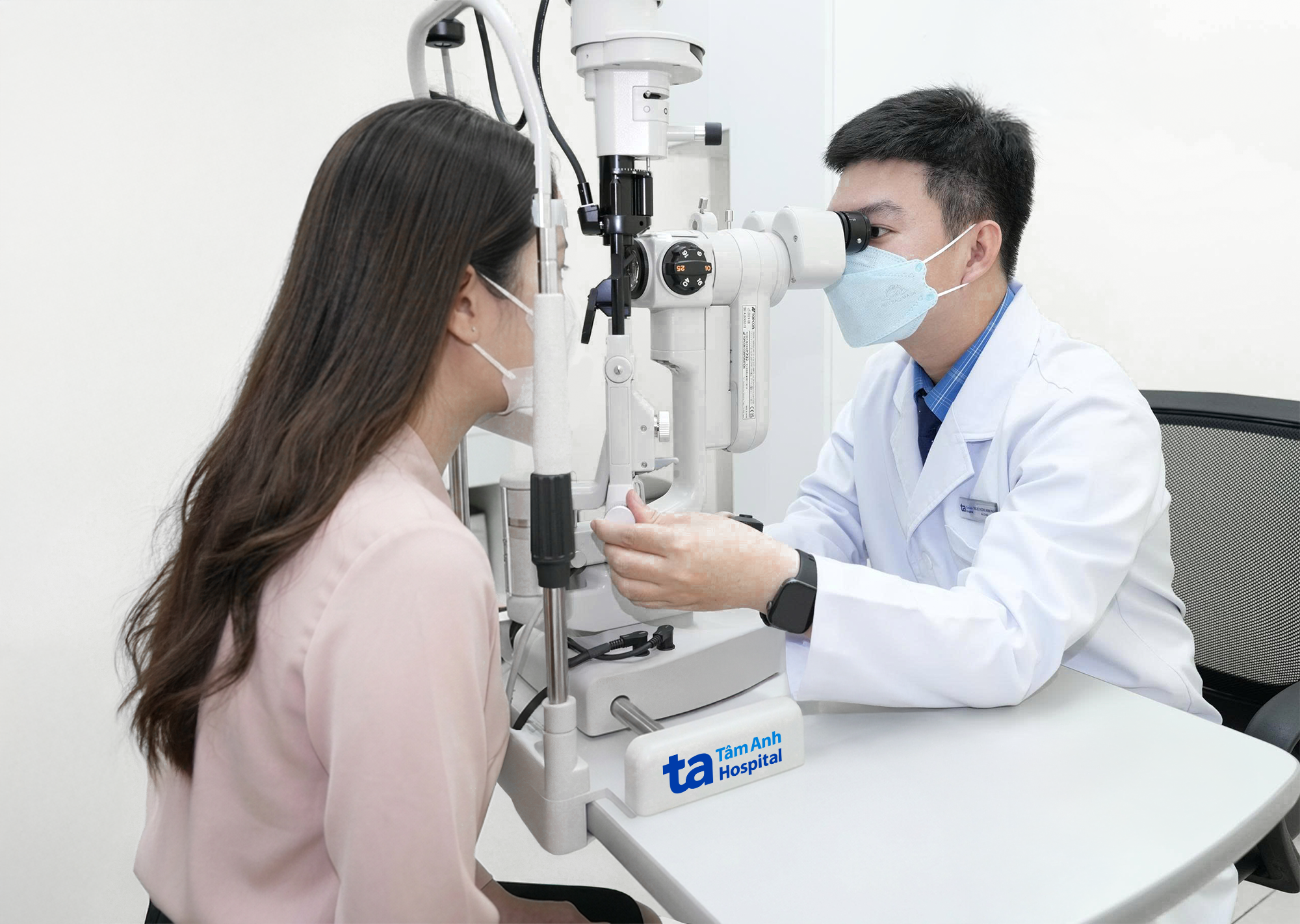 |
Dr. Phuc examines a woman's eyes. Illustration: Tam Anh General Hospital |
The third misconception is that glaucoma causes continuous tearing. The common Vietnamese name for glaucoma, "cuom nuoc" (water cataract), leads many to believe the disease will cause constant tearing. Some individuals, after being diagnosed with "cuom nuoc," question why they do not experience this symptom. Dr. Phuc clarifies that while glaucoma can cause tearing, it is not a typical symptom. In cases of angle-closure glaucoma, a sudden increase in intraocular pressure can cause pain, eye redness, blurred vision, accompanied by reflexive tearing. In contrast, open-angle glaucoma often progresses silently with a gradual increase in intraocular pressure, so patients typically do not experience tearing.
Finally, it is a misconception that glaucoma inevitably leads to blindness. Glaucoma can easily cause blindness if not detected and treated early. However, depending on the stage of the disease, combined with proper treatment, it is possible to slow the progression of nerve damage and preserve vision. Many people live with the disease for several decades; while their vision may decline, they can still maintain their daily activities and work.
Glaucoma can affect people of all ages, including newborns. Dr. Phuc recommends that everyone undergo regular eye examinations every 6-12 months. Individuals at high risk, such as those over 40 years old, with a family history of glaucoma, chronic diseases like hypertension, cardiovascular disease, or diabetes; those with refractive errors such as nearsightedness or farsightedness; or those with a history of eye trauma, prolonged eye inflammation, or long-term corticosteroid use, should have more frequent eye exams.
Ngoc Kim Tham
| Readers can submit questions about ophthalmological conditions here for a doctor's response. |