An international scientific workshop titled "Stem Cells: From Clinical Research to Practical Application" was held on 18/7 in Hanoi. The event, organized by the Institute for Research and Application of Cell Technology (IRACT) in collaboration with Suc khoe & Doi song newspaper and supported by Longevity Medical System, brought together scientists, doctors, experts, and representatives from numerous national and international medical institutions.
The workshop focused on the advancements in stem cell technology, which are creating new opportunities in treating hematological diseases, regenerative medicine, and overall healthcare. However, for research achievements to truly benefit patients, their application must be developed on a scientific foundation, supported by clinical evidence, and involve collaboration among scientists, medical institutions, and businesses.
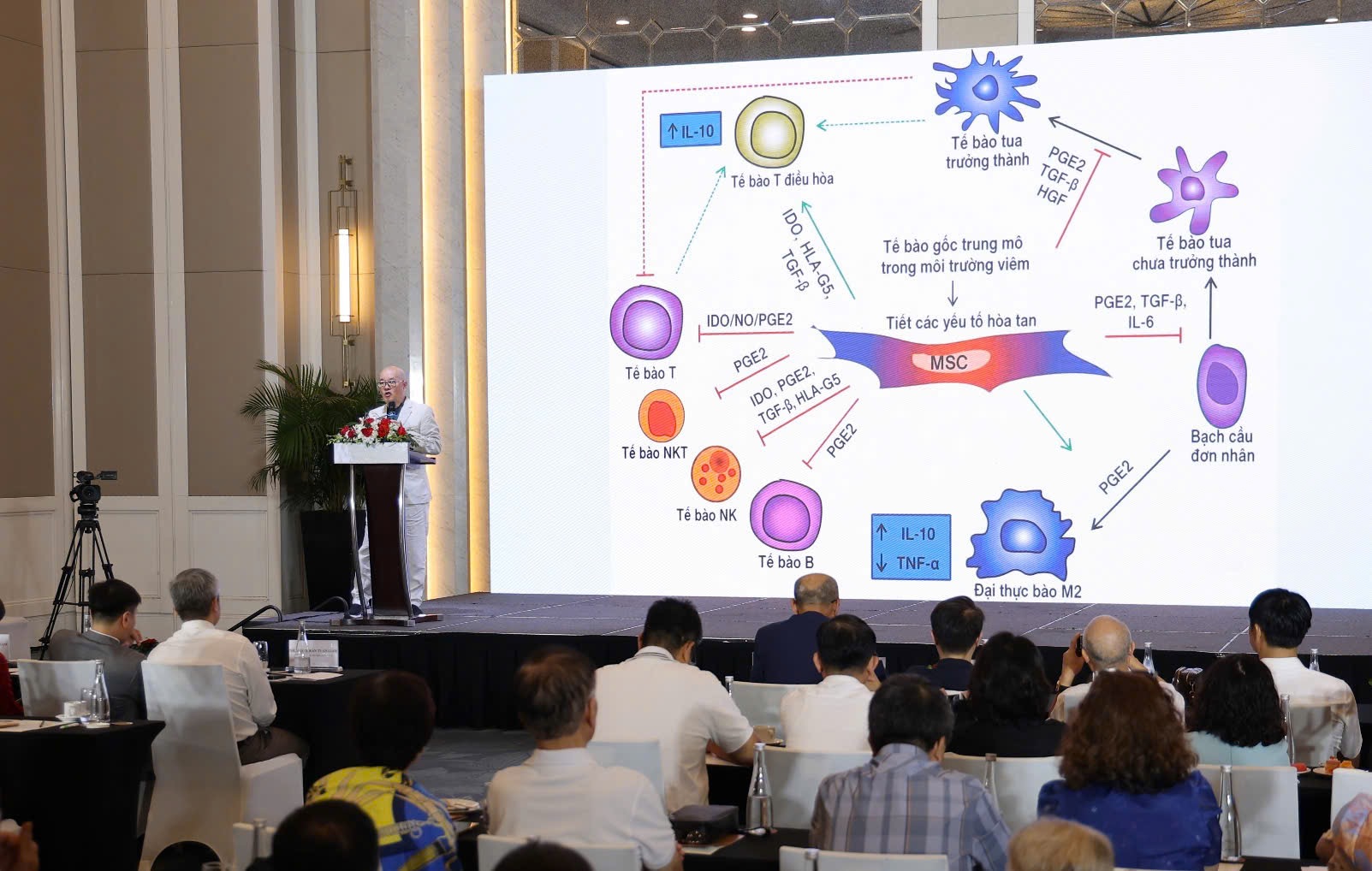 |
Associate Professor, Doctor Phan Toan Thang, a stem cell expert, speaking at the event. *Photo: Longevity Medical System* |
In his opening remarks, Doctor Nguyen Tien Dung, Director of the Institute for Research and Application of Cell Technology, stated that stem cells, along with artificial intelligence, immunotherapy, and gene editing technology, are rapidly developing fields in modern medicine. He added that the workshop's objective was to create a platform for connecting research institutes, universities, hospitals, and businesses. This aims to foster technology transfer, cultivate high-quality human resources, and progressively integrate research achievements into patient care.
Following Doctor Nguyen Tien Dung, Doctor Han Viet Trung, who works at the Hematology and Blood Transfusion Center, Hospital 19-8 (Ministry of Public Security), shared that hematopoietic stem cell transplantation is currently a vital treatment method for many hematological diseases, particularly blood cancer. This therapy helps regenerate the hematopoietic system after high-dose chemotherapy, extending patient survival and enhancing their quality of life.
According to Doctor Han Viet Trung, beyond treating hematological diseases, the application scope of stem cells continues to expand into certain autoimmune diseases, regenerative medicine, reproductive support, and stem cell banking. In the future, when combined with gene editing technology, cell therapy is expected to open new treatment directions for genetic and rare diseases.
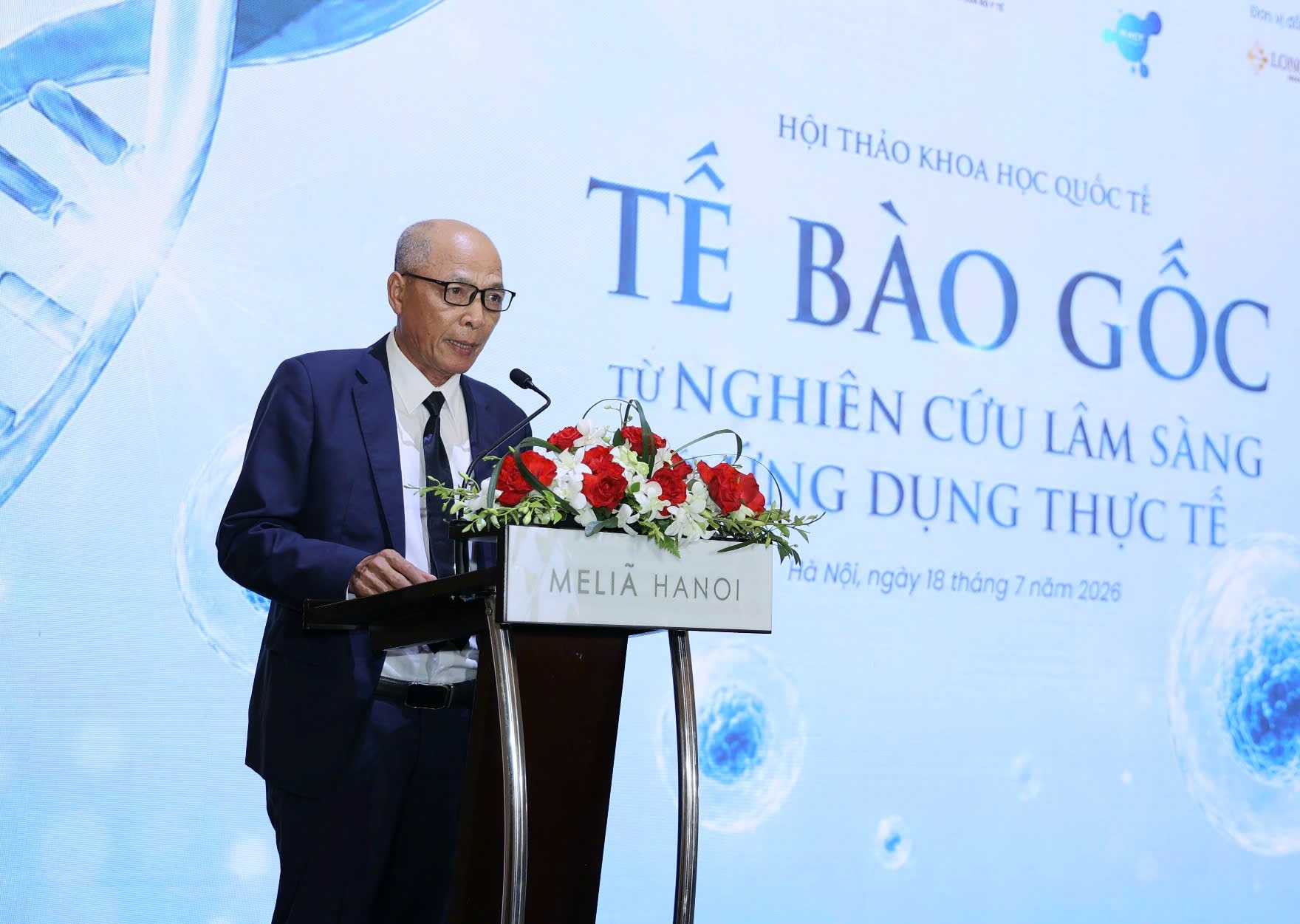 |
Doctor Nguyen Tien Dung, Director of the Institute for Research and Application of Cell Technology. *Photo: Longevity Medical System* |
Offering an international perspective, Associate Professor, Doctor Phan Toan Thang, Head of the Stem Cell and Wound Healing Research Group at the Yong Loo Lin School of Medicine, National University of Singapore, shared his over 20-year journey researching regenerative medicine and stem cells derived from the umbilical cord membrane, also known as "zero-age stem cells." Originally a tissue typically discarded after birth, studies have shown that the umbilical cord membrane contains stem cells capable of proliferation, immune modulation, and tissue regeneration. This opens promising applications in treating burns, chronic wounds, tissue damage, and various other conditions.
Associate Professor Phan Toan Thang highlighted that modern medicine's trend extends beyond merely treating symptoms; it aims to restore the structure and function of damaged tissues and organs. However, he also emphasized that stem cell technology requires an objective assessment. "It should not be 'mythologized’ or seen as a therapy that can cure all diseases, as many applications are still under research and require further validation through clinical trials before widespread implementation", he stated.
Drawing from Singapore's development experience, the expert suggested that the success of stem cell technology does not stem from a single laboratory or hospital. Instead, it necessitates the collaboration of regulatory bodies, research institutes, universities, hospitals, and businesses to form an innovation ecosystem, thereby bridging the gap from research to practical application.
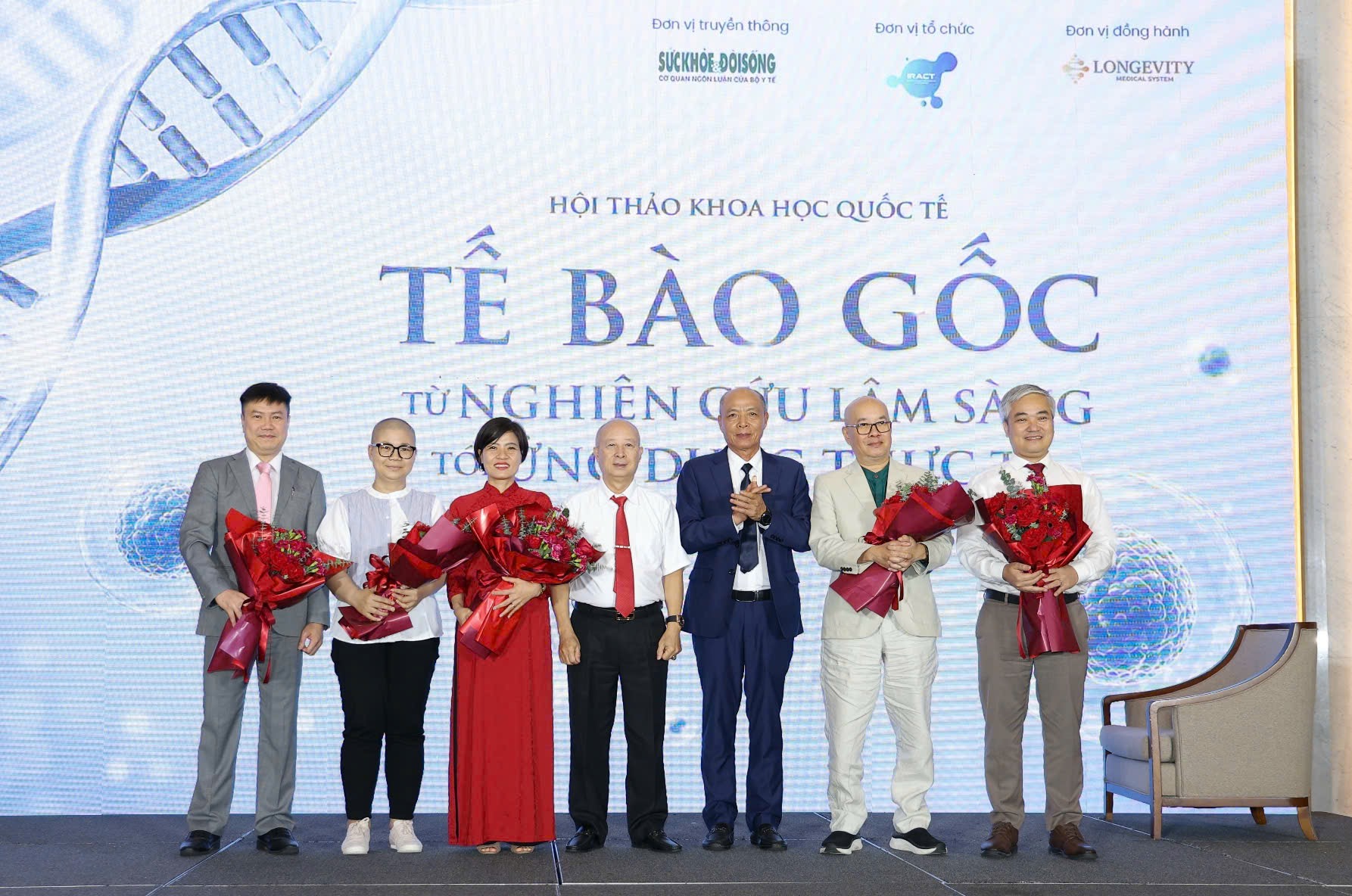 |
Representatives from Longevity Medical System presenting flowers to guests at the program. *Photo: Longevity Medical System* |
A key highlight of the workshop was the discussion session titled "Stem Cells: From Clinical Research to Practical Application." It was moderated by Doctor Nguyen Tien Dung and featured Associate Professor Phan Toan Thang, Doctor Pham Thi Viet Anh, journalist Tran Tuan Linh, and Nguyen Thi Thu Hang, a patient who had undergone cancer treatment using stem cell transplantation.
During the discussion, Doctor Pham Thi Viet Anh stated that the current trend extends beyond focusing solely on stem cell transplantation. It also encompasses broader cell therapies and comprehensive patient care.
Nguyen Thi Thu Hang recounted her journey of cancer treatment using stem cell transplantation. After a period of treatment and monitoring, her health stabilized, allowing her to return to a normal life. Her story serves as a testament to the opportunities provided by modern medical advancements, while also inspiring hope for many other patients battling cancer.
Concluding the workshop, experts affirmed that stem cell technology is opening numerous prospects for Vietnamese medicine, ranging from treating hematological diseases to regenerative medicine and future cell therapies. The workshop also helped strengthen connections among the scientific community, medical facilities, and businesses, including Longevity Medical System. This collaboration aims to promote research, technology transfer, and progressively bring the achievements of regenerative medicine closer to Vietnamese patients.
By Hai My