Urinary leakage, or incontinence, is the uncontrolled release of urine. It is common in postpartum women due to weakened pelvic floor muscles during pregnancy and childbirth. Your situation, where leakage occurs only during strenuous activity, is known as stress urinary incontinence.
To address this, you should temporarily stop exercises that create high abdominal pressure, such as running, jumping, heavy squats, deadlifts, and planks. These activities exert downward pressure on the pelvic floor, worsening leakage. Walking, light swimming, restorative yoga, or stationary cycling are more suitable for your current physical condition.
Prioritize Kegel exercises, a foundational practice for rebuilding pelvic floor muscle strength. Correct Kegel exercises involve contracting the vaginal muscles as if stopping urination, holding for 5-10 seconds, then relaxing. Repeat 10-15 times per set, for at least three sets daily.
Lifestyle adjustments also play a crucial role. Limit caffeine (coffee, strong tea), energy drinks, and alcohol, as these are diuretics and bladder irritants. Reducing water intake to stop leakage is a mistake; concentrated urine further irritates the bladder lining, worsening the condition. Consume enough fiber to prevent constipation, as stool buildup in the rectum can compress the bladder and hinder recovery. Avoid urinating immediately at the first slight urge, as this can train your bladder to hold smaller volumes, leading to frequent urination.
Before returning to gym workouts, schedule a doctor's appointment for a comprehensive health assessment. The doctor will evaluate your overall health, daily habits (such as water intake, frequency of urination, volume per void, leakage frequency), and pelvic floor muscle strength. If you are taking diuretics, sedatives, muscle relaxants, or antidepressants, inform your doctor, as some of these medications can worsen the condition. Doctors may also use a biofeedback machine to measure electromyographic activity in real time, precisely identifying the muscles to activate at the correct intensity and rhythm for each patient's condition. Many individuals improve their condition by 80% after three months of combining biofeedback with specialized exercises.
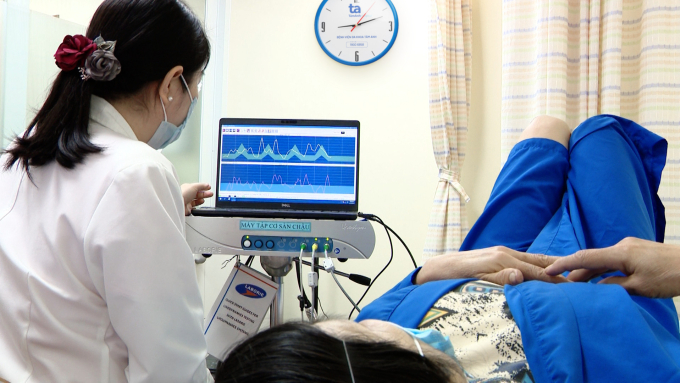 |
Doctors assess pelvic floor muscle contraction using a biofeedback machine. *Illustration: Tam Anh General Hospital*. |
Your body may be ready to resume full workouts if you can jump in place 10 consecutive times without leakage or pelvic discomfort. Increase intensity by no more than 10% weekly to allow the pelvic floor to adapt and prevent cumulative damage.
Urinary leakage is not a serious condition if detected early. However, if prolonged, it can progress to complete loss of bladder control. Constant dampness in the genital area creates an environment for bacterial growth, leading to recurrent infections. Abnormal signs, including fever, painful urination, blood or unusual odor in urine, or lower abdominal pain, require prompt medical attention.
Master Tran Van Dan
Department of Rehabilitation
Tam Anh Cau Giay General Clinic
| Readers can submit questions about obstetrics and gynecology here for doctors to answer. |