At a scientific workshop on 17/4, Dr. Pham Thi Uyen Nhi, Head of Planning and General Affairs and Head of the Clinical Trial Unit at Ho Chi Minh City Dermatology Hospital, reported that the hospital records over 27,000 cases of scalp dermatitis annually. Approximately 50% of the population experiences dandruff at some point in their lives, highlighting its prevalence.
Dandruff, the mildest form of seborrheic dermatitis of the scalp, typically presents as fine white flakes and mild itching. Main causes include Malassezia fungus overgrowth, excessive scalp oil, and a weakened skin barrier. While not contagious, dandruff can impact daily life and mental well-being. If untreated, the condition may worsen, leading to redness, inflammation, oozing, and even hair loss.
According to Dr. Nguyen Vu Hoang, Deputy Director of Ho Chi Minh City Dermatology Hospital, Vietnam's hot and humid climate promotes scalp sweating and oiliness, creating an ideal environment for fungi to thrive, causing inflammation and flaking. Many individuals use anti-dandruff shampoos for four to six weeks without success, often due to incorrect washing techniques. They typically lather and rinse immediately instead of massaging the scalp and allowing the shampoo to sit for three to five minutes for active ingredients to absorb.
During symptomatic periods, use anti-dandruff shampoo two to three times each week. Once the condition improves, maintain use once a week. Rinse thoroughly to prevent residue buildup that can cause irritation. Additionally, rotating anti-dandruff active ingredients every few months can enhance effectiveness.
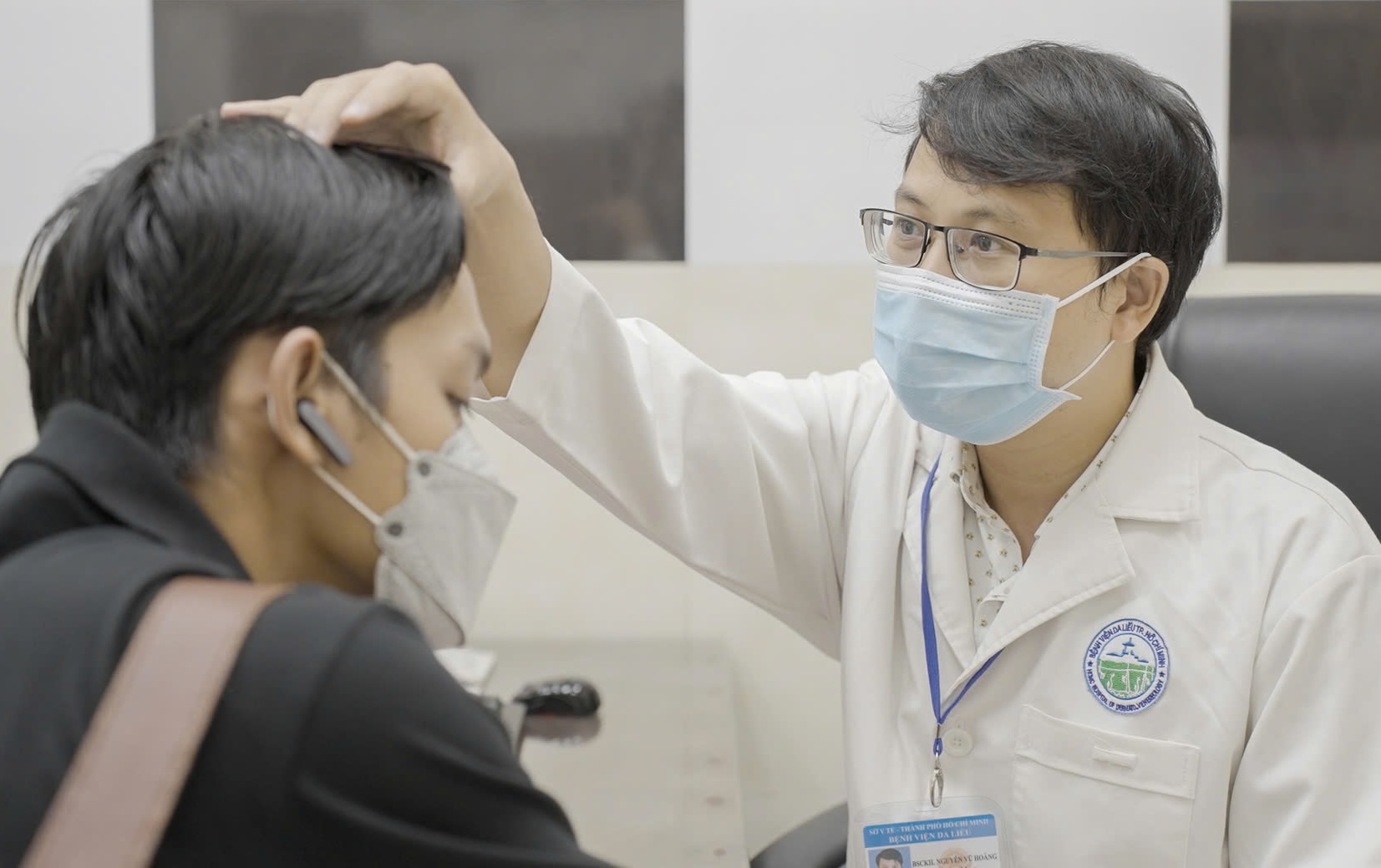 |
Dr. Nguyen Vu Hoang examining a patient. Photo: Hospital provided. |
Master of Pharmacy Pham Nguyen Ngoc Nhan, Director of Herbal Well Co., Ltd., emphasizes that dandruff treatment extends beyond eliminating fungi. It also requires restoring the scalp, balancing its microbiome, and rebuilding the natural protective layer to prevent recurrence. Consequently, many products combine various active ingredient groups, including: antifungals, keratolytics, and skin repair agents.
Experts advise caution regarding shampoos containing silicone and sulfate. While silicone provides an immediate smooth sensation, it can lead to long-term clogging. Sulfate, on the other hand, can strip the scalp's natural oils, resulting in dryness and irritation.
During the workshop, Ho Chi Minh City Dermatology Hospital unveiled a study comparing a domestic product with an international standard product. The findings indicated high effectiveness in dandruff reduction and safety for the Vietnamese product. According to Dr. Nhi, studies in Vietnam are valuable, as they reflect local user characteristics and support appropriate treatment protocols.
For moderate to severe dandruff, or those exhibiting infection or oozing, patients should not self-treat at home. Instead, they should consult dermatology clinics for examination and appropriate prescriptions, including oral medications or topical solutions.
Le Phuong