On 20/4, the National Hospital of Obstetrics and Gynecology announced the successful treatment and discharge of a premature baby boy. After 4 months in intensive care, the infant, who weighed just 500 grams at birth, now weighs 2,5 kg, feeds independently, and maintains stable cardiorespiratory function. Doctor Ha Duc Dung of the Neonatal Center advised the family on strict adherence to nutritional guidelines, maintaining a hygienic home environment to prevent infections, and following the vaccination schedule. The family took home a thick medical record weighing up to 2 kg, a testament to the baby's journey.
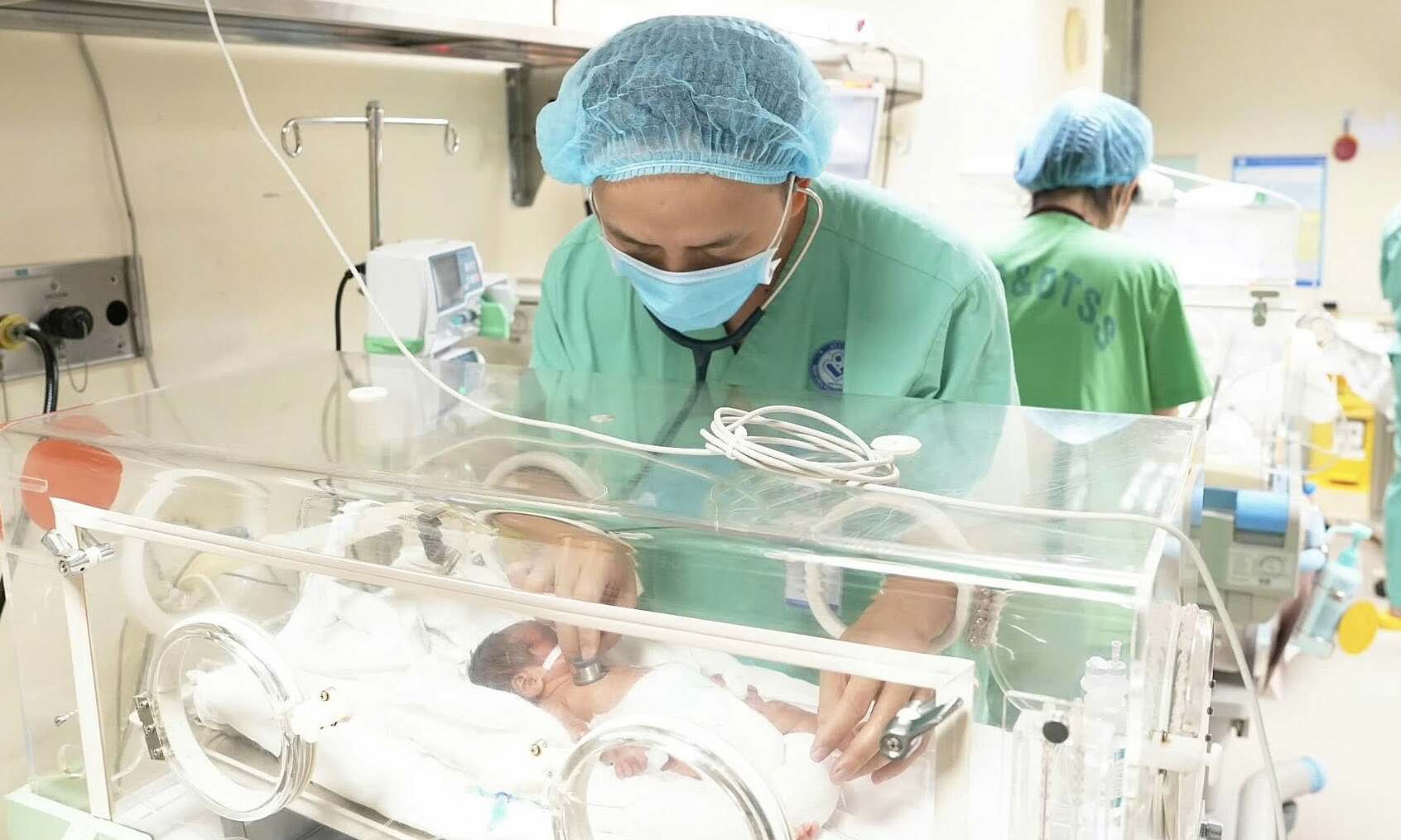 |
The premature baby was cared for in an incubator. *Photo: Hospital provided* |
4 months prior, the baby's survival was uncertain. Born at only 25 weeks and 4 days gestation, he immediately faced severe respiratory failure, non-traumatic brain hemorrhage, and neonatal infection. His underdeveloped body and weak breathing required constant, close monitoring by the medical team. Doctors implemented a prolonged mechanical ventilation protocol, closely coordinated with a special nutritional regimen. Weaning the infant off the ventilator proved very challenging. To sustain his life, medical professionals meticulously managed both the treatment of complications and his specialized feeding plan. It took one month of intensive care before the baby could begin to feed entirely via the digestive tract.
The baby's mother expressed her profound gratitude for his recovery. "Seeing my child safe today, I can only offer my deepest thanks and appreciation to the doctors, nurses, and midwives who not only saved his life but also supported our family through the most difficult times," she shared.
Premature birth and low birth weight are significant contributors to infant mortality. Statistics from the Ministry of Health indicate that neonatal deaths account for 71% of all deaths in children under one year old, with prematurity and low birth weight contributing to 25% of these cases. The World Health Organization (WHO) defines preterm birth as labor occurring before 37 weeks of gestation. Infants born prematurely often have weak immune systems, making them susceptible to conditions such as sepsis, respiratory failure, and necrotizing enterocolitis. They also face risks of long-term complications, including cerebral palsy, blindness, and deafness.
To mitigate these risks, experts recommend that pregnant women prioritize careful prenatal care. This includes maintaining a balanced nutritional diet and attending regular prenatal check-ups, which enable medical professionals to promptly detect and manage any underlying conditions.
 |
After 4 months of care, the baby was discharged to his parents. *Photo: Hospital provided* |
Le Nga