"The 14 days waiting for the biopsy results felt like a period where no miracle would happen," Linh recalled her visit to Ho Chi Minh City Oncology Hospital (TP HCM) in September 2023. The biopsy confirmed she had stage IAE non-Hodgkin lymphoma, a form of lymph node cancer in the stomach wall. She had just turned 22.
Before her diagnosis, Linh lived like many students in Ho Chi Minh City, staying up until 4-5 AM to meet deadlines, skipping meals due to busyness, and dieting to lose weight. Stomach pains began in June, accompanied by bad breath and persistent morning hunger pangs. Friends warned her, but Linh dismissed their concerns, confident in her youth and health.
"I thought staying up late or skipping a few meals wouldn't matter much. I never imagined these small habits, accumulating over time, would silently wreak such havoc on my stomach," she said.
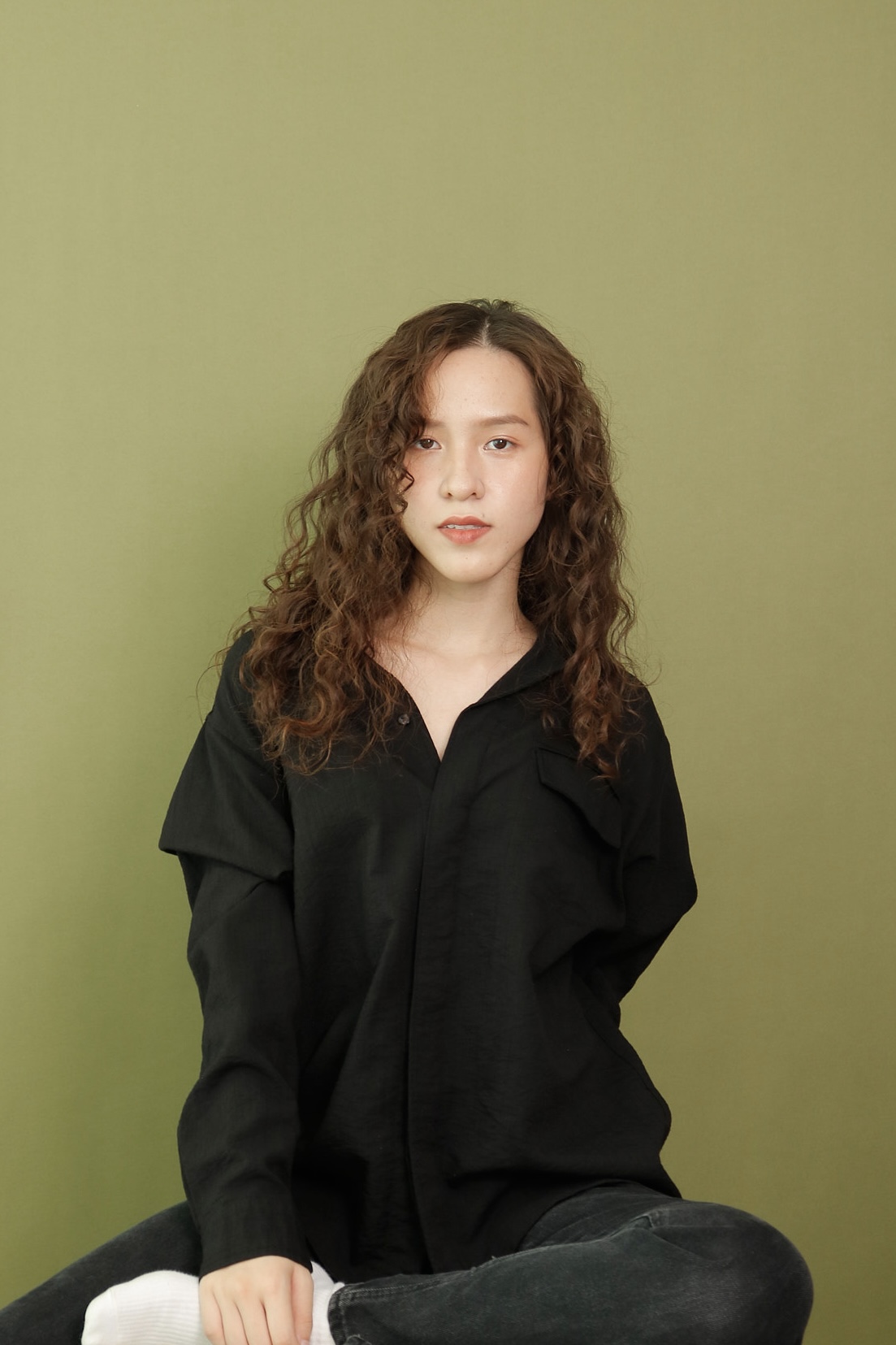 |
Gia Linh at 22. Photo: Courtesy of subject |
In June 2023, Linh and her boyfriend went for a check-up. An endoscopy revealed multiple severe ulcerative lesions measuring 3x6 cm in the stomach antrum, testing positive for HP bacteria. Doctors diagnosed the cause as a prolonged process of HP bacterial metabolism combined with an irregular diet. The only fortunate aspect was its detection at a treatable stage.
Within one week, Linh left her rented room, where she had lived for seven years in Ho Chi Minh City. She resigned from her job, deferred her studies, and returned to her hometown in Long Thanh, Dong Nai, for treatment. The treatment plan involved six cycles of chemotherapy, with an injection port placed under her skin to deliver chemicals directly into the aorta. The first course of medication began in October 2023.
"I felt a burning sensation in my throat, dizziness, and nausea every time the medication spread through my body," Linh recounted. Her hair fell out, and her eyebrows and eyelashes thinned. From a healthy person, her skin darkened. She proactively shaved her head to make a wig and started applying makeup daily, not for beauty, but to regain a sense of confidence amidst days filled with the smell of alcohol and needles.
The only thing Linh felt she could control during that period was her spirit. "When life gives you lemons, make lemonade," she said, not as a slogan but as a practical choice each morning. Data from Military Hospital 103, collected from 264 patients in its Oncology Department, indicated that nearly 58% of patients experience depression. Most harbor fear and lose faith in their ability to control their lives. Doctors emphasize that maintaining a positive attitude is core to the success rate of chemotherapy and radiation therapy regimens.
After every two chemotherapy courses, her test indicators gradually improved. In April 2024, just before her 23rd birthday, Linh completed her final round of chemotherapy. She ate well, slept soundly, and realized the painful days were truly over.
Yet, what Linh said pained her most was not her own suffering. Her mother, a medical assistant, fell into severe depression witnessing her daughter's treatment. Her boyfriend and the entire family endured mental pressure for many months. "We often focus on the patient and forget the family, who have to work, pay medical bills, and helplessly watch their loved one fight illness. I couldn't have overcome this without them," she said.
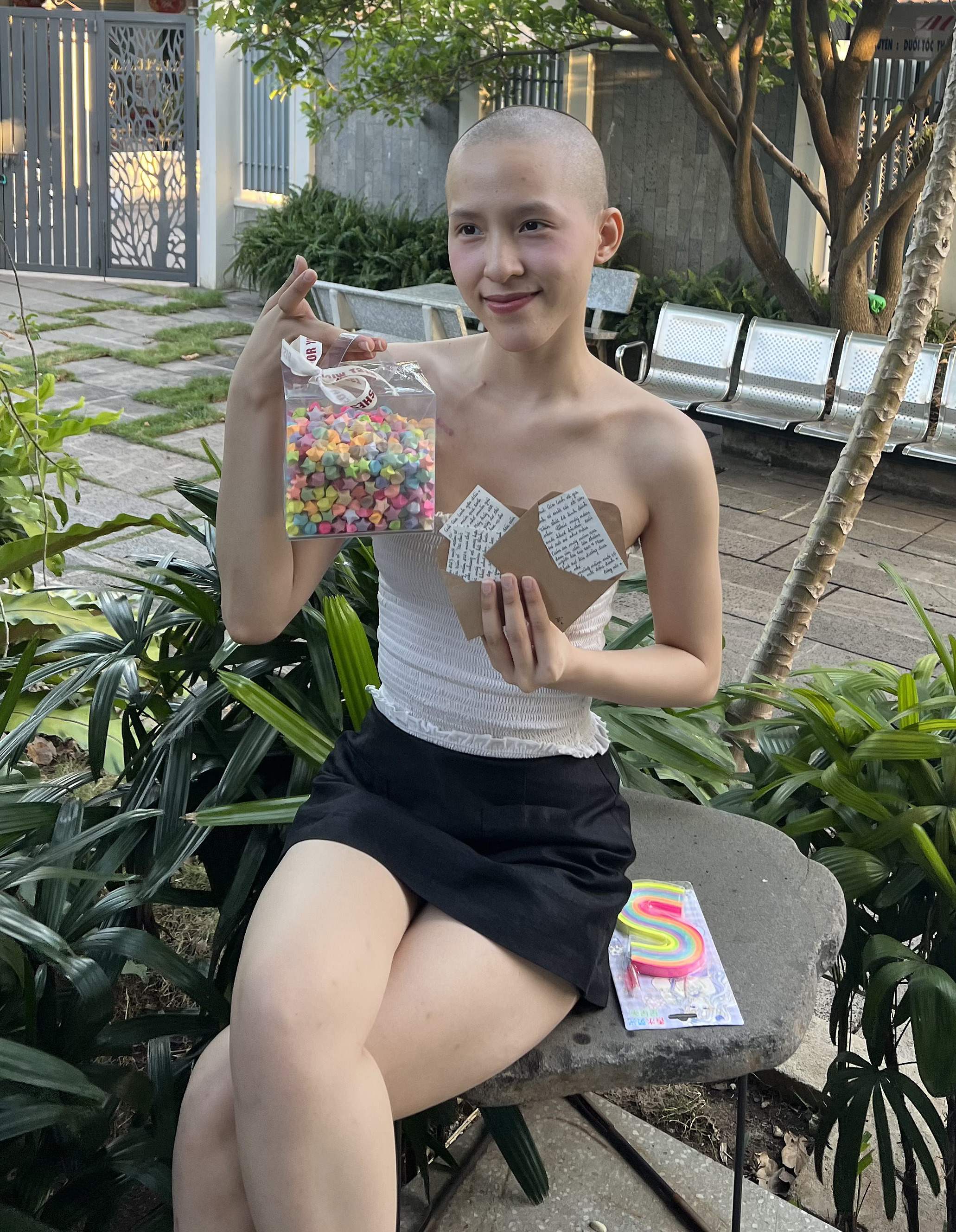 |
Gia Linh is optimistic during chemotherapy. Photo: Courtesy of subject |
Doctor Nguyen Viet Chung, Head of the Mental Health Department at E Hospital, confirmed this is an overlooked issue in the healthcare system. The burden of caring for chronically ill patients causes prolonged physical, mental, and financial stress, especially for older caregivers. Feelings of social isolation and unending responsibility exacerbate symptoms of depression and anxiety.
Stomach cancer is not uncommon in Vietnam. According to GLOBOCAN, in 2022, the country recorded over 16,277 new cases, with more than 12,000 deaths, ranking third among cancer mortality causes, after liver and lung cancer. HP bacteria is a main risk factor, transmitted through shared meals, feeding children mouth-to-mouth, or improperly sterilized medical equipment. The infection rate within families can exceed 80%, highest in children under 12. Even after successful treatment, the reinfection rate in Vietnam is 23% after 12 months and 38,5% after 31 months, significantly higher than the 12% in developed countries. An additional challenge is antibiotic resistance, with the rate of simultaneous multi-drug resistance to Clarithromycin and Levofloxacin exceeding 57% in Vietnam.
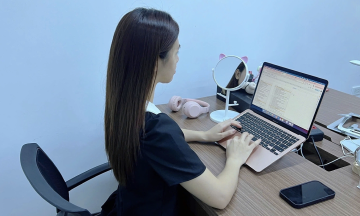
At 25, Linh has returned to work, studies remotely, and exercises. Sometimes she still stays up late, but she knows her limits. Her goal is no longer career milestones. "My only goal now is to be healthy," Linh said.
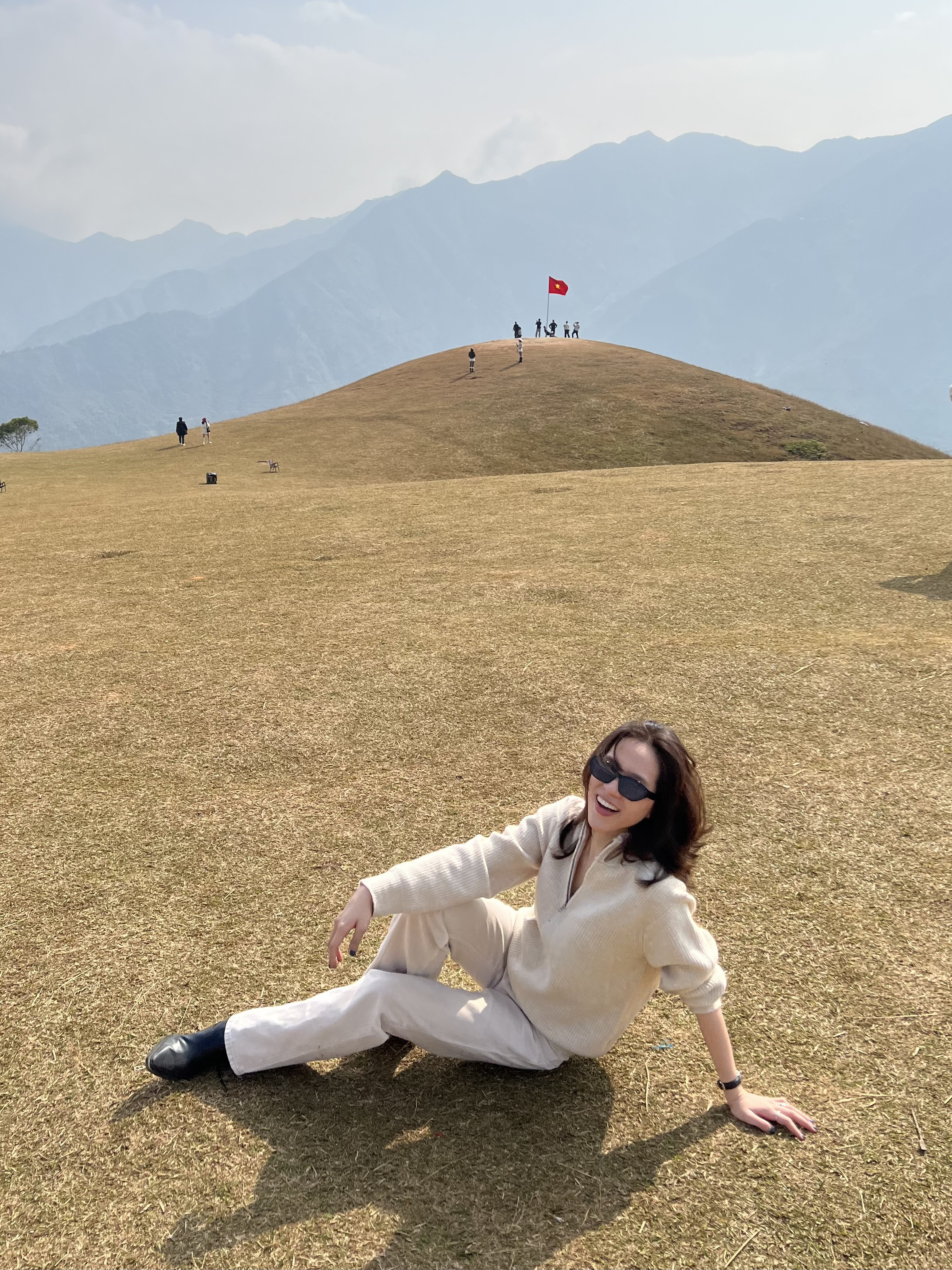 |
Gia Linh currently. Photo: Courtesy of subject |
My Y