Many people have experienced food accidentally falling onto the floor, quickly counting "1, 2, 3 seconds" to retrieve it "before bacteria can attach," rinsing it with water, and then continuing to eat. However, Professor John Tregoning, an immunology and vaccine expert at Imperial College London, England, cites multiple studies confirming this long-held belief is entirely unfounded.
Bacteria transfer to food almost immediately upon contact with surfaces and can survive there for hours, according to John Tregoning, who states that a quick rinse with water cannot ensure safety. All three studies on bacterial transmission mechanisms he cited conclude that the "3-second rule" is completely false.
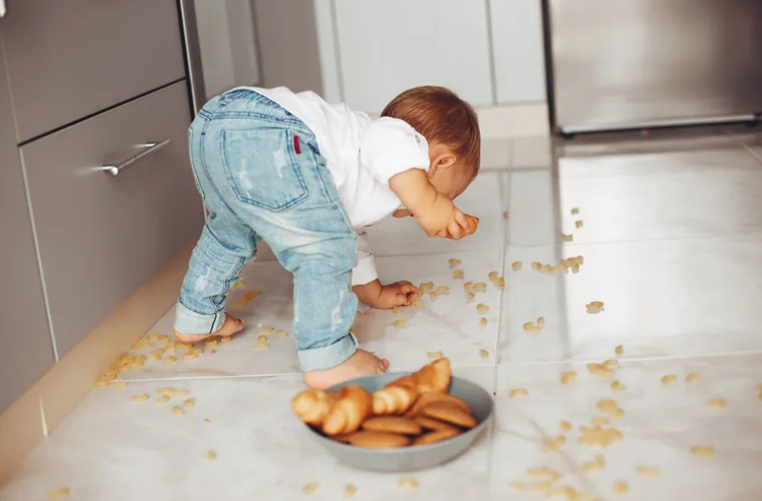 |
Illustrative photo: Active Beat. |
The first study investigated what happens when various foods, including bread, buttered bread, watermelon, and gummy candy, were dropped onto bacteria-laden surfaces such as ceramic tile, stainless steel, wood, and carpet. Results showed that moist foods like watermelon had the highest bacterial transfer rate when falling on hard, smooth surfaces like ceramic tile or stainless steel. Conversely, dry foods such as bread picked up fewer bacteria, but this does not mean they are safe. Professor Tregoning emphasized that the riskiest combination is moist food dropped on a hard surface.
The second study involved dropping cooked sausages onto hard surfaces, observing that bacteria still transferred to the food even when the surface had been contaminated hours earlier. Scientists demonstrated that if a contaminated piece of chicken was placed on a kitchen counter, and two hours later a slice of bread was dropped in the exact same spot, bacteria would still attach to the food because they can survive there for up to 24 hours. Therefore, even if a floor or kitchen counter appears clean, food dropped there many hours later still faces a risk of cross-contamination if the area previously contacted contaminated food.
This reality was also proven in environments demanding strict sterility. A third study applied the "3-second rule" to medical instruments in operating rooms. Results indicated that if a surgeon dropped an instrument, it had to be thoroughly cleaned with specialized disinfectants before it could be safely reused. This further confirms that quickly picking something up does not prevent bacterial contamination.
Professor Tregoning emphasized that a quick rinse with water is insufficient to ensure food cleanliness, posing particular danger to individuals with weakened immune systems or households with pets. Even if a pet walked through an area hours prior, residual bacteria on the surface can still adhere to food. To protect health, the safest solution when food has fallen to the ground is to discard it, accepting that the item is no longer safe to eat.
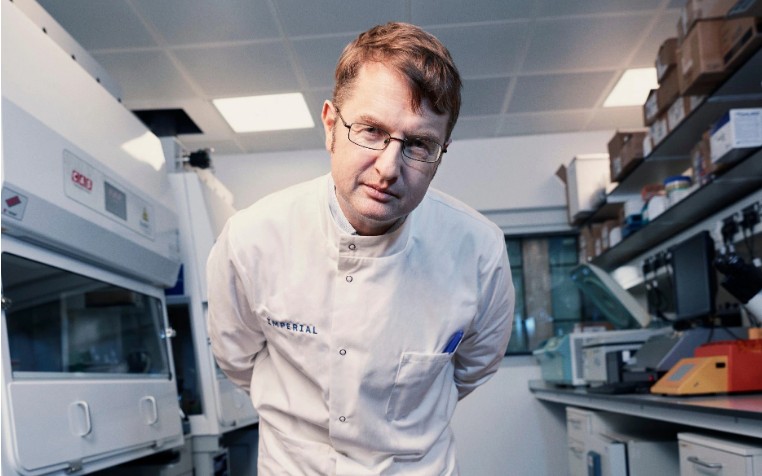 |
Professor John S Tregoning, immunology expert at Imperial College London. *Photo: Felicity McCabe*. |
Binh Minh (According to The Guardian, ST Headline)