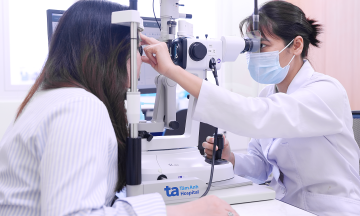
On 28/2, during a week of free examinations, Nguyen Thi Nha, Director of the Center for Reproductive Support, decided to fully sponsor the treatment costs for Oanh and her husband. Doctor Nha called the case challenging due to the wife's mutant gene, which causes congenital vision impairment. The team plans to use preimplantation embryo screening to eliminate the disease gene. Experts will select only the healthiest embryo for implantation. This process requires precise genetic diagnosis, making it more complex than typical infertility cases, Nha noted.
 |
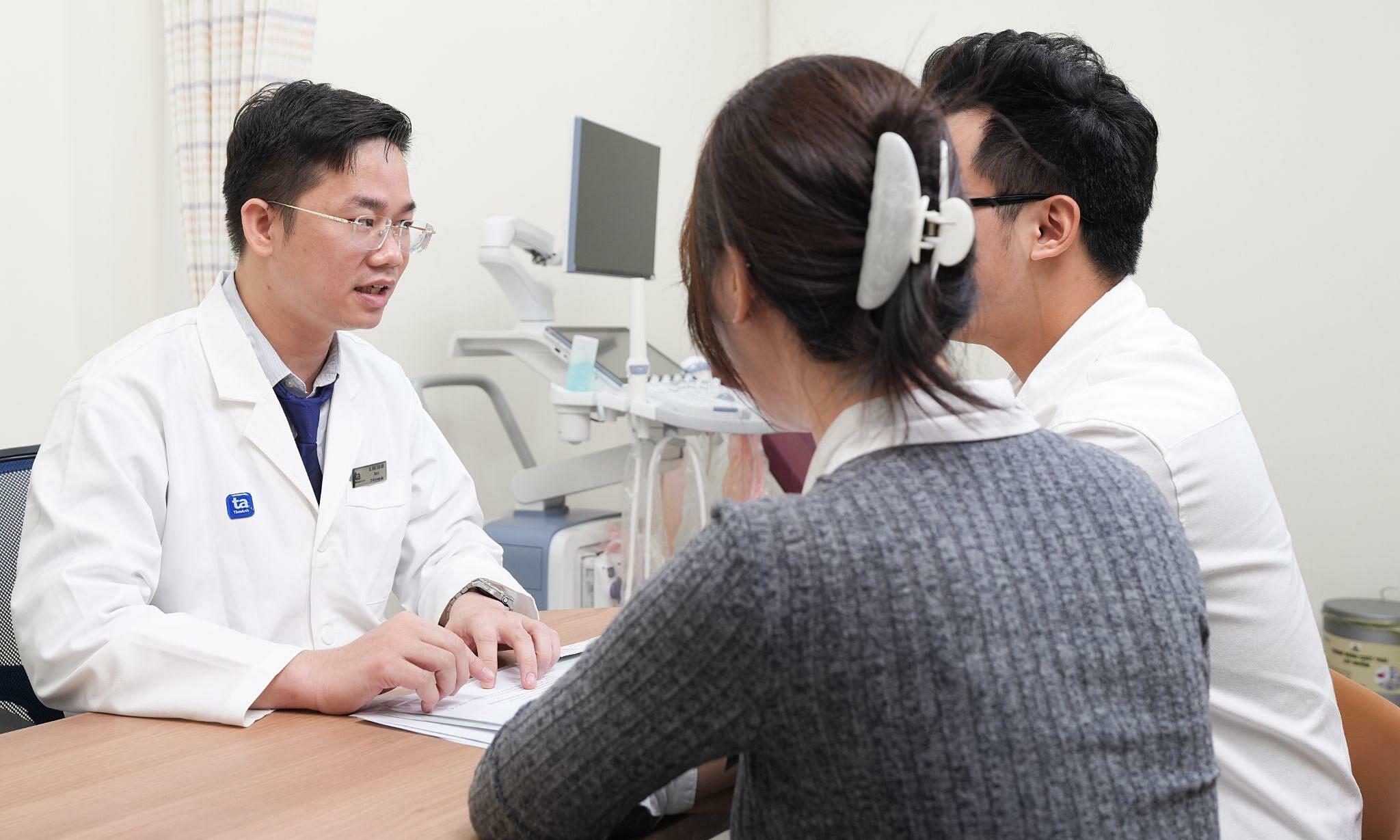
Doctor Nha advises the visually impaired couple. *Photo: Thuy An*
Oanh has been visually impaired since birth, inheriting the condition from her father. Her husband also lost his sight completely after an accident severed his optic nerve. They met at a massage facility and married in 2025. Ignoring societal whispers that disabled parents would burden a child, the couple yearns for the laughter of a child. To ensure their child does not repeat their parents' dark lives, they decided to seek medical intervention.
Leading her husband out of the clinic, the wife felt relieved, scheduling their return in one month to begin egg retrieval and embryo creation. She asserted, "My husband and I can live in darkness our whole lives, but our child cannot, so no matter how difficult it is, we are willing to endure it".
The Oanh family's efforts reflect the desire of many couples at risk of carrying disease genes to have healthy children. The Ministry of Health reported that in 2023, Vietnam recorded about 1,2 million children under 17 with disabilities, with congenital causes accounting for 65%. Genetic mutations cause 80% of rare diseases, leading to approximately 30% of affected children not surviving past 5 years old. Children with underlying medical conditions often develop low self-esteem and face many barriers in life.
Current infertility treatment places a significant financial burden on people because the Health Insurance Fund does not cover assisted reproductive technologies. This policy contrasts sharply with countries like France or China, where governments subsidize multiple rounds of in vitro fertilization.
Moreover, Vietnam's infertility treatment network currently has over 50 medical facilities but does not fully cover the number of patients in need. It is estimated that about one million infertile couples nationwide, but the average annual treatment capacity of the 50 facilities is only 50.000 cases, accounting for 5%. Geographical barriers also exist, as infertility treatment centers are mainly in large cities, with a lack of presence in mountainous, remote, and distant areas.
However, to have a child and fulfill the dream of a complete family, many are willing to sacrifice everything. "When holding their child, couples say it's a worthy gift, rather than complaining about the finances", Doctor Nha stated.
Thuy An