Eng English
China 中国人

Eng English
China 中国人
  • News
  • World
  • Business
  • Entertainment
  • Sports
  • Law
  • Education
  • Health
  • Lifestyle
  • Travel
  • Science
  • Digital
  • Automobiles
  • Trở lại Thể thao
  • Health
Saturday, 18/7/2026 | 09:01 GMT+7

Three-day 'winter sleep' saves newborn with brain oxygen deficiency

An infant born at 39 weeks gestation, suffering from respiratory distress and hypoxic-ischemic encephalopathy after birth asphyxia, was saved by doctors who lowered the body temperature to 33.5°C for three days.

On 17/7, a representative from Phu Tho Obstetrics and Pediatrics Hospital stated that the mother experienced no abnormalities during her pregnancy and delivered at 39 weeks gestation. After birth, the infant cried weakly, showed whole-body cyanosis, and achieved an Apgar score of only 5 points at the first minute.

Doctors initiated intensive neonatal resuscitation immediately in the delivery room. Three minutes later, the infant's circulatory and respiratory conditions improved. The patient received oxygen support and was transferred to Phu Tho Obstetrics and Pediatrics Hospital for further treatment.

At the hospital, the infant's respiratory distress progressed, sucking reflexes diminished, and seizures began. Recognizing these as symptoms of hypoxic-ischemic encephalopathy after birth asphyxia, the treatment team held an urgent consultation with the Neonatal Center at the National Children's Hospital. Experts unanimously diagnosed the infant with moderate to severe hypoxic-ischemic encephalopathy and prescribed controlled hypothermia (cooling) during the "golden window" after birth.

Controlled hypothermia, also known as the "winter sleep" technique, uses specialized equipment to precisely maintain the infant's body temperature at 33.5°C for 72 hours, followed by gradual rewarming according to a standard protocol. This controlled reduction in body temperature slows down brain cell metabolism, limits secondary damage reactions after oxygen deprivation, thereby reducing the risk of neuronal necrosis and improving long-term neurological prognosis.

Throughout the treatment, the infant's vital signs, respiratory function, circulation, neurological status, and potential metabolic disorders during hypothermia were continuously monitored. After 72 hours of combined resuscitation and intensive care, the infant breathed normally, and sucking and other neonatal reflexes showed significant improvement; seizures no longer occurred.

A post-treatment magnetic resonance imaging (MRI) scan of the brain confirmed good control over brain parenchymal lesions. Tests evaluating infection status, liver and kidney function, and other organs all fell within normal limits.
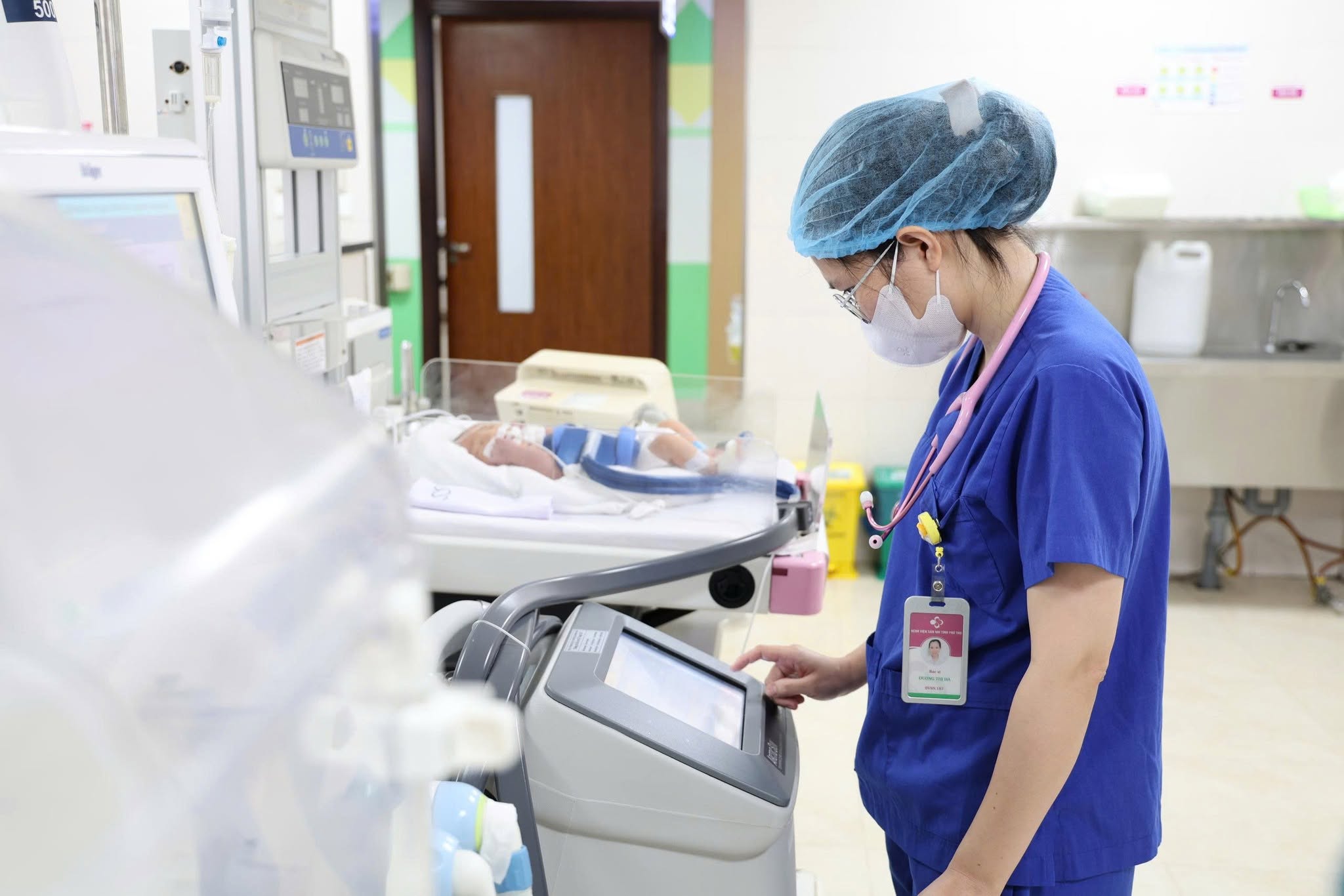
The infant receiving treatment at the hospital. Photo: Hospital provided

Doctor Duong Thi Ha, from the Neonatal Department, explained that controlled hypothermia is a recommended treatment in international guidelines for full-term or near-term newborns with moderate to severe hypoxic-ischemic encephalopathy. Treatment effectiveness largely depends on appropriate patient selection and implementation within the golden window, ideally within the initial six hours after birth. When performed correctly, this technique significantly reduces mortality rates and the risk of neurological sequelae such as cerebral palsy, epilepsy, or psychomotor developmental delay.

Hypoxic-ischemic encephalopathy is a leading cause of mortality and neurological sequelae in newborns. Therefore, early identification, proper initial resuscitation, timely referral, and implementing controlled hypothermia during the golden window are crucial for treatment outcomes.

Thuy Quynh
By VnExpress: https://vnexpress.net/ngu-dong-3-ngay-cuu-be-so-sinh-thieu-oxy-nao-5098669.html
Tags: asphyxiated infant therapeutic hypothermia controlled hypothermia

News in the same category

Who Should Get Their Thyroid Checked Before Pregnancy?

Who Should Get Their Thyroid Checked Before Pregnancy?

Women with a history of thyroid disease, type 1 diabetes, or those who are overweight or obese, should undergo thyroid function testing before pregnancy.

Why are children prone to middle ear infections during the rainy season?

Why are children prone to middle ear infections during the rainy season?

My child, aged three, frequently experiences recurrent middle ear infections during the rainy season. What are the causes, and how can they be prevented? (Tram Anh, 27, TP HCM)

do women who give birth have a lower risk of breast cancer?

do women who give birth have a lower risk of breast cancer?

I am 33 years old and have one child. Many people say that women who have been pregnant and given birth have a reduced risk of breast cancer. Is this true? (Thanh Tam, 33)

Does eating hot rice for breakfast cause a 'heavy stomach'?

Does eating hot rice for breakfast cause a 'heavy stomach'?

Reports suggest that consuming rice for breakfast can be difficult to swallow, leading to bloating and indigestion. Is this true, and is hot rice a recommended breakfast option? (Hoai, 34, Hanoi)

What diseases can spread when swimming together?

What diseases can spread when swimming together?

I went swimming with my 5-year-old son and noticed many cases of adenovirus causing pink eye and diarrhea. What other diseases can this virus cause? (Thuy Hanh, 38, Hanoi)

Early detection of cardiovascular risk in sports

Early detection of cardiovascular risk in sports

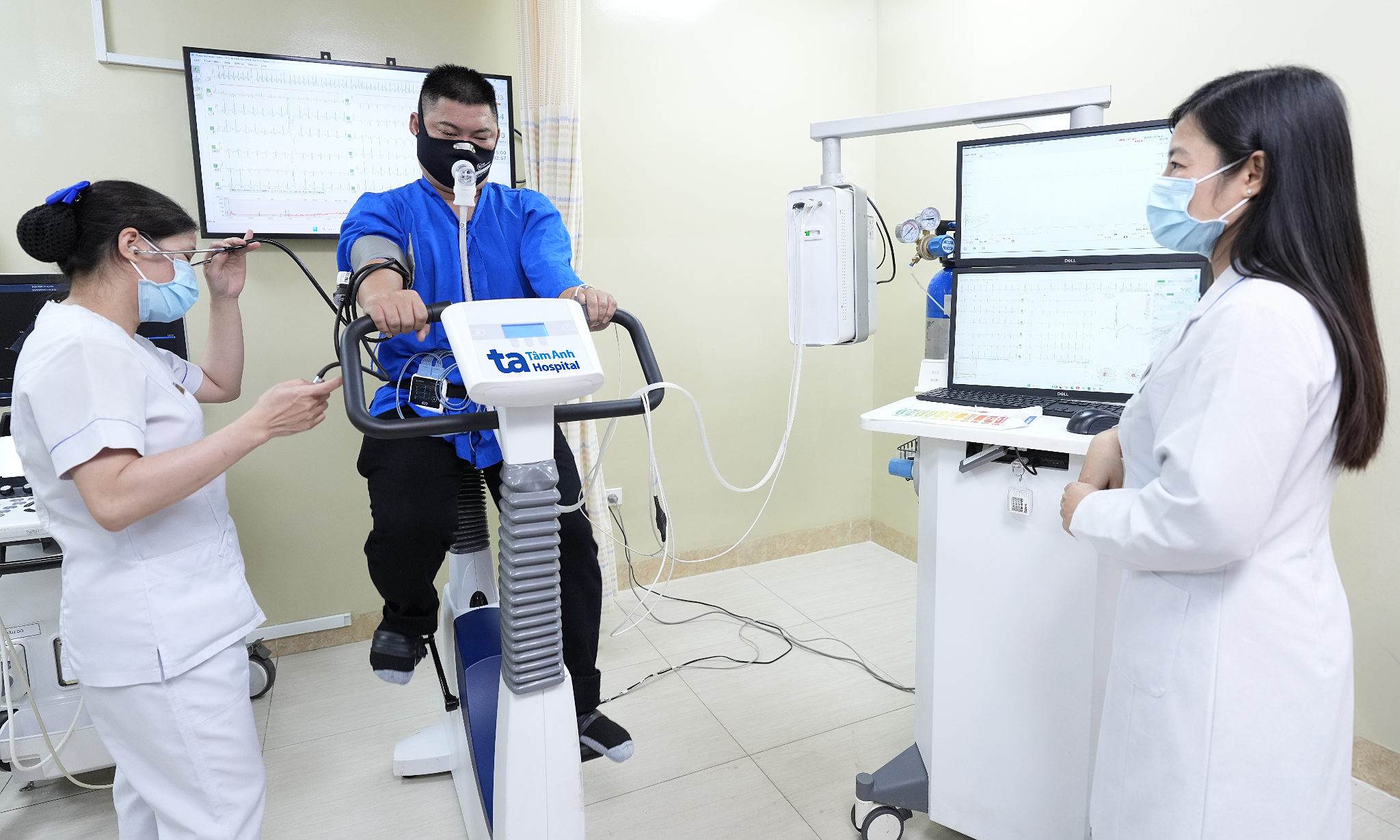
Cardiopulmonary exercise testing (CPET) helps uncover hidden abnormalities that lead to fainting or cardiovascular events during high-intensity physical activity, even when routine cardiac exams appear normal.

7 groups at high risk of occupational lung disease

7 groups at high risk of occupational lung disease

Miners, construction workers, textile industry employees, and those regularly exposed to asbestos and chemicals face a heightened risk of developing occupational lung disease.

How should pregnant mothers at high risk of preeclampsia eat?

How should pregnant mothers at high risk of preeclampsia eat?

I am 16 weeks pregnant and taking Aspirin to prevent preeclampsia. Can I eat anything I want, or are there specific dietary considerations? (Quynh, Dong Nai)

Septic shock caused by splenic abscess

Septic shock caused by splenic abscess

After several days of fever and dull abdominal pain, doctors discovered a large splenic abscess and critical septic shock in a woman in her 70s.

Removing the health insurance 'bottleneck' so vulnerable individuals don't have to visit hospitals

Removing the health insurance 'bottleneck' so vulnerable individuals don't have to visit hospitals

The Ho Chi Minh City People's Committee has petitioned the Ministry of Health, the Ministry of Finance, and Vietnam Social Security to resolve issues concerning health insurance payments for mobile medical examinations at social protection centers.

Eng English
China 中国人
  • News
  • World
  • Business
  • Entertainment
  • Sports
  • Law
  • Education
  • Health
  • Lifestyle
  • Travel
  • Science
  • Digital
  • Automobiles
FPT Tower, 10 Pham Van Bach Street, Dich Vong Ward,
Cau Giay District, Hanoi, Vietnam
Email: contacts@vnportal.net
Tel: 028 7300 9999 - Ext 8556
Advertise with us: 090 293 9644
Register
© Copyright 2026 vnnow.net. All rights reserved.
Terms of use Privacy policy Cookies