Stroke occurs when a brain blood vessel is blocked or ruptures, leading to blood deprivation or damage in part of the brain. Dr. Nguyen Huu Khanh, a Specialist Level I Doctor in the Department of Neurology at Tam Anh General Hospital, Ho Chi Minh City, highlights several habits to limit during holidays to protect one's health.
Excessive alcohol consumption
During holiday periods, social gatherings often lead to higher-than-usual alcohol consumption. Alcohol can raise blood pressure, cause dehydration, and lead to heart rhythm disturbances, including atrial fibrillation. Atrial fibrillation promotes blood pooling in heart chambers, forming clots that can travel to the brain and cause a stroke.
According to Dr. Khanh, the risk is higher for those who drink heavily in a short period, individuals with hypertension, heart disease, or a history of transient ischemic attacks. Alcohol intoxication can also mask stroke symptoms like slurred speech, unsteady gait, or drowsiness, delaying urgent medical attention.
 |
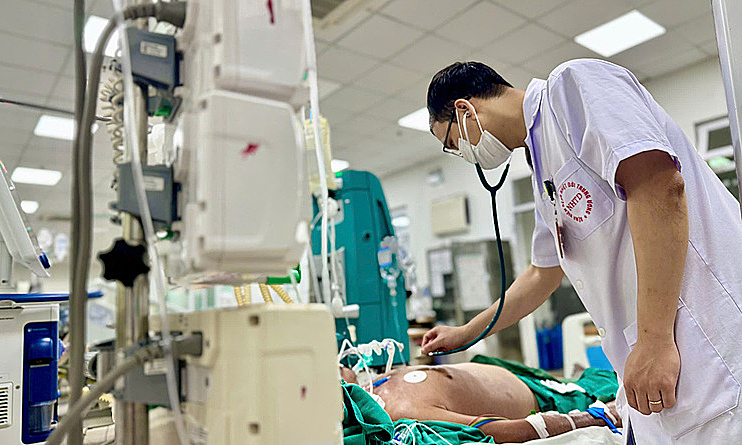
A doctor examines a patient for stroke screening. *Photo: Tam Anh General Hospital*
Late nights and disrupted sleep schedules
Changing daily routines during holidays, staying up late for entertainment, movies, or travel, and then compensating with daytime sleep can lead to sleep deprivation and disrupted circadian rhythms. These factors can affect blood pressure, heart rate, and metabolism, increasing the burden on the cardiovascular system. For individuals with hypertension, diabetes, obesity, or heart disease, prolonged late nights can make risk factors harder to control.
Consuming high-salt, high-fat, processed meats, and energy-dense foods at parties leads to excess fat and energy, impacting weight management, blood lipid levels, and blood sugar.
Dr. Khanh advises that even during holidays, people should try to maintain a relatively stable sleep-wake schedule, ensure sufficient sleep, and avoid continuous late nights.
Forgetting medication
Some patients traveling or experiencing schedule changes may forget to take their prescribed blood pressure, cardiovascular, diabetes, or stroke prevention medications. Abruptly stopping medication can lead to uncontrolled underlying conditions, increasing the risk of cardiovascular and cerebrovascular events.
According to Dr. Khanh, individuals with underlying conditions should prepare enough medication before traveling, taking the correct dose at the right time throughout their holiday. Prioritize low-salt foods, limit fried dishes, organ meats, and processed meats, drink sufficient water, avoid skipping meals, and restrict alcohol.
Individuals with hypertension, diabetes, dyslipidemia, heart disease, atrial fibrillation, a history of stroke, or transient ischemic attack should undergo health check-ups and stroke screenings as advised. Doctors may recommend assessing risk factors and examining the heart, blood vessels, and brain using advanced imaging techniques like 3 Tesla MRI and CT scans with over 100,000 slices. This helps detect abnormalities early and develop appropriate prevention plans.
If sudden symptoms appear, such as facial drooping, one-sided limb weakness, difficulty speaking, blurred vision, or loss of balance, patients should go to a hospital for examination. Do not self-treat with traditional methods like coin rubbing or acupressure, or wait for symptoms to resolve on their own.
Trong Nghia
| Readers can ask questions about neurological conditions here for doctors to answer. |