On 24/7, doctors at Bach Mai Hospital, Ninh Binh facility, reported that three individuals remain hospitalized. These include two cases initially suffering severe poisoning with heart damage and one patient who developed additional health issues.
Fortunately, all 8 individuals did not suffer brain damage, and their heart and respiratory injuries improved during treatment. According to doctors, this is a positive sign for a mass hydrogen sulfide (H2S) gas poisoning incident, a condition with a very high risk of fatality if not promptly rescued. Even with early hospital admission, some cases can still worsen due to heart and lung damage, or even result in death in subsequent days.
Currently, all patients are fully conscious, vital signs are stable, liver and kidney functions are normal, and MRI scans of the brain and CT scans of the chest have not revealed specific parenchymal damage. Consequently, five patients have been discharged, while the remaining three continue treatment and are expected to be discharged in a few days.
The group of 8 men, aged from 32 to 46 years old, were admitted to the hospital from the night of 18/7 to the afternoon of 19/7, presenting with headaches, eye irritation, conjunctival congestion, and rhabdomyolysis. They work for Dabaco Co., Ltd. in Thach Quang commune, Thanh Hoa, and were involved in the incident on the evening of 18/7 at a closed liquid manure storage tank. Initially, one worker slipped and fell into the tank, losing consciousness. Several colleagues then successively jumped in or leaned deeply into the tank opening to rescue him, but quickly lost consciousness themselves, creating a chain reaction. Among the 13 victims, five died at the scene.
Within the group of 8 individuals, two who directly entered the tank were secured with safety ropes and were pulled out promptly after losing consciousness for a few minutes. The remaining 6 individuals participated in pulling victims from the tank opening.
Doctors identified the patients as suffering from hydrogen sulfide (H2S) gas poisoning, a highly toxic gas that accumulates in confined spaces.
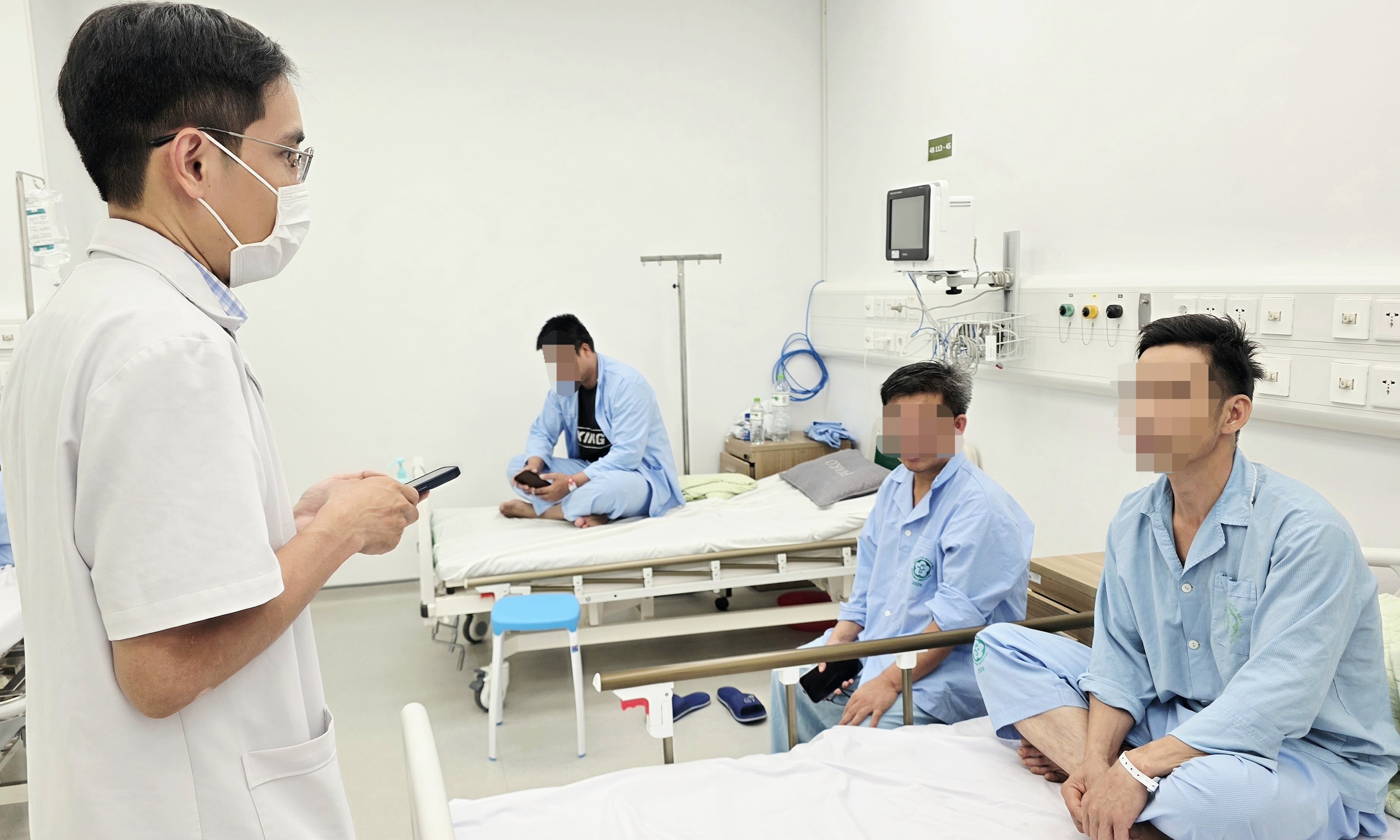 |
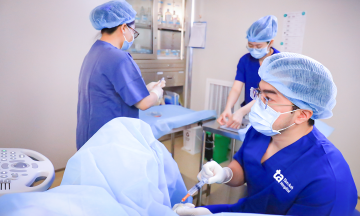
Patients receiving treatment at the hospital. Photo: Thanh Duong |
H2S is a toxic gas that causes damage similar to cyanide, inhibiting cellular respiration and leading to circulatory arrest within minutes. At high concentrations, this gas paralyzes the sense of smell, preventing victims from recognizing its characteristic rotten egg odor to avoid it. Medically, this phenomenon is referred to as "slaughterhouse hammer syndrome" due to its ability to instantly incapacitate victims in confined spaces.
Distinctive signs, in addition to rapid loss of consciousness, include metal objects on the victim's person, such as coins, trouser zippers, and belts, often becoming tarnished and turning dark gray due to chemical reactions with the toxic gas.
To prevent similar chain accidents, doctors advise against attempting to rescue individuals in confined spaces without specialized gas masks and oxygen tanks. The first step is to open ventilation and use fans to push clean air inside. Rescuers entering the space must wear safety harnesses so that personnel above can immediately pull them out if any unusual signs are detected.
Le Nga