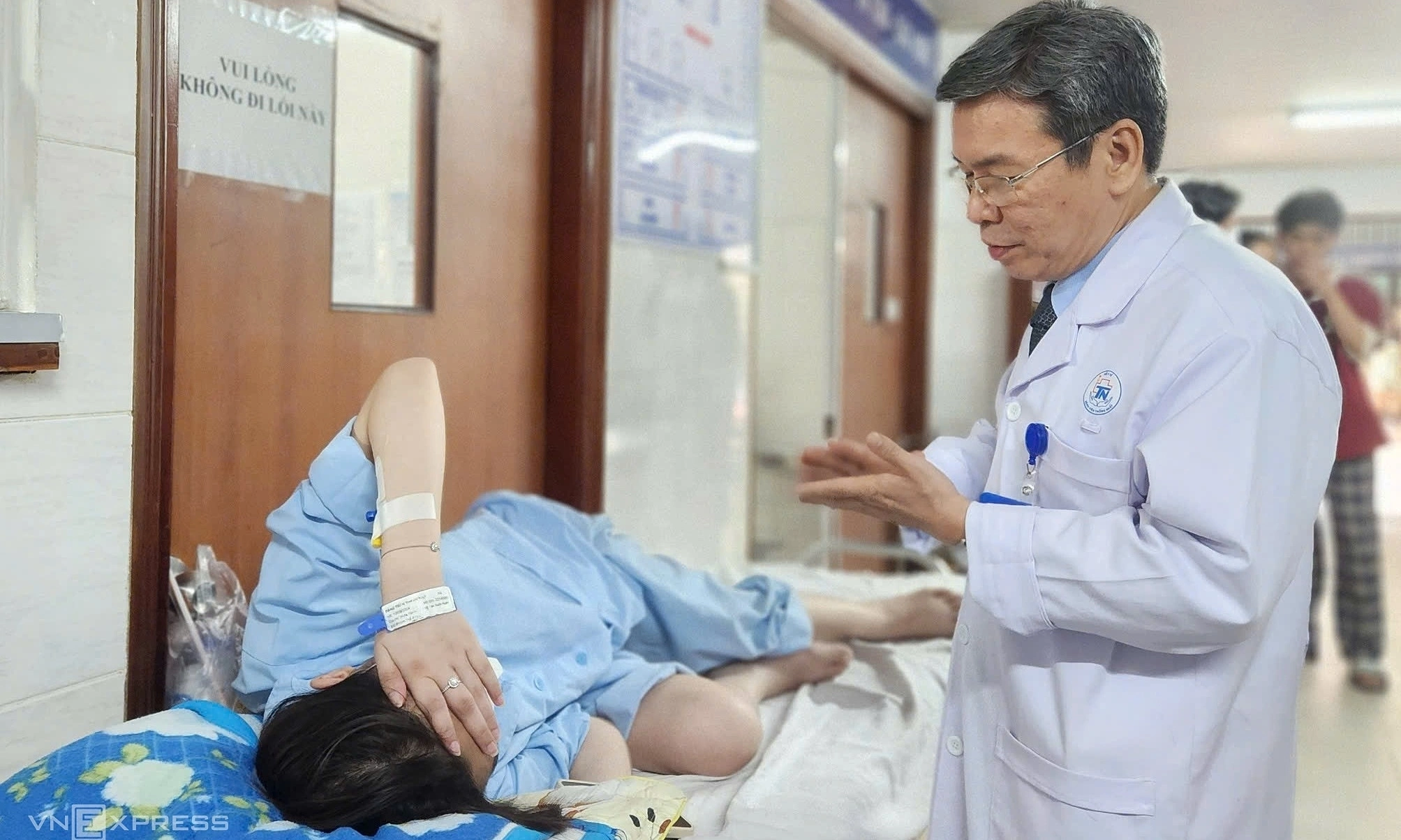
Mid-July, Phuong Anh and her husband brought their 5-month-old daughter, Ti Na, to the Center for Reproductive Assistance, Tam Anh General Hospital TP HCM (IVF Tam Anh TP HCM), to visit Doctor Le Xuan Nguyen.
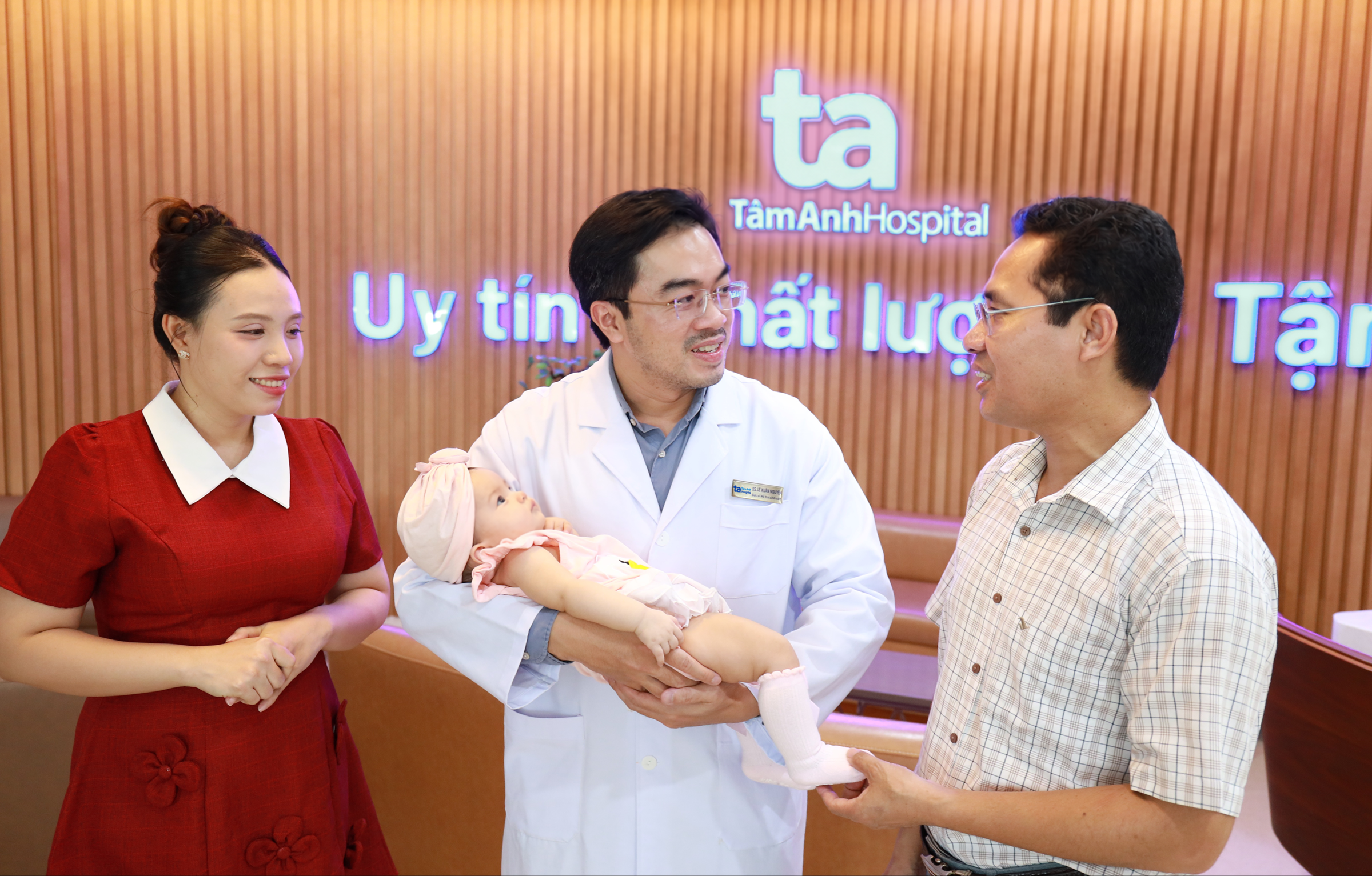 |
Phuong Anh and her husband with Doctor Le Xuan Nguyen and 5-month-old Ti Na at Tam Anh General Hospital. *Nguyet Nhi* |
Phuong Anh and her husband had planned for a second child when their first was 9 years old. However, she experienced two consecutive early miscarriages with no clear cause. After seeking examination at a hospital in TP HCM, a doctor diagnosed her with reduced ovarian reserve. She then underwent in vitro fertilization (IVF), but three day-3 embryo transfers failed.
At IVF Tam Anh TP HCM, Doctor Nguyen discovered that in addition to reduced ovarian reserve (AMH index 1.1 ng/mL), Phuong Anh also had two conditions directly impacting her ability to conceive: ovarian endometriosis and adenomyosis (endometriosis within the uterine muscle). Doctor Nguyen explained that having previously conceived and given birth naturally does not guarantee sustained fertility over time. After 35 years old, ovarian reserve declines more rapidly, while many gynecological conditions can progress silently without obvious symptoms.
Ovarian endometriosis not only reduces the number of oocytes but also affects egg quality due to prolonged inflammation. Meanwhile, adenomyosis alters the uterine environment, reducing embryo receptivity and increasing the risk of miscarriage.
To increase the chances of obtaining good quality embryos, Doctor Nguyen conducted two consecutive cycles of ovarian stimulation for Phuong Anh to collect a sufficient number of eggs. This was followed by embryo creation.
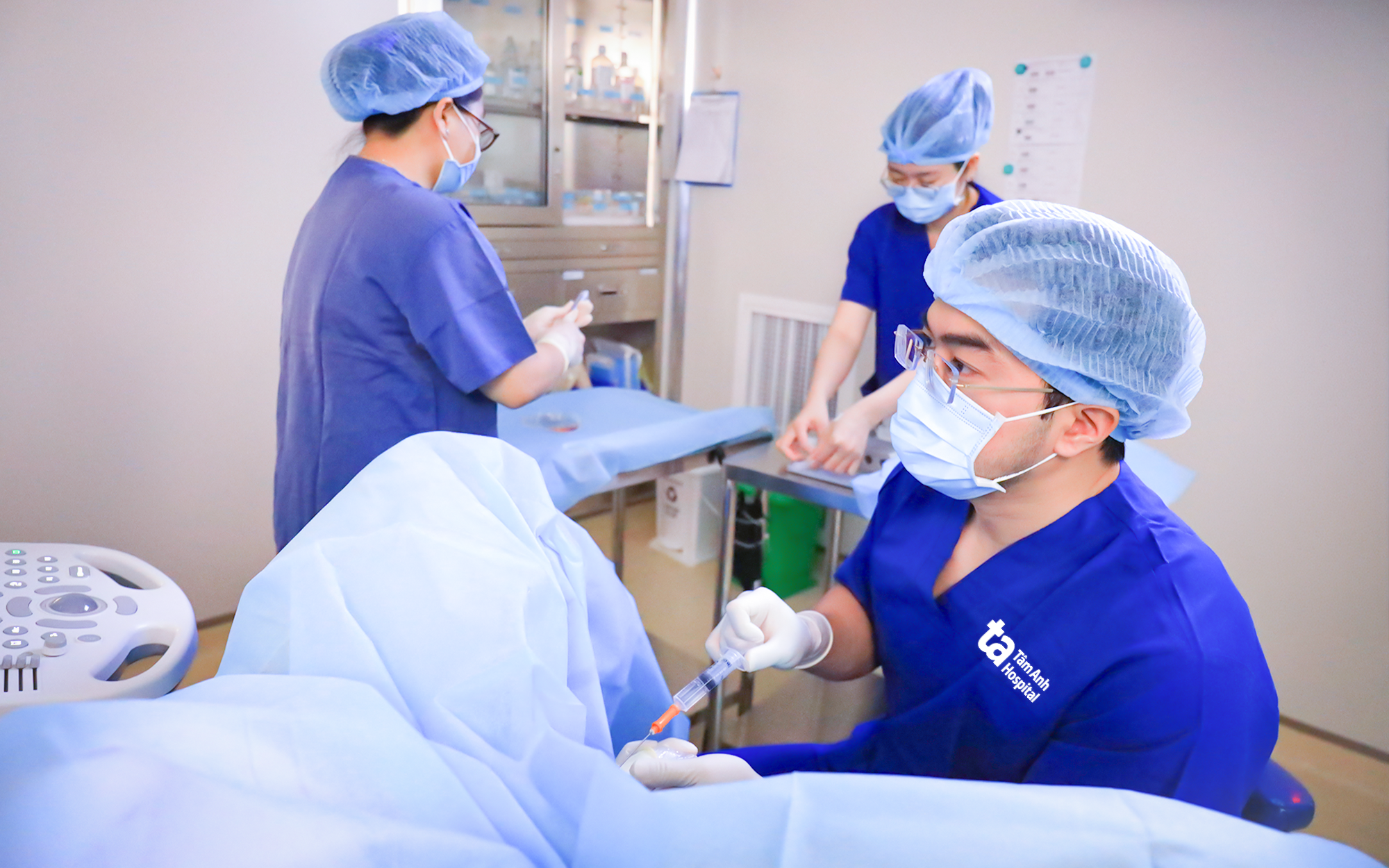 |
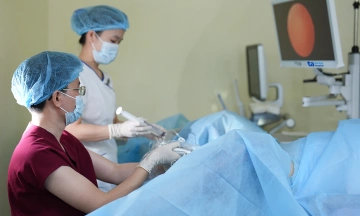
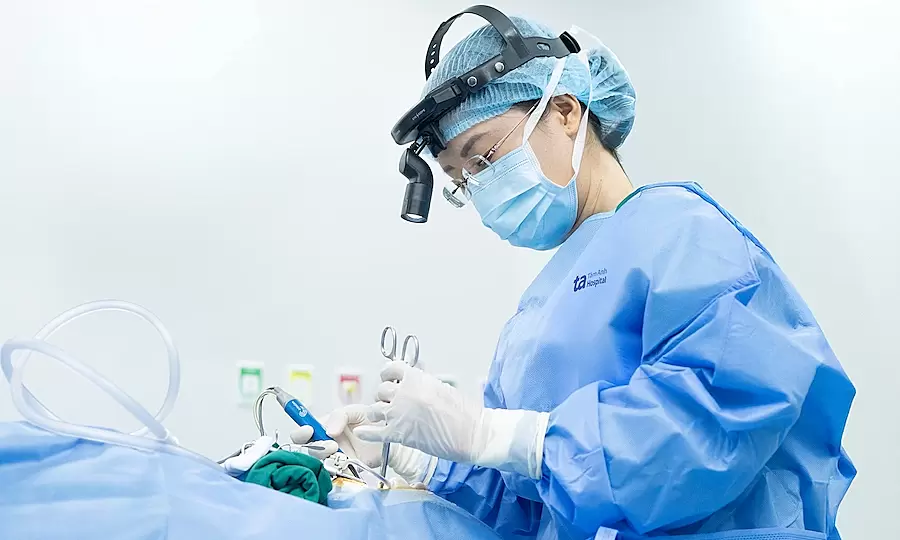
Doctor Le Xuan Nguyen performing egg retrieval for Phuong Anh. *IVF Tam Anh* |
Over the two cycles, Phuong Anh yielded 9 mature eggs, from which four day-3 embryos were created. All embryos were then cultured in a time-lapse system with continuous observation cameras and integrated artificial intelligence (AI), resulting in three day-5 embryos and one day-6 embryo.
Before embryo transfer, Doctor Nguyen performed a hysteroscopy, revealing that Phuong Anh had uterine endometritis. This condition was identified as a significant factor contributing to her previous failed embryo transfers. The doctor prescribed medication to suppress ovarian endometriosis and a two-week course of antibiotics to treat the endometritis. Phuong Anh conceived successfully on her first embryo transfer, giving birth to Ti Na, who weighed 3.2 kg.
The remaining embryos were cryopreserved. She plans to return to the hospital at the end of this year for a second embryo transfer, hoping to have another child.
According to Doctor Nguyen, over 50% of cases at IVF Tam Anh involve secondary infertility, meaning individuals who have previously had children but subsequently face difficulty conceiving again. Many people are complacent, waiting for natural conception, while conditions like ovarian endometriosis and chronic uterine endometritis can progress silently for years. This, combined with age-related decline in ovarian reserve, significantly reduces fertility.
Doctor Nguyen advises women to complete their families before 35 years old. Individuals who have previously given birth but have not conceived again after 6-12 months of regular intercourse, have a history of recurrent miscarriages, prolonged menstrual pain, or changes in their menstrual cycle, should seek early medical consultation. A doctor will assess ovarian reserve, identify the cause, and provide timely treatment.
Nguyet Nhi