Waking up between 2-3 am and struggling to fall back asleep is a common experience. Many find it difficult to get sufficient rest, particularly those who frequently wake during the night. Implementing simple habits can help your body relax and return to sleep faster.
Avoid checking your phone
Many individuals reach for their phones to "kill time" when unable to sleep, a counterproductive habit. The blue light emitted from screens can inhibit melatonin, a hormone crucial for sleep regulation. Furthermore, engaging with messages, social media, or news stimulates the brain, making it harder to relax.
If you frequently wake during the night, keep your phone out of reach or activate "do not disturb" mode before bed.
Do not look at the clock
Upon waking, many instinctively check the time, wanting to know how much sleep remains. However, Healthline suggests that repeatedly checking the clock can heighten anxiety, keeping the brain alert and preventing sleep. Instead, turn your clock away or avoid checking your phone for the time to reduce this pressure.
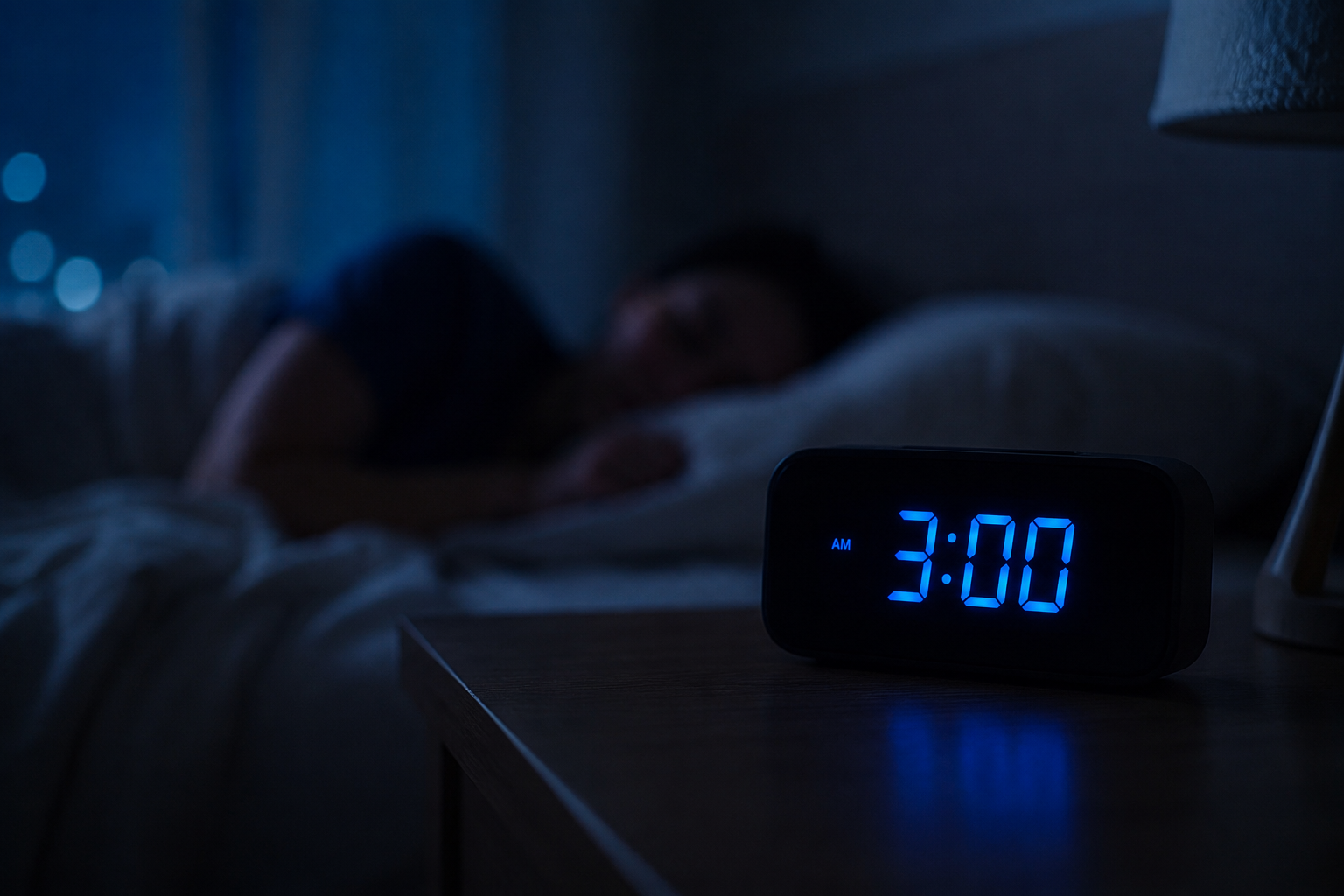 |
Avoiding checking the clock when waking up in the middle of the night can help reduce stress from sleeplessness, making it easier to fall back asleep. Image created by AI
Breathe deeply and relax your mind
If your mind races with thoughts of work, finances, or tomorrow's tasks, practice slow, deep breathing. Inhale through your nose for about 4 seconds, hold your breath for mot-hai seconds, then slowly exhale for 6-8 seconds, repeating for several minutes.
Health reports that many experience sleeplessness due to an overactive mind. Instead of attempting to "erase" thoughts, allow them to surface and then naturally fade, while focusing on your breath or bodily relaxation. This technique reduces stress, paving the way for sleep to return.
You can also practice progressive muscle relaxation by tensing and then releasing each muscle group, starting from your feet and moving up to your shoulders, to alleviate physical tension.
Keep your bedroom cool, dark, quiet
Mayo Clinic highlights the significant impact of your sleep environment on falling back asleep. Your bedroom should be dark, quiet, and set to a cool, comfortable temperature. If external light or noise disrupts your sleep, consider blackout curtains, earplugs, or a white noise machine to minimize environmental disturbances.
Do not try to stay in bed to force yourself to sleep
Instead of forcing immediate sleep, accept that brief nighttime awakenings are sometimes normal. Cleveland Clinic notes that the pressure to sleep often prolongs insomnia and restlessness. If you remain awake after about 20 minutes, leave your bed and engage in a relaxing activity like reading a physical book, listening to soft music, or meditating in dim light. Avoid work, checking emails, or social media, as these activities stimulate the brain.
Return to bed only when you feel sleepy again. With a relaxed body and mind, sleep will come more naturally.
Bao Bao (Compiled)