High summer temperatures lead many to spend nearly all day in air-conditioned rooms to escape the heat. However, the cold, dry air from air conditioning can lower environmental humidity, directly affecting the eye's surface and often causing dryness and irritation.
The tear film, composed of three layers (mucus, aqueous, and lipid), helps maintain moisture and protect the eyeball's surface. According to Master, Doctor Le Thanh Huyen from the High-Tech Eye Center at Tam Anh General Hospital Hanoi, prolonged exposure to air-conditioned environments reduces air humidity. This can destabilize the lipid layer, causing tears to evaporate easily and making it difficult for them to remain on the eye's surface. This condition reduces lubrication, often leading to dryness, irritation, a gritty sensation, and blurred vision, especially for those working extensively with screens due to reduced blinking.
Doctor Huyen suggests several lifestyle and air conditioning usage habits to help prevent dry eyes:
Maintain appropriate air conditioning temperature and humidity
Excessively low room temperatures not only make the body susceptible to thermal shock but also dry out the air, directly impacting the eye's surface. It is advisable to keep the air conditioner set between 26-28 degrees Celsius and avoid directing the airflow straight towards the face. In enclosed spaces, consider adding a humidifier or a small bowl of water to improve humidity, which helps reduce tear evaporation.
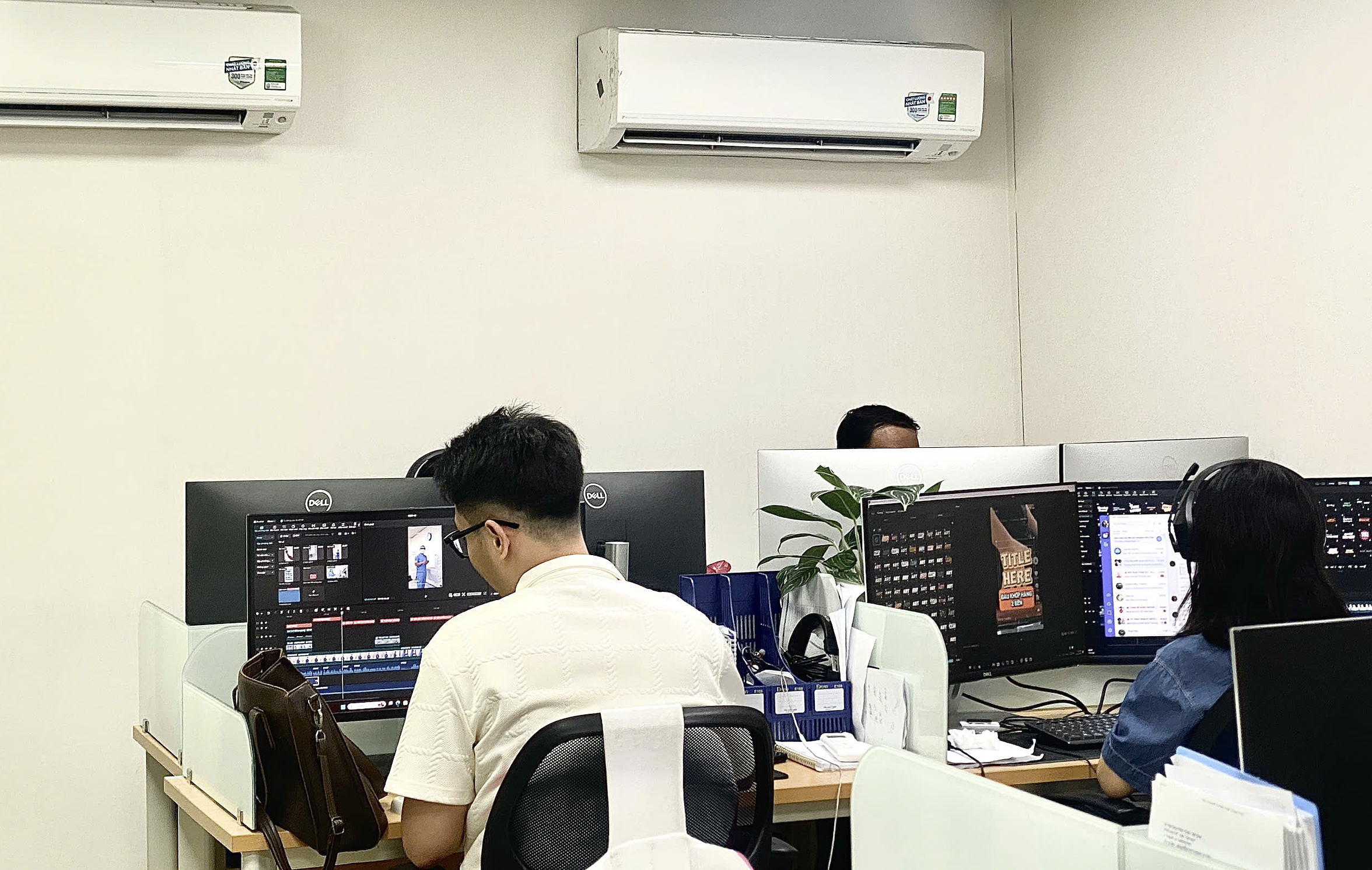 |
Working in an air-conditioned room can easily cause dry eyes. Illustration: Tam Anh General Hospital |
Drink enough water daily
Water is a crucial component of the tear film. When the body is dehydrated, the lacrimal glands secrete less fluid, making eyes more prone to dryness and fatigue. Maintaining an intake of 1,5-2 liters of water daily (depending on body type) helps stabilize the eye's natural moisture and reduces irritation, especially when working in prolonged air-conditioned environments.
Use artificial tears
Artificial tears help replenish moisture and improve lubrication of the corneal surface, particularly for those who regularly work with computers or are in cold rooms. Some types contain lipids, which help limit tear evaporation and are suitable for individuals with meibomian gland dysfunction. However, it is important to choose the appropriate type and use it as directed by a doctor for optimal effectiveness.
Allow eyes to rest
When focusing on a screen, blinking frequency can decrease by half compared to normal, causing tears to evaporate more quickly. It is advisable to rest your eyes using the 20-20-20 rule: every 20 minutes, look at an object about 6 m (20 feet) away for 20 seconds. Consciously and regularly blinking helps distribute the tear film evenly, effectively reducing dry and tired eyes.
According to Doctor Huyen, prolonged dry eyes not only cause discomfort but can also lead to inflammation of the eyeball surface, corneal damage, or reduced vision quality if not properly managed. If symptoms such as persistent dryness and irritation, a gritty sensation, blurred vision, or light sensitivity occur, it is essential to consult an ophthalmologist at a specialized eye hospital for timely evaluation and treatment, to prevent long-term effects on vision.
Thu Giang
| Readers can submit questions about eye diseases here for doctor's answers. |