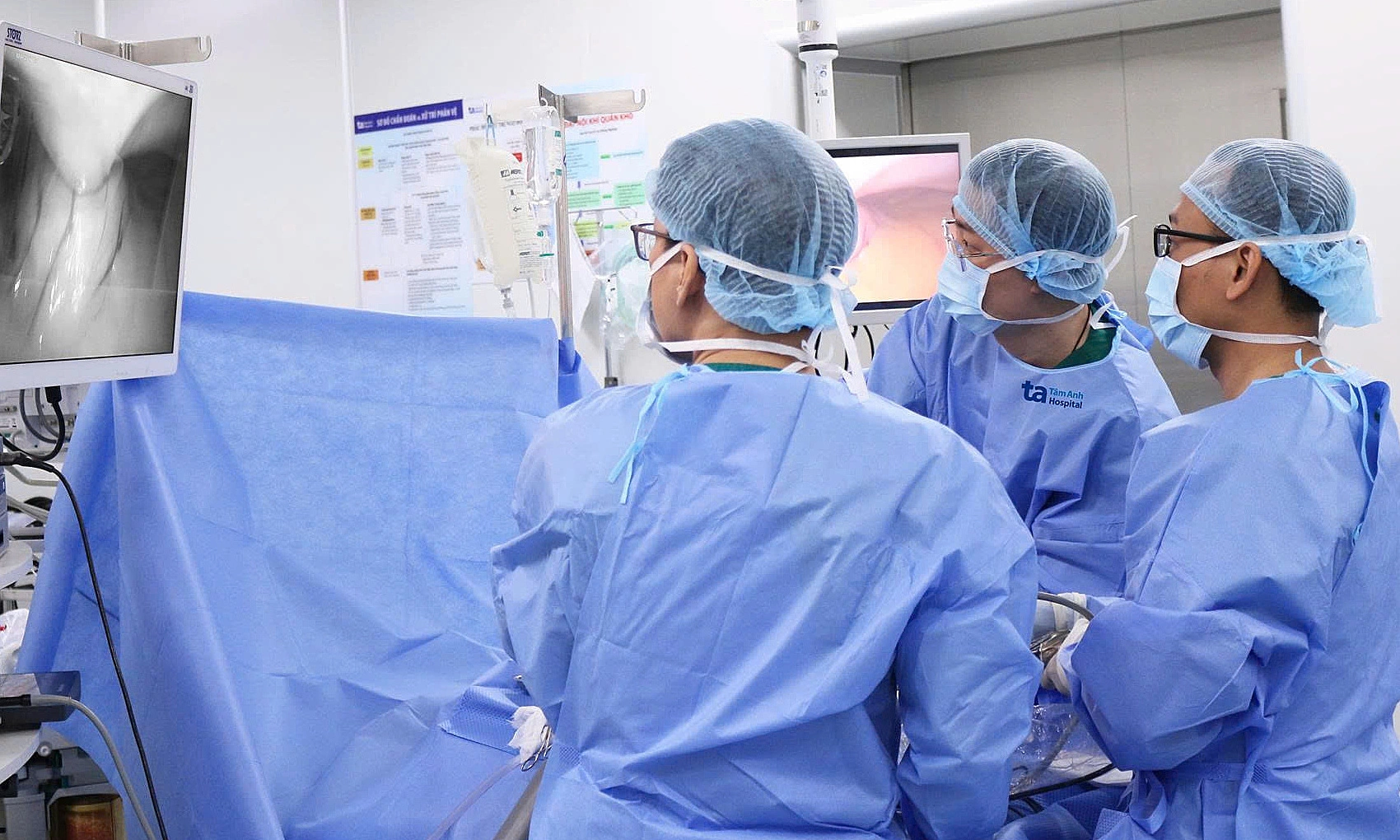
Professor, Doctor Vo Thanh Nhan, Director of the Interventional Cardiology Center at Tam Anh General Hospital TP HCM, announced that Phong is the youngest patient to undergo transcatheter aortic valve implantation (TAVI) at the hospital. Previously, TAVI was primarily indicated for patients over 60 years old with weakened health and multiple underlying conditions. Now, this technique is being expanded to younger individuals with suitable indications, helping them avoid open-heart surgery, sternotomy, the use of a heart-lung machine, and general anesthesia. Patients experience reduced complication risks and faster recovery.
Phong was diagnosed with aortic valve narrowing 10 years ago, stemming from a congenital heart valve defect. An echocardiogram confirmed severe aortic valve stenosis. Normally, the aortic valve has three leaflets, but Phong was born with only two, leading to early calcification and narrowing. When the valve cannot open completely, the heart must work harder to pump blood to the body. If this condition persists, patients are susceptible to heart failure or sudden death.
Phong’s progressively worsening shortness of breath and chest pain indicated a severe progression, leading to heart failure with preserved ejection fraction. The echocardiogram recorded a mean transvalvular pressure gradient of over 65 mmHg, exceeding the 40 mmHg threshold for valve replacement.
 |
Professor Nhan (far left) and his team perform transcatheter aortic valve implantation for a patient. Photo: Tam Anh General Hospital |
Professor Nhan opted for the new-generation Sapien 3 Ultra Resilia biological valve, which boasts a lifespan of 15-16 years, an improvement over older valve generations (8-10 years). This extended durability reduces the number of future valve replacements a patient might need. This valve type also offers advantages such as a lower incidence of paravalvular leak, minimized procedure time, reduced infection risk, and a lower residual transvalvular gradient immediately after intervention.
The patient received local anesthesia and remained conscious throughout the procedure. Through a small puncture in the femoral artery, the team guided the biological valve to the heart using a catheter and positioned it precisely within the narrowed aortic valve. After one hour, the new valve was functioning well, myocardial contractility improved, and blood pumping to nourish the body was enhanced. The pressure gradient returned to near-normal levels.
 |
Professor Vo Thanh Nhan examines the patient before discharge. Photo: Tam Anh General Hospital |
One day after the intervention, Phong was able to walk normally, with no more shortness of breath or chest pain, and was discharged after 3 days.
Aortic valve narrowing is common in individuals aged 70-80, resulting from calcification and hardening of the heart valves, preventing them from fully opening to pump blood from the heart to the body. In younger patients, the condition is primarily linked to congenital heart valve defects. Abnormal heart valves accelerate the calcification process by decades, leading to severe valve narrowing and heart failure if not treated promptly.
Professor Nhan advises patients with aortic valve narrowing due to congenital heart defects to undergo regular follow-up examinations to monitor disease progression, allowing for timely intervention and complication prevention. If symptoms such as shortness of breath during exertion, chest pain, breathlessness, or reduced exercise capacity appear, patients should seek medical attention immediately.
Thu Ha
* Patient's name has been changed
| Readers can submit questions about cardiovascular disease here for doctors to answer |