An MRI scan of Hong at Tam Anh General Hospital Ho Chi Minh City revealed thinning pancreatic tissue, with the main pancreatic duct and its branches unevenly dilated. Within the duct, from its head to its body and tail, numerous large stones were present, some measuring 12x18 mm. The intrahepatic bile ducts also showed mild dilation.
Doctor Pham Cong Khanh, Head of the Department of Hepatobiliary-Pancreatic Surgery at the Center for Endoscopy and Endoscopic Digestive Surgery, stated that pancreatic stones are a severe complication of chronic pancreatitis. Hong's condition, characterized by many large stones scattered throughout both the main pancreatic duct and smaller branches, made complete clearance difficult with medical treatments or endoscopic retrograde cholangiopancreatography (ERCP).
The surgical team opted for minimally invasive endoscopic surgery, incising the pancreatic duct and combining it with laser lithotripsy to thoroughly remove the stones and reduce complication risks.
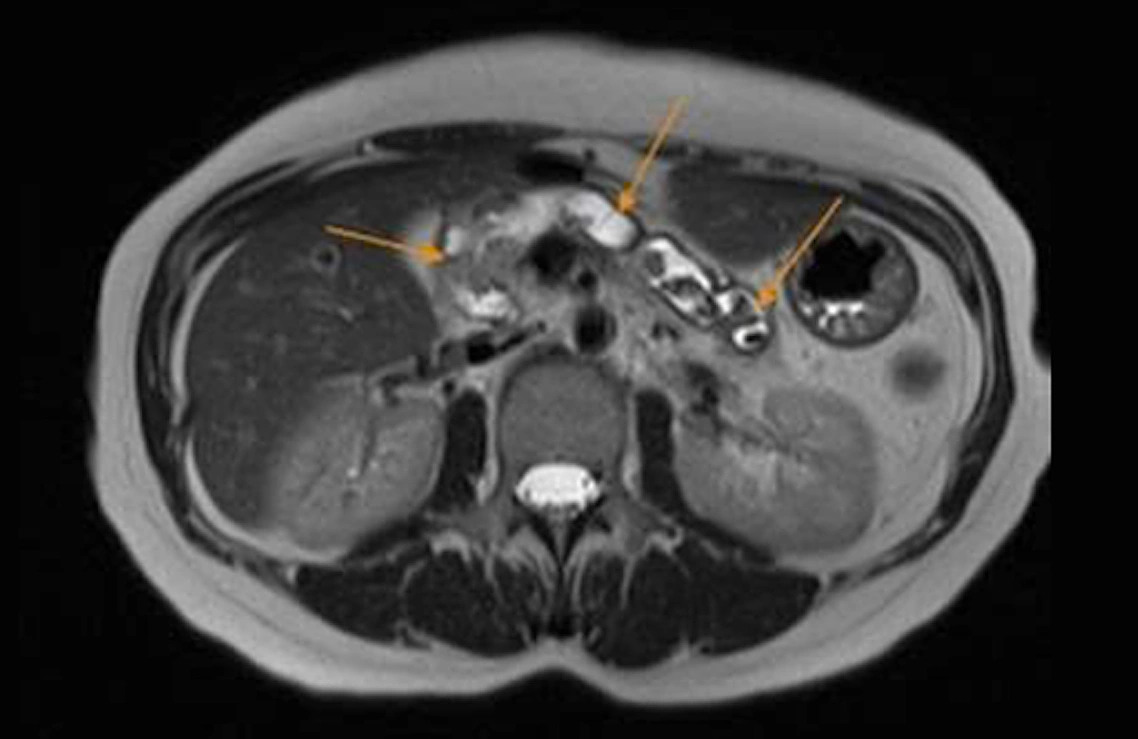 |
MRI results showing multiple pancreatic stones (yellow arrow). Photo: Tam Anh General Hospital |
After accessing the pancreas, doctors opened the pancreatic duct and found many hard stones, 10-15 mm in size, within the main duct and its side branches. Subsequently, doctors directly endoscopically explored the pancreatic duct to reach deeper locations. In the head of the pancreas, many large stones were fragmented by laser and extracted.
However, a fibrotic scar in the area near the tail of the pancreas narrowed the duct, preventing the endoscope from passing. To ensure pancreatic fluid drainage, doctors resected the jejunum, connecting the pancreatic duct to the jejunum and then performing a jejunojejunostomy, creating a new pathway for pancreatic fluid. Severe inflammatory adhesions around the pancreas, large stones, and their scattered distribution made the dissection challenging and prolonged.
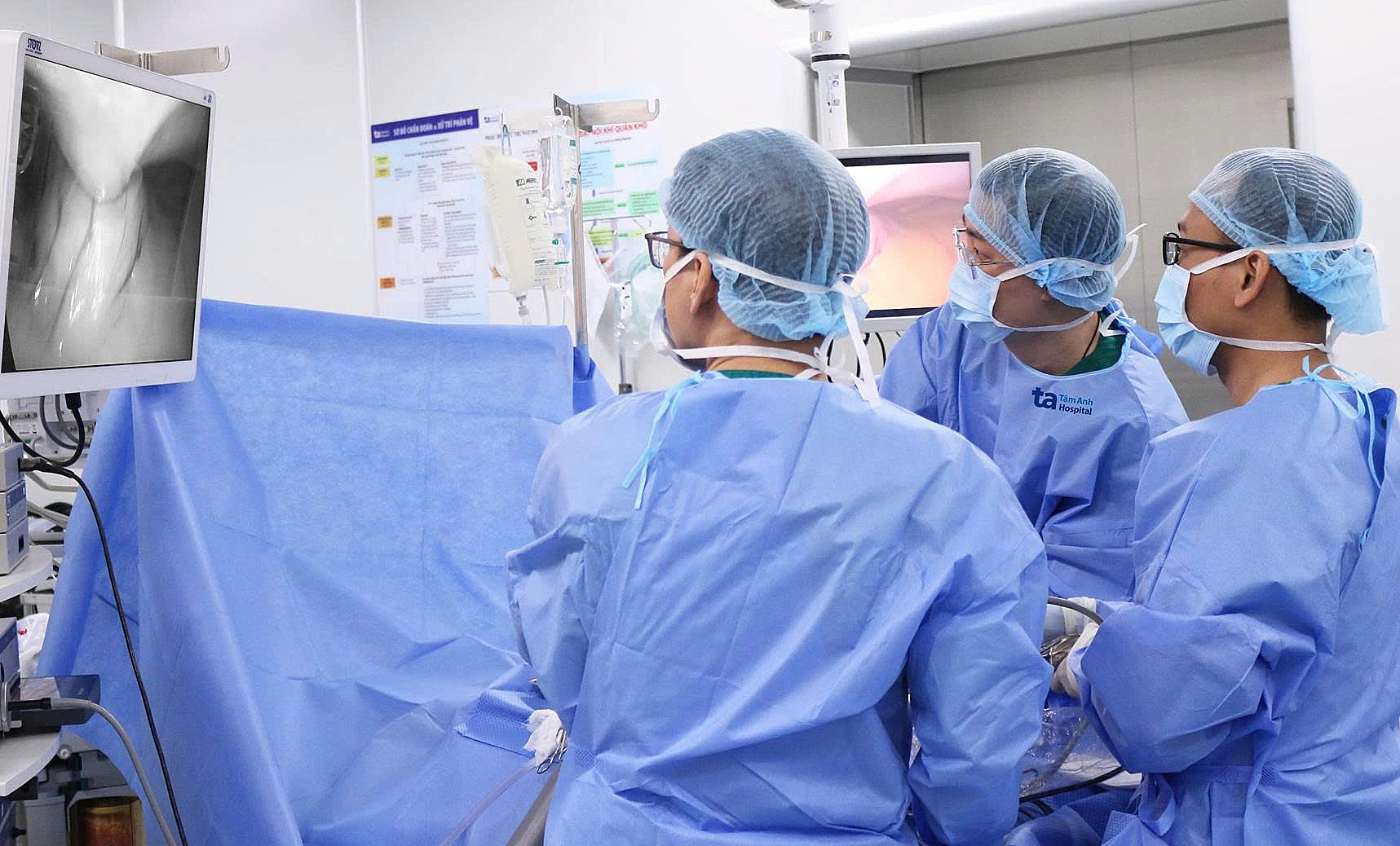 |
Doctor Cong Khanh (center) performing endoscopic surgery to remove pancreatic stones for Hong. Photo: Tam Anh General Hospital |
After surgery, the patient recovered well, experienced significant pain reduction, could consume liquid food, and was discharged after 5 days.
Pancreatic stones form due to various causes, most commonly as a complication of chronic pancreatitis. Additionally, gallstones can contribute to pancreatic stone formation due to the close anatomical proximity of the common bile duct and the pancreatic duct. When gallstones migrate and cause obstruction, pressure within the pancreatic duct increases, leading to stone formation. Prolonged calcium metabolism disorders also increase the risk of mineral deposition and stone formation in the pancreas.
Common symptoms of chronic pancreatitis include bile duct obstruction, jaundice, cholangitis, infection, or the formation of pancreatic pseudocysts. The disease causes persistent pain, risks gradual destruction of pancreatic tissue, impairs the organ's digestive and endocrine functions, and increases cancer risk.
Doctor Khanh advises patients to seek timely treatment upon discovering stones. Delaying surgery not only reduces treatment effectiveness but also allows the condition to worsen, making surgical intervention more difficult.
Quyen Phan
*Patient's name has been changed
| Readers can send questions about digestive diseases here for doctors to answer. |