Cancer remains a daunting challenge for public health. Nutrition expert Cao Man Man from Taiwan (China) warns that the most frightening aspect of cancer is not its difficulty to treat, but rather late detection.
Among these, six types of cancer exhibit extremely subtle initial symptoms. By the time the body signals a warning, the disease has often progressed to a moderate or late stage, losing the optimal window for treatment.
Colorectal cancer
In its early stage, colorectal cancer is easily mistaken for common conditions such as constipation, bloating, hemorrhoids, or general digestive disorders. Abnormalities are often only detected when distinct symptoms like bloody stools, weight loss, or anemia manifest.
Liver cancer
The liver contains very few pain-sensing nerves. Consequently, even as a tumor grows, patients may not experience pain. By the time symptoms like fatigue, loss of appetite, weight loss, or jaundice appear, the disease has often progressed beyond its earliest stage.
Pancreatic cancer
Pancreatic cancer is often dubbed one of the "kings of cancer." Due to its deep location within the abdominal cavity, early-stage symptoms are subtle. When issues such as back pain, loss of appetite, weight loss, or abnormal blood sugar levels emerge, most patients have already progressed to a late stage.
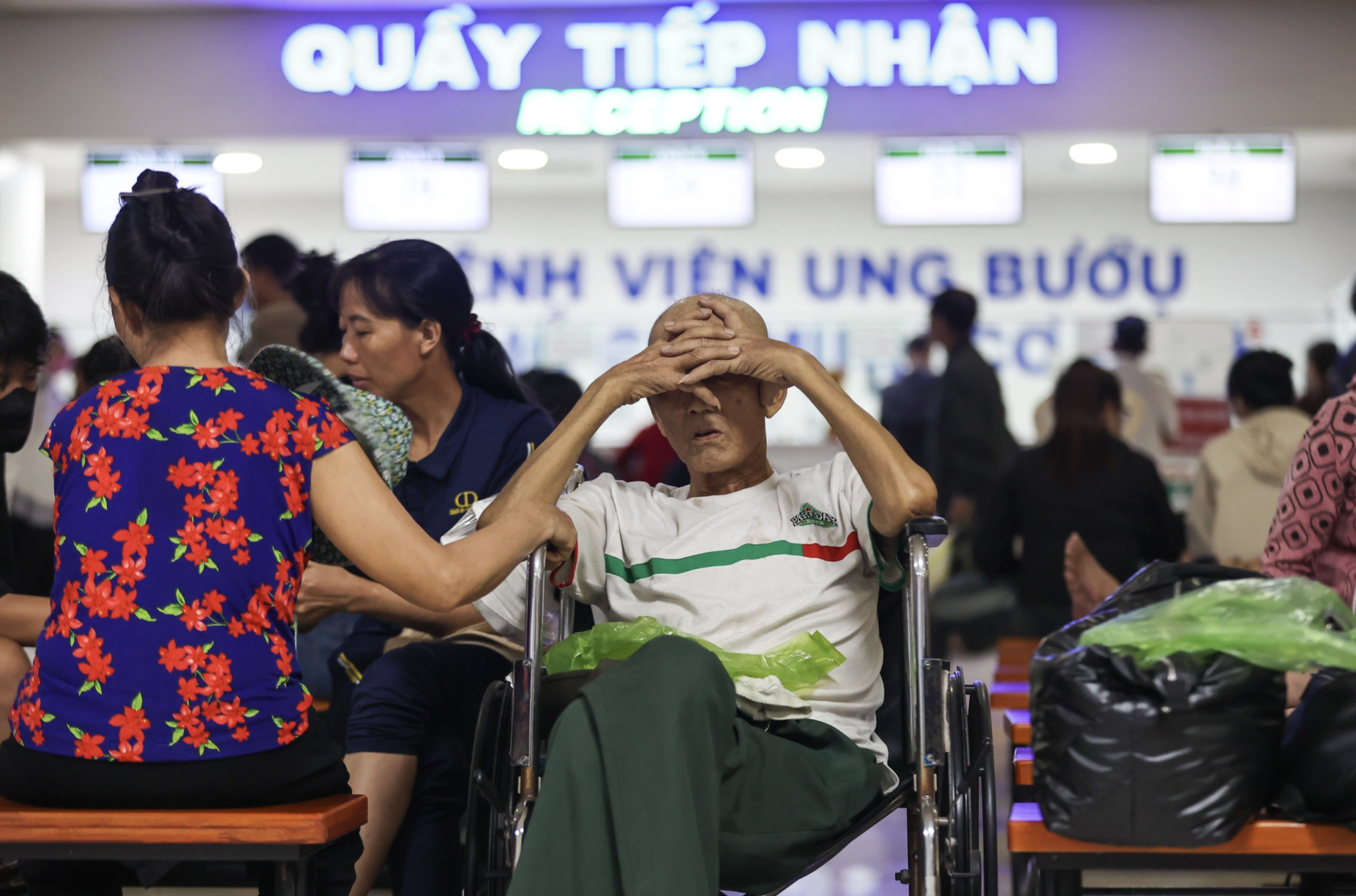 |
Patients awaiting examination at TP HCM Oncology Hospital. Photo: Quynh Tran
Ovarian cancer
Ovarian cancer is often likened to a "silent killer." In its early stage, it may only cause vague symptoms such as bloating, frequent urination, dull pelvic pain, or indigestion, making it easily mistaken for common gastrointestinal or gynecological conditions.
Lung cancer
Lung cancer has one of the highest mortality rates. Many patients have no symptoms at all in the early stage. By the time persistent cough, chest pain, shortness of breath, or coughing up blood appear, it may already be too late.
Notably, even non-smokers are at risk due to factors like air pollution, cooking fumes, or family history.
Breast cancer
Breast cancer has the highest incidence rate among women. Many early-stage cases cause no pain, leading them to be overlooked. If a lump in the breast, an inverted nipple, abnormal discharge, or changes in breast shape are detected, immediate medical examination is necessary.
Expert Cao Man Man emphasizes that early cancer detection offers patients more treatment options and significantly higher survival rates. While no single food can guarantee 100% protection against cancer, extensive studies show that long-term dietary habits are closely linked to disease risk.
To prevent cancer, it is advisable to minimize consumption of processed meats, fried foods, refined sweets, sugary drinks, trans fats, charred grilled foods, and excessive alcohol. Instead, the expert recommends increasing intake of eight healthy food groups, including: dark green vegetables, cruciferous vegetables, lycopene-rich foods, berries, nuts and seeds, soy products, whole grains, and healthy fats.
Finally, she emphasizes that cancer is closely linked to lifestyle, encompassing diet, weight management, exercise habits, smoking, and alcohol consumption. Regular health screenings, a balanced diet, and consistent exercise are the golden keys to effectively reducing cancer risk.
My Y (According to TVBS)