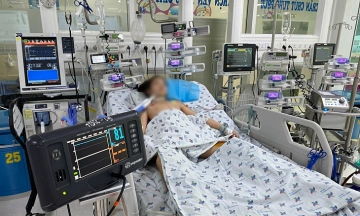
According to Dr. Nguyen Xuan Duy, a Master of Science from the Cardiology Department at Tam Anh General Hospital Hanoi, Mr. Vu was diagnosed with triple-vessel coronary artery disease. This condition involves significant atherosclerotic narrowing in all three major coronary arteries that supply the heart. Untreated, such severe and diffuse calcified coronary narrowing can lead to heart failure, arrhythmias, myocardial infarction, and sudden cardiac arrest. Mr. Vu's medical history included hypertension and dyslipidemia.
The medical team performed angioplasty and stenting in critical narrow segments of the three main coronary arteries to restore blood flow to his heart muscle. Concurrently, Mr. Vu received optimal medical treatment, including anti-platelet medications and blood pressure control.
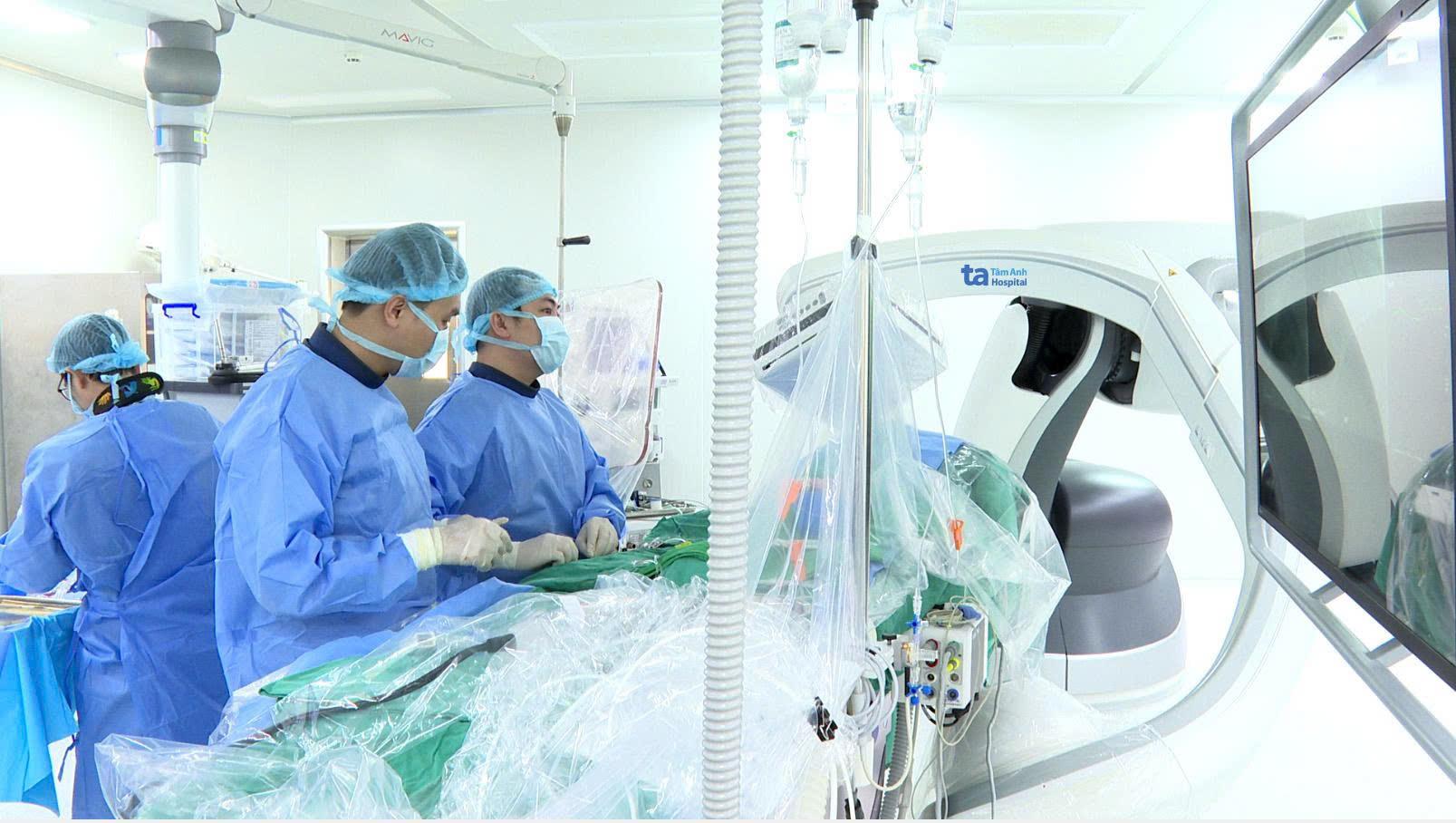 |
The medical team performing coronary revascularization for the patient. *Photo: Tam Anh General Hospital*
Following the intervention, Mr. Vu's chest pain resolved, and he recovered rapidly, being discharged after 5 days. He must adhere to his prescribed medication regimen, follow guidelines for managing blood pressure and blood lipids, maintain a low-salt diet, and limit saturated fats. Patients are advised to engage in gentle exercise and attend regular follow-up appointments for effective treatment monitoring.
Triple-vessel coronary artery disease is a severe condition, as it places a larger area of the heart muscle at risk of ischemia. It commonly affects individuals with chronic cardiovascular risk factors, including hypertension, dyslipidemia, diabetes, smoking, or a family history. The atherosclerotic process often progresses silently for years. Symptoms only become apparent when the vessel lumen is severely narrowed or atherosclerotic plaques become unstable. Many cases are diagnosed only after the heart muscle has already sustained damage.
Treatment approaches depend on the complexity of the lesions, left ventricular function, and co-existing conditions. Coronary artery bypass graft surgery was previously the preferred choice for many patients with triple-vessel coronary artery disease. However, numerous cases are now effectively treated with stenting, a minimally invasive procedure that promotes rapid recovery.
Dr. Duy advises middle-aged individuals, particularly those with underlying conditions such as hypertension, dyslipidemia, or diabetes, to undergo regular cardiovascular screenings. Patients experiencing chest pain, especially if it worsens with exertion or is accompanied by shortness of breath, should seek prompt medical attention. Early detection and coronary revascularization, before widespread heart muscle damage occurs, can significantly reduce the risk of myocardial infarction and heart failure.
Ly Nguyen
*Patient's name has been changed
| Readers can submit questions about cardiovascular disease here for doctors to answer. |