Answer:
The timing of seasoning does not determine the amount of salt the body absorbs. The most important factor remains the total amount of salt and sodium-containing seasonings used throughout the day.
For individuals who need to limit salt, such as those with high blood pressure or kidney disease, seasoning at the end of the cooking process, just before eating, can be a helpful tip. When seasoning early, salt has time to penetrate deep into the food, making the salty taste less noticeable. Conversely, adding a small amount of seasoning when the food is nearly done concentrates the salt more on the food's surface, directly stimulating taste receptors. This enhances the salty sensation, making the dish flavorful even with less salt.
However, one should not assume that seasoning at the final stage of preparation automatically leads to lower salt consumption. If you use a lot of salt, fish sauce, soy sauce, or other sodium-containing seasonings during preparation, the total sodium intake will still be high.
You can try several tips to reduce salt in meals, such as gradually decreasing the amount of salt when cooking to allow your taste buds to adapt, rather than cutting back too quickly. Add a portion of the seasoning at the end of the dish to make the salty flavor more prominent, instead of adding it all at the beginning. Additionally, increase the use of other aromatic and flavorful spices and seasonings like pepper, ginger, garlic, onion, chili, lemon, vinegar, or various herbs to make dishes rich in flavor without relying too heavily on salt. When using packaged foods, read the sodium information on the label and prioritize products with lower sodium content.
Overall, adding salt at the beginning or end of the cooking process does not automatically determine your salt intake. If your goal is to reduce salt, you should control the total amount of sodium-containing seasonings in food throughout the day. Within this strategy, adding a moderate amount of seasoning at the end of cooking can make the salty taste clearer, thereby helping to reduce the amount of seasoning needed while maintaining a flavorful dish.
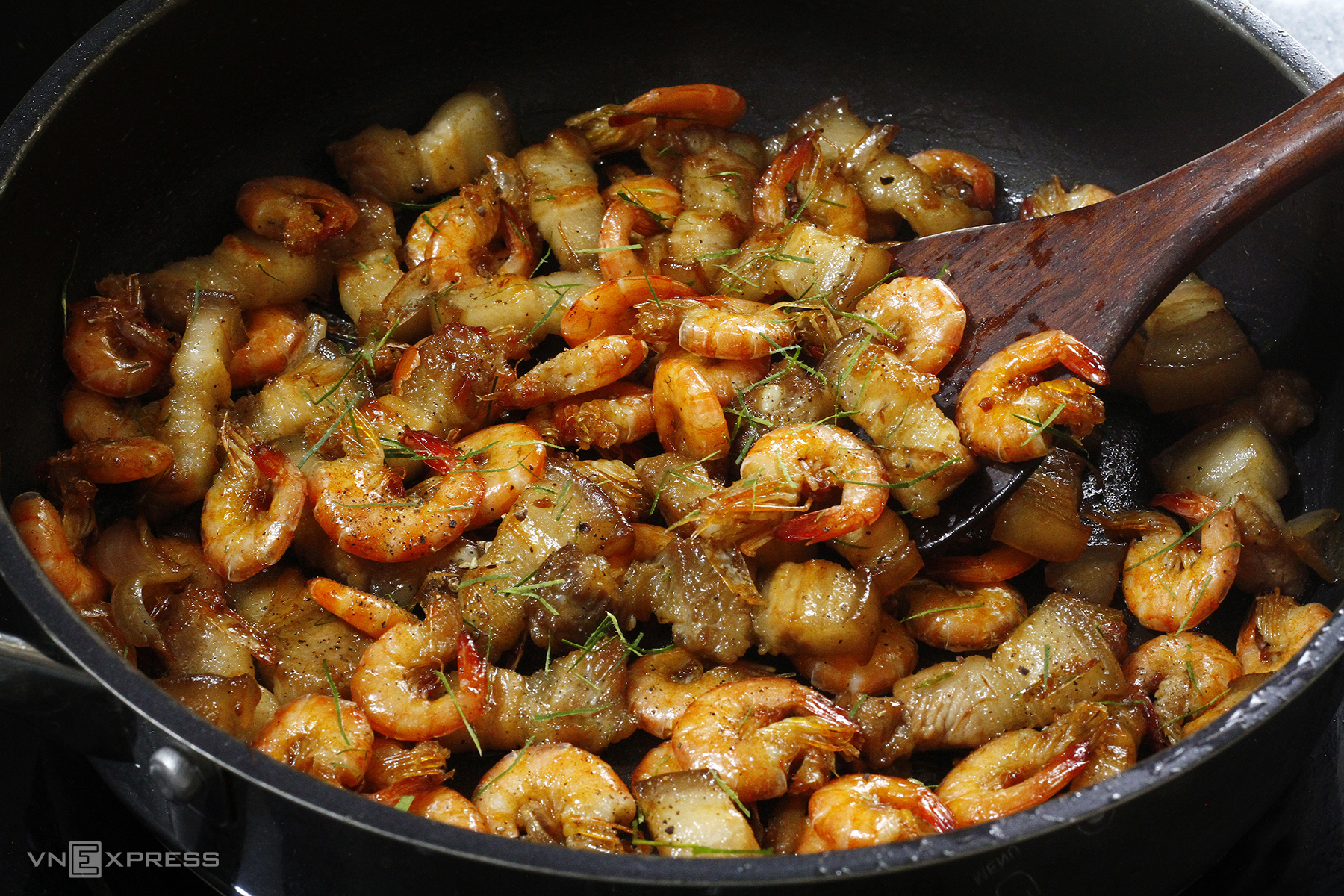 |
Adding salt at the end of cooking, just before eating, can be a helpful tip to reduce salt intake. Photo: Bui Thuy |
Nutritionist Nguyen Thi Ha
Bachelor of Nutrition, Hanoi Medical University