Mr. Van, 52, sought medical attention after experiencing dull chest pain for over a month. Doctors at Tam Anh General Hospital in Hanoi diagnosed him with a heart attack he was unaware of, confirming previous myocardial damage.
His electrocardiogram (ECG) showed evidence of myocardial injury beyond the acute stage. Blood tests revealed a slightly elevated Troponin T level, and some areas of his heart muscle exhibited reduced movement.
Dr. Nguyen Xuan Duy, from the Cardiology Department, explained that some small regions of the heart muscle had permanently reduced function, consistent with "scars" from an old heart attack. However, a significant portion of the affected myocardium regained normal movement after a low-dose infusion administered during an ultrasound. Mr. Van's medical history included type 2 diabetes, dyslipidemia, and adrenal insufficiency.
According to Dr. Duy, some patients experience heart attacks that do not present with severe symptoms but rather progress silently, often against a backdrop of chronic coronary artery disease. When a coronary artery becomes completely blocked, a section of the heart muscle undergoes necrosis, forming scar tissue. Adjacent areas then enter a state known as "hibernating myocardium"—still viable but contracting weakly due to insufficient blood supply. This is a self-protective mechanism where the heart muscle reduces its activity, akin to "hibernation," leading to symptoms like dull chest pain. If left undetected and untreated, prolonged myocardial ischemia can lead to irreversible damage and cell death, increasing the patient's risk of chronic heart failure and cardiac arrhythmias.
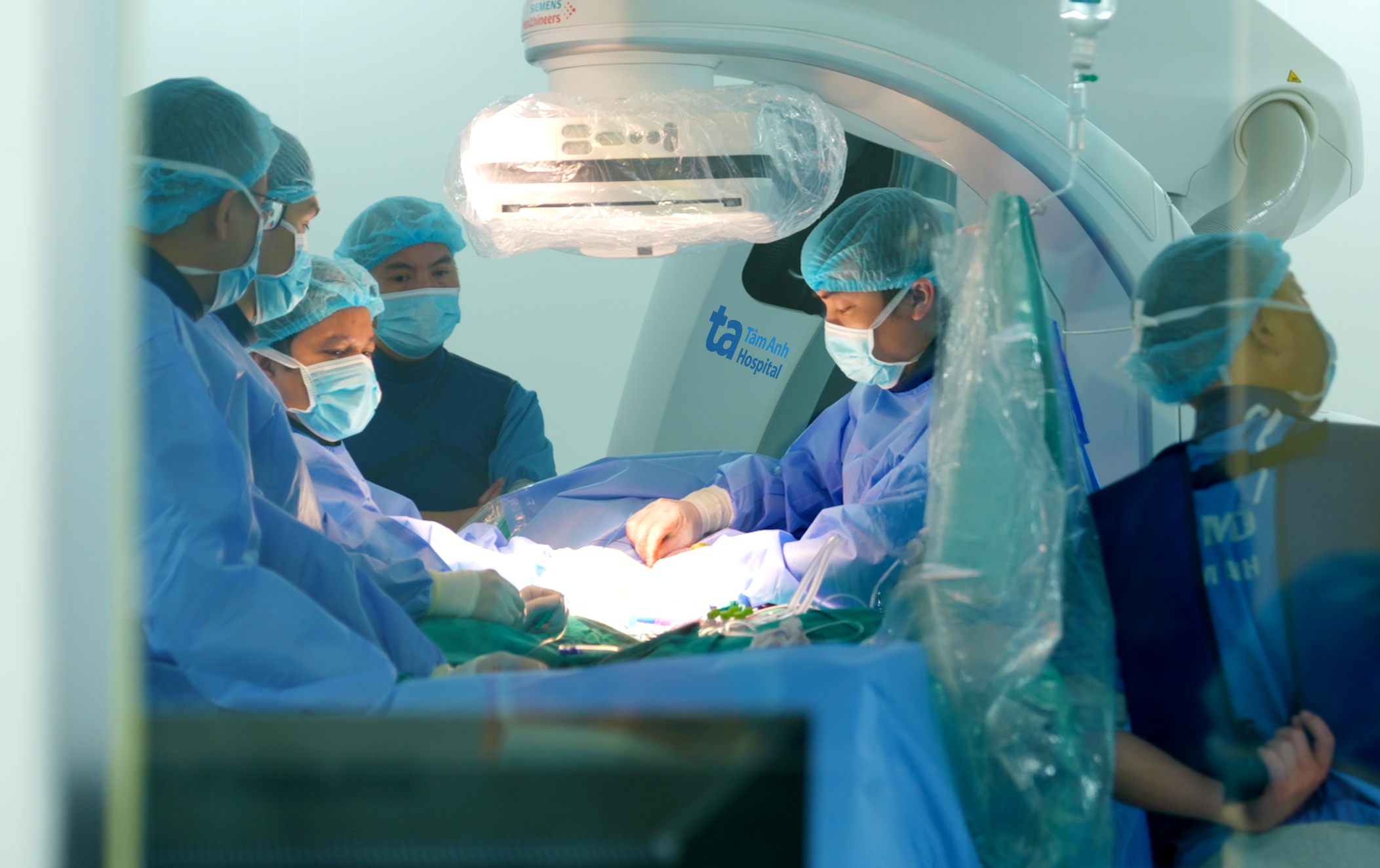 |
The intervention team places stents for the patient. *Photo: Tam Anh General Hospital* |
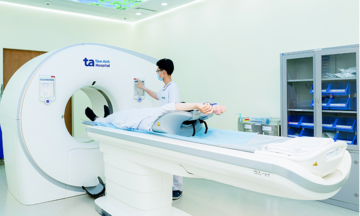
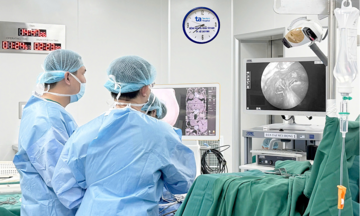
Doctors then ordered a computed tomography (CT) scan to precisely evaluate the narrowed and blocked section of the coronary artery. Based on the imaging results, the medical team successfully placed two stents in the damaged segment of the left anterior descending artery, guided by intravascular ultrasound. Following the intervention, Mr. Van's angina symptoms significantly improved, and he was subsequently discharged.
Dr. Duy strongly advises individuals with cardiovascular risk factors, such as diabetes, dyslipidemia, hypertension, or those who experience persistent chest pain or tightness, not to be complacent. Early medical examination and a comprehensive assessment using modern diagnostic imaging techniques are crucial for timely detection and appropriate treatment of heart conditions.
Ly Nguyen
| Readers can submit questions about cardiovascular health here for doctors to answer. |