Doctor Shen Mingzhong, a specialist in Rheumatology and Immunology from Trung Quoc, stated that small, scattered depressions on the nail surface, resembling pinpricks (nail pitting), are not typical signs of calcium deficiency. Instead, these are residual effects of inflammation in the nail matrix during development, indicating immune system problems and associations with conditions such as psoriasis or alopecia areata. If accompanied by joint pain, patients should seek early consultation with a dermatology or musculoskeletal-immunology specialist.
What is nail pitting?
Doctor Shen Mingzhong explained that a normal nail surface is smooth. Nail pitting occurs when nails develop shallow or deep pits of varying sizes, potentially spreading across multiple fingers, giving them a thimble-like appearance. This condition reflects an affected keratinization process during nail formation due to an inflammatory response, and it is not caused by calcium or vitamin deficiencies.
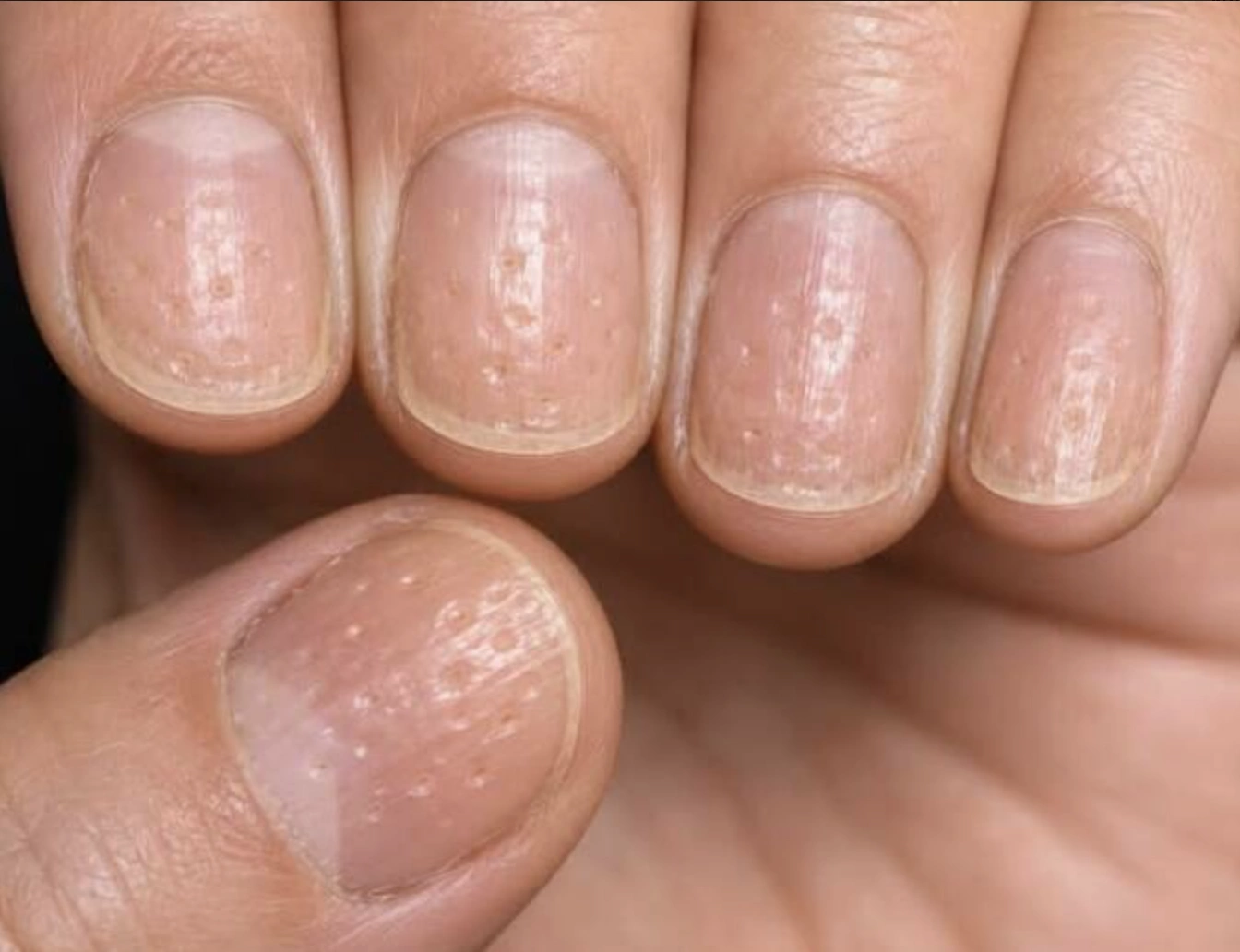 |
The phenomenon of nail pitting. Photo taken from Doctor Shen Mingzhong’s Facebook page. |
Related conditions for nail pitting
Doctor Shen Mingzhong noted that psoriasis is the most common condition associated with nail pitting. Approximately 40-50% of psoriasis patients experience nail changes; this rate increases to 70-80% in those with psoriatic arthritis. Additionally, alopecia areata, atopic dermatitis, eczema, and a few connective tissue diseases can also cause similar symptoms. However, nail pitting does not definitively mean a psoriasis diagnosis; doctors must also consider skin, scalp, and joint conditions, along with family history, for an accurate conclusion.
Treatment methods
Doctor Shen Mingzhong explained that the treatment goal is not merely cosmetic nail restoration, but fundamentally to control the underlying inflammatory condition. Depending on severity, medical protocols include:
- Using topical corticosteroids or vitamin D derivatives.
- Direct corticosteroid injections into the nail matrix (for specific cases).
- Light therapy (phototherapy).
- Oral immunosuppressants or biological drugs.
Doctor Shen Mingzhong emphasized that to prevent the immune system from entering prolonged chronic inflammation, clinical assessments may include additional risk factors:
- Imbalance in the gut microbiome.
- Degree of vitamin D deficiency.
- Imbalance ratio between omega-3 and omega-6.
- Chronic infections or periodontal disease.
- Sleep disorders, psychological stress, and cortisol hormone imbalance.
- Metabolic inflammation, such as insulin resistance and obesity.
- Supplementary assessment of micronutrients (zinc, selenium, magnesium), leaky gut syndrome, food intolerance levels, or allergy history.
Doctor Shen Mingzhong advised that fingernails are a mirror reflecting health, sometimes revealing early warning signs of immune inflammation even before the skin. When nails show pitting accompanied by joint pain, morning stiffness, a scaly scalp, red, flaky patches on elbows or knees, thickened nails, or nail detachment, patients should proactively seek consultation with a dermatology or immunology specialist for timely diagnosis and treatment.
My Y (According to LTN)