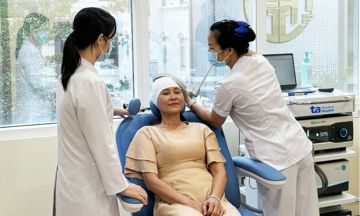
Dr. Le Phuc Lien, Head of the Female Urology Unit, Urology - Nephrology - Andrology Center, Tam Anh General Hospital, TP HCM, explained that while pyuria in men often stems from sexually transmitted infections, in women it is commonly due to a urethral diverticulum. This diverticulum, located in the anterior segment near the external urethral meatus, can connect to the urethral lumen via a small opening. Urine collects there instead of exiting, leading to infection.
This condition affects about 1-6% of women globally, making diagnosis challenging. If prolonged, it can lead to bacterial growth, causing infection and pyuria in some cases. According to Dr. Lien, even with antibiotic treatment, recurrence is common, as seen in Mai's case.
 |
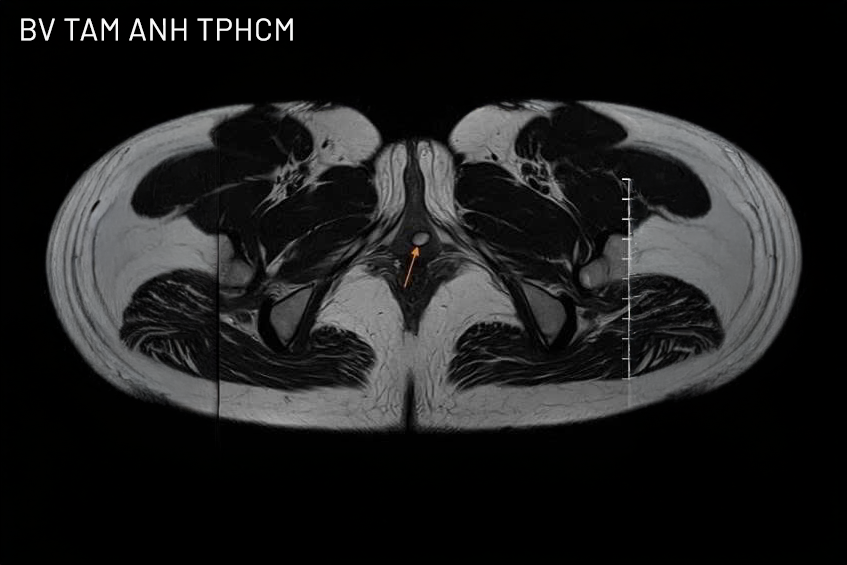
Mai's urethral diverticulum on an MRI scan. *Photo: Tam Anh General Hospital* |
Doctors performed an endoscopic resection of the anterior urethral diverticulum, avoiding damage to the urethra and preventing future urethral stricture. This minimally invasive technique is used for small diverticula located in the anterior segment with a clear communication between the diverticular neck and the urethral lumen.
After surgery, Mai had a urinary catheter inserted to aid urethral healing and prevent adhesion; the catheter was removed after 7 days. Doctors advised her to drink plenty of water, avoid intercourse for 4-6 weeks post-surgery, and attend follow-up appointments to ensure the infection does not recur.
 |
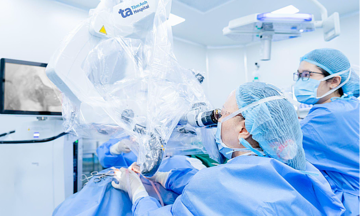
Dr. Lien (center) with the surgical team performing urethral diverticulectomy on Mai. *Photo: Tam Anh General Hospital* |
Dr. Lien stated that the exact cause of urethral diverticulum is unclear, but it may be related to congenital or acquired factors. Symptoms include: painful urination, pyuria, urinary tract or bladder infections, painful intercourse, or a mass in the vaginal wall. Some cases are asymptomatic, requiring diagnosis through clinical examination, urethroscopy, cystoscopy, ultrasound, or MRI.
Untreated urethral diverticula can lead to recurrent infections and antibiotic resistance. If large, they can cause obstruction, pain in the anterior vaginal wall during intercourse, or hinder movement. Therefore, early detection and treatment are crucial. In early stages, medical treatment may suffice. However, severe infections and larger diverticula require surgery.
Currently, there are no specific preventive measures for urethral diverticulum. Women should maintain a healthy diet, exercise, drink enough water, avoid holding urine, and urinate after intercourse to flush out invading bacteria. Women experiencing unusual symptoms should seek timely examination and treatment at a hospital with a specialized female urology department, and undergo regular check-ups every 6-12 months for early detection.
By Ha Thanh
*Patient's name has been changed.