Master of Science, Doctor, Level II Specialist Duong Quang Huy, Head of the Andrology Unit at Tam Anh General Hospital - District 8, stated that the "golden window" for vasectomy reversal is under five years, with a success rate of nearly 100%. After 15 years, the recanalization rate gradually decreases to 70-80%.
In cases like Mr. Quan's, where the vas deferens has been blocked for 30 years, the testicles still produce sperm. However, prolonged high pressure within the vas deferens causes the tiny tubules in the epididymis to dilate significantly, which can lead to fibrosis and secondary blockages, complicating the reversal procedure. Additionally, men over 50 experience a notable decrease in testosterone levels and increased sperm DNA fragmentation. Therefore, even a successful vasectomy reversal does not guarantee the ability to conceive naturally.
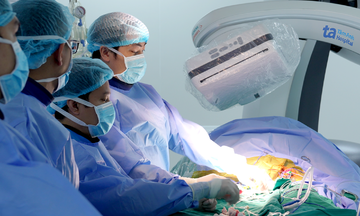
Doctors prescribed a "2-in-1" surgical approach for Mr. Quan, combining microsurgical epididymal sperm aspiration (MESA) with vasectomy reversal. Using a microsurgical microscope, the doctors located epididymal tubules containing living sperm, aspirated them, and transferred them to the lab. There, embryologists screened and selected high-quality sperm, collecting a sufficient quantity for one in vitro fertilization (IVF) cycle, which was then cryopreserved.
For the vas deferens, doctors removed the fibrotic scar tissue from the previous vasectomy. Given the 30-year blockage, Dr. Huy observed a new obstruction point below the original vasectomy site during examination, resulting in fluid devoid of sperm, including dead sperm. The surgical team decided to proceed with a microsurgical vasoepididymostomy. This is a complex and advanced technique for restoring flow, as the anastomosis is only one to two hair strands in size. After more than 120 minutes, the surgery was successful, and Mr. Quan was discharged one day post-operation.
It is anticipated that after approximately three to six months, new sperm will be produced, clearing out any old, stagnant sperm. This will give Mr. Quan an opportunity for natural conception. Should natural pregnancy not occur, doctors will use the cryopreserved sperm samples for intracytoplasmic sperm injection (ICSC) to create embryos.
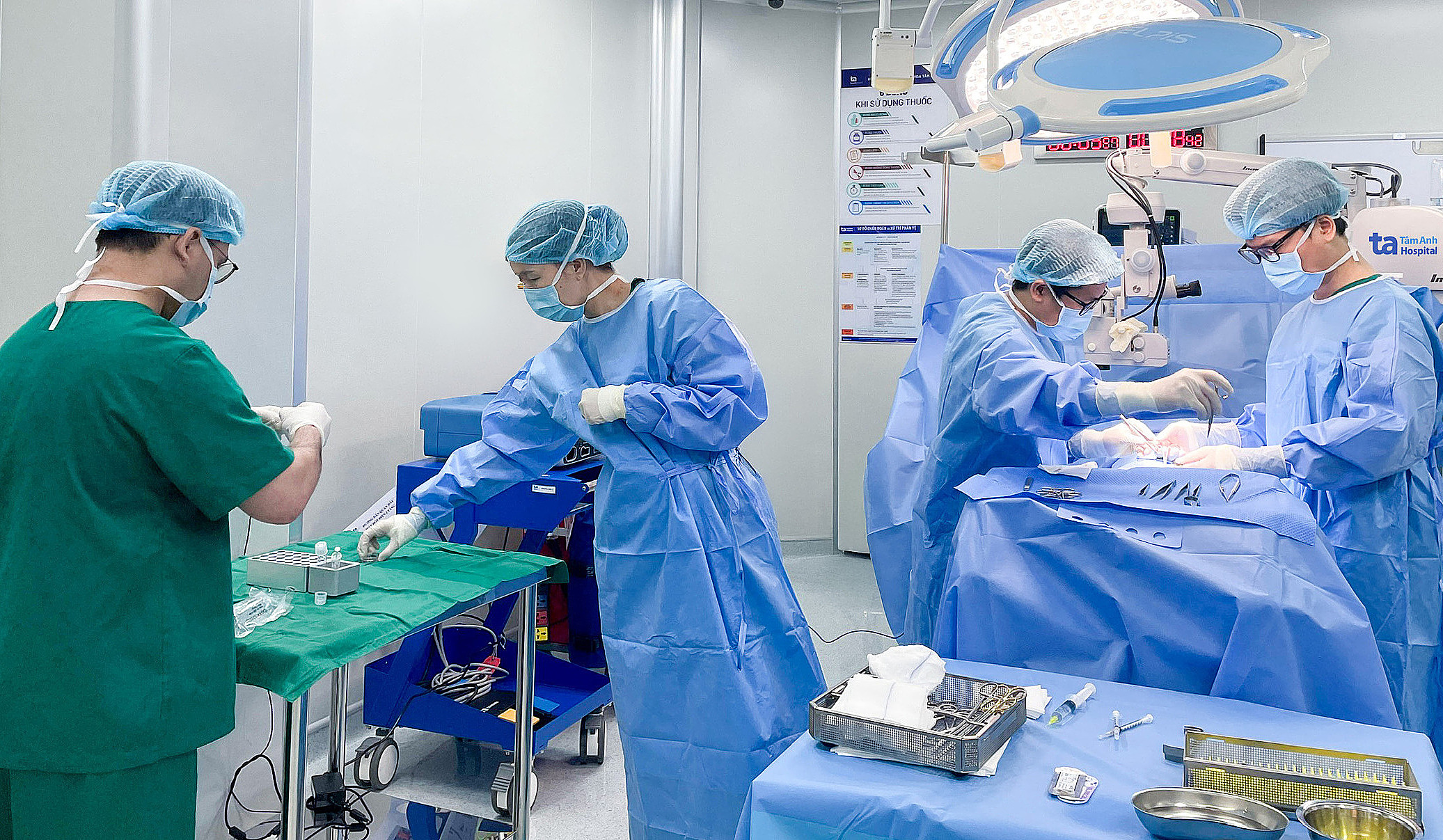 |
Dr. Huy (second from right) aspirates sperm from Mr. Quan's epididymis and transfers it to the lab. Photo: Tam Anh General Hospital. |
Vasectomy is an effective and safe contraceptive method for men, boasting a high success rate and fewer complications compared to tubal ligation in women, without affecting sexual function. While vasectomy reversal surgery is possible, doctors advise men to consider it carefully, as reversal requires more complex techniques, and its success rate depends on the time elapsed between the original vasectomy and the reversal. The longer the interval, the lower the success rate. Reversal procedures should be performed at hospitals equipped with fertility support centers, which facilitate sperm examination and cryopreservation.
Even with a successful reversal, men may still face challenges conceiving due to reduced sperm quality after many years of blockage. At Tam Anh General Hospital, for vasectomy cases exceeding 10 years, doctors often combine the reversal with prophylactic sperm retrieval during the surgery. This approach provides patients with additional opportunities for future conception, minimizing the need for multiple interventions that could impact their health.
Dinh Lam
*Patient's name has been changed