Associate Professor Doctor Nguyen Manh Khanh, the hospital's Deputy Director, performed the surgery on 2/10. Post-operation, the patient is stable and is undergoing monitoring and rehabilitation.
The patient suffered from osteoarthritis in both knees and had undergone various conservative treatments, including joint injections and physical therapy, without improvement. Pain and restricted movement significantly impacted his daily activities.
This surgery was broadcast live from the hospital's operating room to a conference hall during the "Application of Science and Technology in Orthopedic Trauma" event on 2/10. It served as a demonstration, allowing doctors and experts to learn and share practical experiences. Robot technology for knee replacement has been used globally for over 10 years, but it remains a new technique in Vietnam.
Associate Professor Khanh stated that the robot assists surgeons in planning the operation based on each patient's anatomical structure. It helps perform bone cuts and artificial joint placement with high accuracy. The goal of the surgery is to restore mechanical and joint function close to normal physiology, reduce pain, enable early patient mobility, and potentially shorten hospital stays.
However, not all knee replacement cases are suitable for robot assistance. Patients with severe joint deformities, those presenting at a late stage, or individuals with complex injuries from trauma or previous surgeries may not be eligible for this technique.
"A robot cannot replace the surgeon", Associate Professor Khanh said, emphasizing that doctors retain the decisive role in assessing injuries, selecting treatment options, and managing any situations that arise during surgery.
Associate Professor Khanh noted that the market for robotic knee surgery currently offers various equipment lines. He expressed hope that Vietnam could research and produce robots suitable for the physical characteristics of Vietnamese people and within patients' affordability.
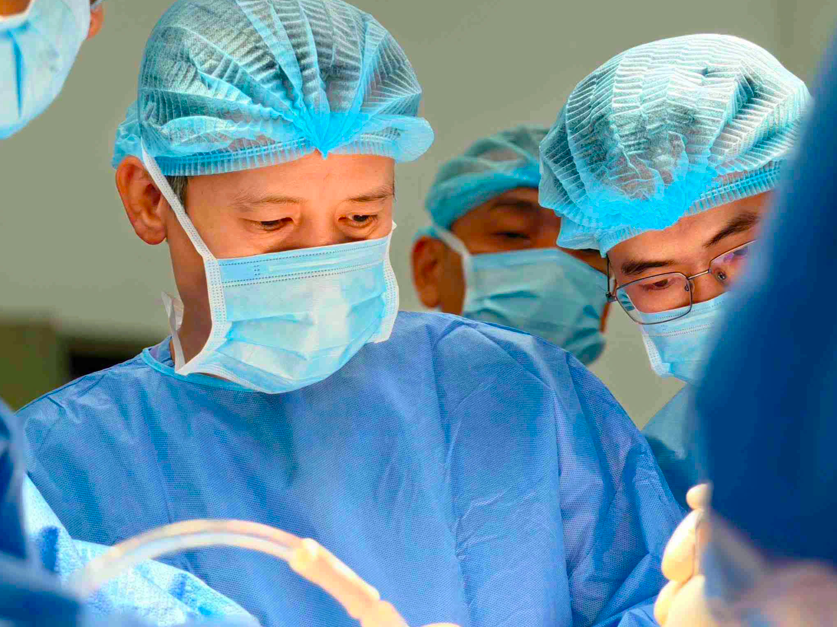 |
Associate Professor Doctor Nguyen Manh Khanh performing a hip replacement. Photo: Thai Ngoc
At Viet Duc Hospital, more than 50,000 orthopedic trauma and spinal surgeries are performed annually. These represent a significant cost burden for patients and the health insurance fund. Therefore, medical professionals constantly collaborate on research to apply new techniques and materials, aiming for the most effective and economical treatment for patients.
Knee osteoarthritis is a disease that affects all joint structures, with the knee being one of the most common locations. The condition can reduce mobility and have a long-term impact on quality of life.
Doctor Nguyen Van Hoc, Deputy Head of the Department of Upper Limb Surgery and Sports Medicine at Viet Duc Friendship Hospital, explained that common symptoms include pain when walking, climbing stairs, or squatting; morning stiffness lasting less than 30 minutes; a grinding sensation during movement; and limited range of motion. In severe cases, patients may experience pain even at night.
Treatment depends on the degree of degeneration, age, and activity needs. Options may include joint unloading, physical therapy, medication, certain injection methods, or surgery. Knee replacement is usually considered for individuals with severe osteoarthritis, especially grade 3-4, which causes significant pain and severely affects mobility.