This investment strategy was outlined by Ngo Chi Dung, Chairman of the Board of Directors and General Director of Vietnam Vaccine Company (VNVC), during his speech on the roadmap for high-tech vaccine production development. He spoke at the Vietnam - France High-Level Conference on Strategic Technology Implementation in Healthcare, held on 9/7 in Ha Noi.
According to Dung, VNVC has identified three pillars for developing vaccine production: modern manufacturing infrastructure, technology transfer, and research and development (R&D) capabilities.
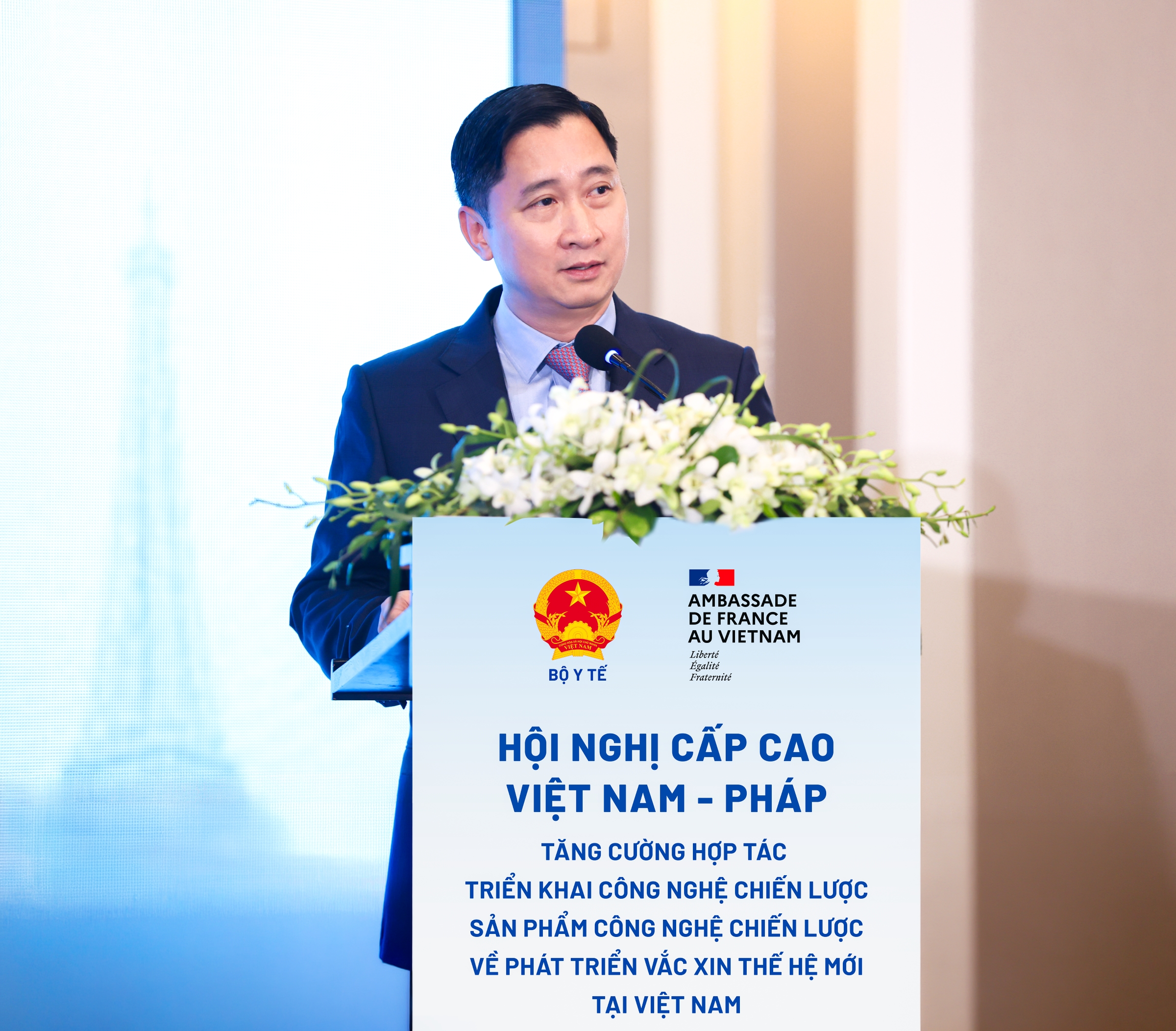 |
Ngo Chi Dung shares the roadmap for high-tech vaccine production investment at the VNVC Vaccine and Biologicals Factory. *Photo: Thanh Trung* |
Regarding the first pillar, VNVC signed a contract in February to purchase a high-tech vaccine production line. The factory is expected to complete construction in 2027, with installation, validation, and operational production scheduled for 2028. By 2029, two to three high-tech vaccine products are projected to be manufactured and commercialized in Vietnam. From 2030 onwards, an additional new product will be commercialized each year, gradually increasing the domestic production rate of important vaccines for children and adults to around 50% in the initial phase.
Phase one of the project involves an investment of 100 million USD, aiming to meet international standards such as WHO-GMP, EU-GMP, and FDA cGMP. The factory will incorporate modern production lines and technologies, including: robotic applications, no touch transfer technology for sterile material handling, and steam sterilization. These advancements help control cross-contamination and ensure precise dosing, minimizing direct human intervention in sensitive stages. The VNVC factory can formulate various product types, such as solution vials, lyophilized vials, syringes, and auto-injectors, with a design capacity of 120 million doses per year, meeting both domestic demand and export needs.
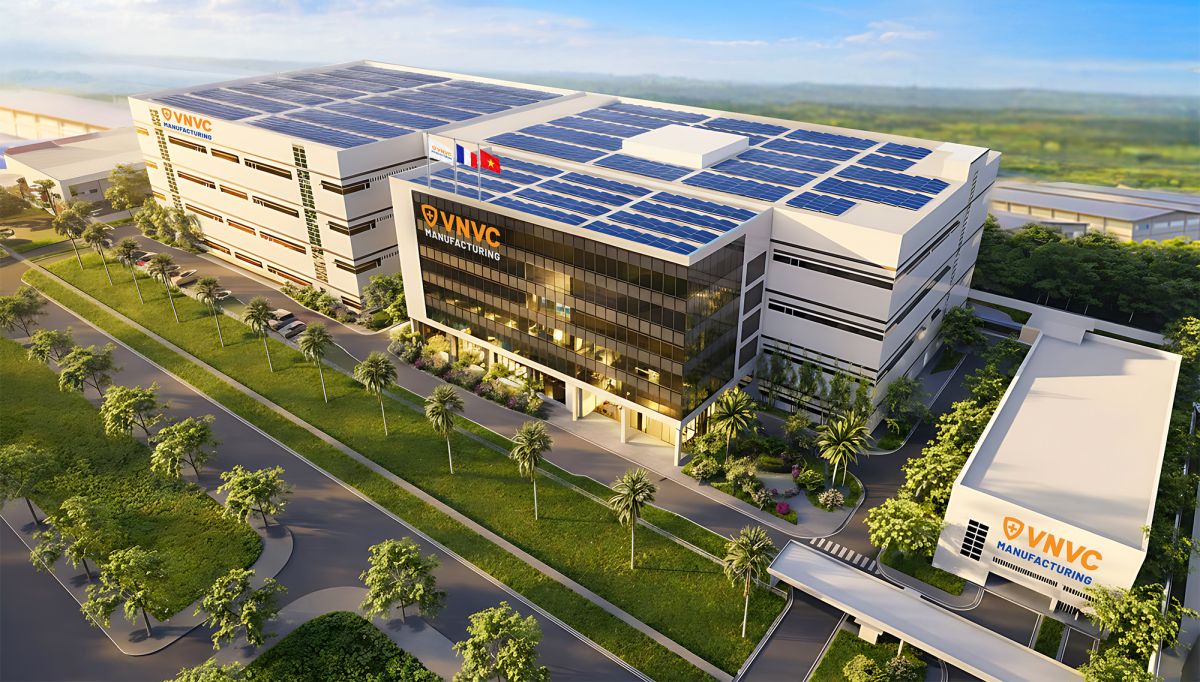 |
The VNVC Vaccine and Biologicals Factory is expected to complete construction in 2027, with installation, validation, and production operations in 2028, and vaccine commercialization starting in 2029. *Photo: VNVC* |
For the second pillar, VNVC plans to collaborate with leading global vaccine manufacturers to facilitate technology transfer. This involves integrating transfer with personnel training, operational management of production lines, quality control, and gradually expanding into upstream technologies.
VNVC’s priority products include new generation influenza vaccines, six-in-one combination vaccines, new generation meningococcal vaccines, HPV, pneumococcal, and RSV vaccines. These vaccine groups address significant needs in proactive disease prevention, expanded immunization programs, and ensuring health security. A report from the Department of Science, Technology and Training, Ministry of Health, also outlines a research roadmap for new prophylactic vaccines such as influenza, pneumococcal, six-in-one, and therapeutic cancer vaccines.
According to VNVC, vaccine production extends beyond simply bringing production lines to Vietnam. This process requires a step-by-step approach, from technology transfer and personnel training to operation, quality control, and ultimately, mastering the technology. This approach allows domestic enterprises to integrate deeper into the vaccine production value chain, moving beyond mere processing or packaging. This will significantly reduce the cost of new generation vaccines, thereby increasing the availability of vaccines for the population.
Regarding research and development infrastructure, VNVC aims to master high-tech vaccine platforms, such as mRNA vaccines, and to be prepared for potential cancer treatment vaccines. The VNVC Immunization System, in collaboration with Tam Anh General Hospital, currently operates 66 GCP (good clinical practice)-compliant research sites. These sites are capable of conducting vaccine clinical trials across all four phases, from phase 1 to phase 4, in the fields of vaccines, biologicals, pharmaceuticals, and new technologies from leading global pharmaceutical and vaccine companies.
In the future, the company plans to expand its R&D infrastructure by investing in a pre-clinical testing laboratory for animals, adhering to GLP (good laboratory practice) and AAALAC (Association for Assessment and Accreditation of Laboratory Animal Care International) standards. VNVC also aims to establish internationally standardized research laboratories, with the long-term goal of developing a synchronized capability chain encompassing pre-clinical and clinical research, data management, safety monitoring, and quality control.
Concurrently, VNVC intends to collaborate with international research centers, universities, and institutes, providing practical training models. The long-term objective is to develop a domestic R&D team capable of mastering platforms such as mRNA, viral vectors, recombinant proteins, DNA, and personalized vaccines for cancer treatment.
This sustainable development strategy by VNVC is introduced as the Government identifies new generation vaccines as strategic national technology products. The health sector aims to have clinical trial vaccine products and establish standards during the 2026-2027 phase. Registration and commercialization are targeted for the 2028-2030 phase. From 2030, the focus will be on commercialization, export, and expanding other vaccine types.
However, Dung notes that vaccine investment requires substantial capital, long timelines, and carries high risks. Companies must simultaneously invest in factories, technology, human resources, R&D, and quality control. Without a stable market, maintaining high-tech capabilities will be challenging.
VNVC proposes that the Government's public procurement plan for vaccines should include a stable procurement strategy for domestically produced high-tech vaccines, with specific quality standards and pricing. According to the company, this represents not just the purchase of a product, but a policy to nurture, sustain, and develop national strategic technological capabilities. This approach would allow people to access high-quality products at better costs, promote R&D, foster localization, and enhance health self-reliance.
 |
Parents bring their children to VNVC District 9 Immunization Center, TP HCM, for Japanese encephalitis vaccination. *Photo: Dieu Thuan* |
Nguyen Ngo Quang, Deputy Director of the Department of Science, Technology and Training, Ministry of Health, stated that the agency is collaborating with other ministries and sectors to submit guidelines to the Government for implementing strategic technologies and products. This includes provisions related to State procurement of strategic technologies and products. For vaccines transferred to VNVC, the company needs to coordinate closely with the Ministry of Health for inclusion in relevant lists. This would enable the company to access specific mechanisms suitable for its investment, transfer, and production processes.
A WHO representative in Vietnam suggested that for Vietnam to become a regional vaccine production hub, it needs not only factory capacity but also a comprehensive public health ecosystem. Key factors include pharmaceutical regulation, good manufacturing standards, and research and innovation.
Chi Le