Eng English
China 中国人

Eng English
China 中国人
  • News
  • World
  • Business
  • Entertainment
  • Sports
  • Law
  • Education
  • Health
  • Lifestyle
  • Travel
  • Science
  • Digital
  • Automobiles
  • Trở lại Thể thao
  • Health
Wednesday, 3/6/2026 | 10:01 GMT+7

What happens to your digestive system when you don't drink enough water?

Thirst is a late sign of dehydration, which can lead to fatigue and digestive dysfunction if prolonged.

Many people drink water only when thirsty or limit intake for weight loss. This habit harms the digestive system, according to Doctor Ho Thi Ha Phuong of Tam Anh Cau Giay General Clinic. The human body is composed of about 60% to 70% water, and the digestive system requires sufficient fluids for normal function. Water aids in saliva production, gastric fluid secretion, protection of the stomach lining, and supports food digestion and absorption. Insufficient water reduces saliva, making oral digestion less effective and increasing the stomach's contractile pressure.

The stomach lining is covered by a mucus layer that acts as a biological barrier, protecting the stomach from the corrosive effects of gastric acid. The production of this mucus layer depends on the body's water content. Chronic dehydration can weaken this protective layer, causing the lining to become irritated by acid. This irritation can lead to a burning sensation in the epigastric region (above the navel), bloating, or a dull ache after meals.
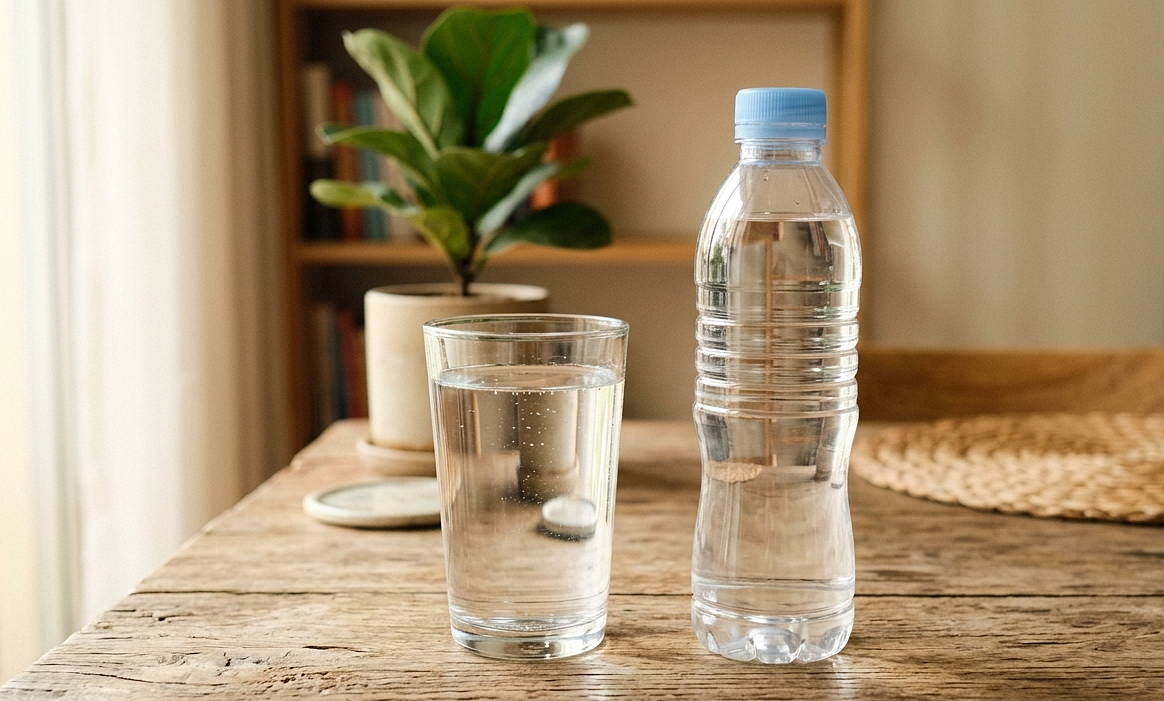
Drinking plain water helps produce saliva and supports food digestion. Illustration: AI

Water also maintains the fluidity of digestive juices, ensuring stable circulation. When the body is dehydrated, gastric fluids become more concentrated, intensifying feelings of an empty stomach or discomfort for sensitive individuals, or those with stomach ulcers or gastroesophageal reflux.

According to Doctor Phuong, insufficient water intake is a common cause of constipation. Dehydration forces the large intestine to absorb more water from stool to maintain fluid balance, making the stool dry, hard, and difficult to pass.

Doctor Phuong recommends that adults maintain an intake of about 1,5 to 2 liters of water daily, depending on their physical condition, activity level, and environmental factors. Office workers who use air conditioning continuously often experience water loss without a clear sensation of thirst. The elderly also have a slower thirst reflex than normal, making them prone to prolonged dehydration; they need to supplement more water to support stable bodily functions.

Individuals working outdoors, athletes, or those in high-temperature environments should drink more than 2 liters of water daily to compensate for fluid loss through sweat. It is advisable to drink water regularly throughout the day, in small, frequent sips, for better absorption and to avoid overwhelming the stomach.

Maintain a habit of drinking water at specific times, such as: upon waking, about 30 minutes before meals, and increasing intake during physical activity or hot weather. Prioritize plain water and limit sugary sodas, milk tea, and caffeinated beverages.

Thanh Ba

Readers can ask questions about digestive diseases here for doctors to answer
By VnExpress: https://vnexpress.net/dieu-gi-xay-voi-he-tieu-hoa-khi-khong-uong-du-nuoc-5081381.html
Tags: drinking water digestive disorders

News in the same category

Proposal to develop mobile application to rescue abused children

Proposal to develop mobile application to rescue abused children

Deputy Minister Nguyen Tri Thuc proposed developing a mobile application similar to the 111 national hotline, enabling abused and exploited children to quickly send distress signals for help.

Vietnam issues recall for two Australian functional foods over glass fragment risk

Vietnam issues recall for two Australian functional foods over glass fragment risk

The Food Safety Authority, under the Ministry of Health, has mandated the cessation of circulation for two Nature's Own functional food products, currently under recall in Australia due to the potential presence of glass fragments in their bottles.

Three dietary approaches to reduce harmful cholesterol

Three dietary approaches to reduce harmful cholesterol

Adopting a diet rich in soluble fiber, limiting unhealthy fats, and cutting down on sugary foods and beverages can significantly help in lowering ldl cholesterol.

Mistaken for asthma, a 77-year-old's persistent symptoms reveal invasive lung fungus

Mistaken for asthma, a 77-year-old's persistent symptoms reveal invasive lung fungus

Mr. Duan, 77, experienced prolonged shortness of breath, coughing, and hoarseness; when his bronchial asthma treatment showed no improvement, doctors diagnosed invasive pulmonary aspergillosis.

Human skin 'printed' in Vietnamese laboratory

Human skin 'printed' in Vietnamese laboratory

A research group from the University of Science, Vietnam National University Ho Chi Minh City, has made initial progress in developing human skin tissue using 3D bioprinting technology, opening up prospects for regenerative biomedical and therapeutic applications in Vietnam.

How hormonal imbalances lead to abdominal fat accumulation

How hormonal imbalances lead to abdominal fat accumulation

Hormonal imbalances can cause the body to accumulate fat around the abdomen, increasing visceral fat and the risk of many chronic diseases.

6 food combinations to enhance nutrient absorption

6 food combinations to enhance nutrient absorption

Combining yogurt with bananas, tomatoes with olive oil, and turmeric with black pepper can help the body absorb nutrients more effectively.

Doctor explains the concept 'five years to age one year'

Doctor explains the concept 'five years to age one year'

Not only can individuals live longer, but they can also maintain a biological age younger than their chronological age, potentially aging "one year every five years" with proper health and lifestyle management.

16 years of nocturnal enuresis

16 years of nocturnal enuresis

Nhi, 16, who suffered from a bladder control disorder, has now been successfully treated by doctors with medication combined with lifestyle adjustments.

Common mistakes in arthritis treatment

Common mistakes in arthritis treatment

Arbitrarily stopping or changing medication, limiting physical activity, or using hot oils to treat arthritis can worsen the condition.

Eng English
China 中国人
  • News
  • World
  • Business
  • Entertainment
  • Sports
  • Law
  • Education
  • Health
  • Lifestyle
  • Travel
  • Science
  • Digital
  • Automobiles
FPT Tower, 10 Pham Van Bach Street, Dich Vong Ward,
Cau Giay District, Hanoi, Vietnam
Email: contacts@vnportal.net
Tel: 028 7300 9999 - Ext 8556
Advertise with us: 090 293 9644
Register
© Copyright 2026 vnnow.net. All rights reserved.
Terms of use Privacy policy Cookies