Answer:
Kangaroo Mother Care (KMC) is a specialized method of care recommended by the World Health Organization (WHO) for premature and low-birth-weight infants. It serves as an alternative or supplement to incubator care, involving direct skin-to-skin contact between the infant and a parent or caregiver.
According to WHO, Kangaroo Mother Care can be applied as soon as newborns stabilize their vital signs, helping to reduce mortality by up to 40% in hospitalized infants weighing under 2 kg.
Premature infants lack the ability to regulate their own body temperature. Skin-to-skin contact provides warmth from the mother's chest, stabilizing the baby's temperature. The mother's chest rising and falling with her breath helps the infant breathe more regularly, reduces episodes of apnea, and supports improved heart rate.
When held against the mother's chest, the infant's senses are stimulated, promoting the formation and development of neural pathways such as: touch (feeling the mother's skin and body temperature), hearing (listening to the mother's heartbeat and voice), smell (perceiving the mother's scent and breast milk), and taste (the taste of breast milk). Skin-to-skin contact also reduces cortisol (stress hormone) levels and increases oxytocin (happiness hormone) secretion. Consequently, infants cry less, which activates the development of their nervous system and brain.
For premature and low-birth-weight infants, this method also helps them gain weight better, strengthens their immune system, and can reduce rates of illness and mortality. For mothers, Kangaroo Mother Care can stimulate milk production, improve breastfeeding ability, enhance mother-infant bonding, and reduce the risk of postpartum depression.
However, this method cannot be applied to all premature or low-birth-weight infants; it requires meeting strict medical criteria. Premature or low-birth-weight infants (especially those under 2,5 kg) should only have skin-to-skin contact when their vital signs (heart rate, breathing rate, blood pressure) are stable.
If an infant is experiencing severe respiratory or circulatory failure, KMC must be postponed until their condition improves. The infant must also respond well to the warmth from the mother. If an infant continuously experiences hypothermia despite properly performed KMC, doctors will consider switching to a more suitable alternative care method.
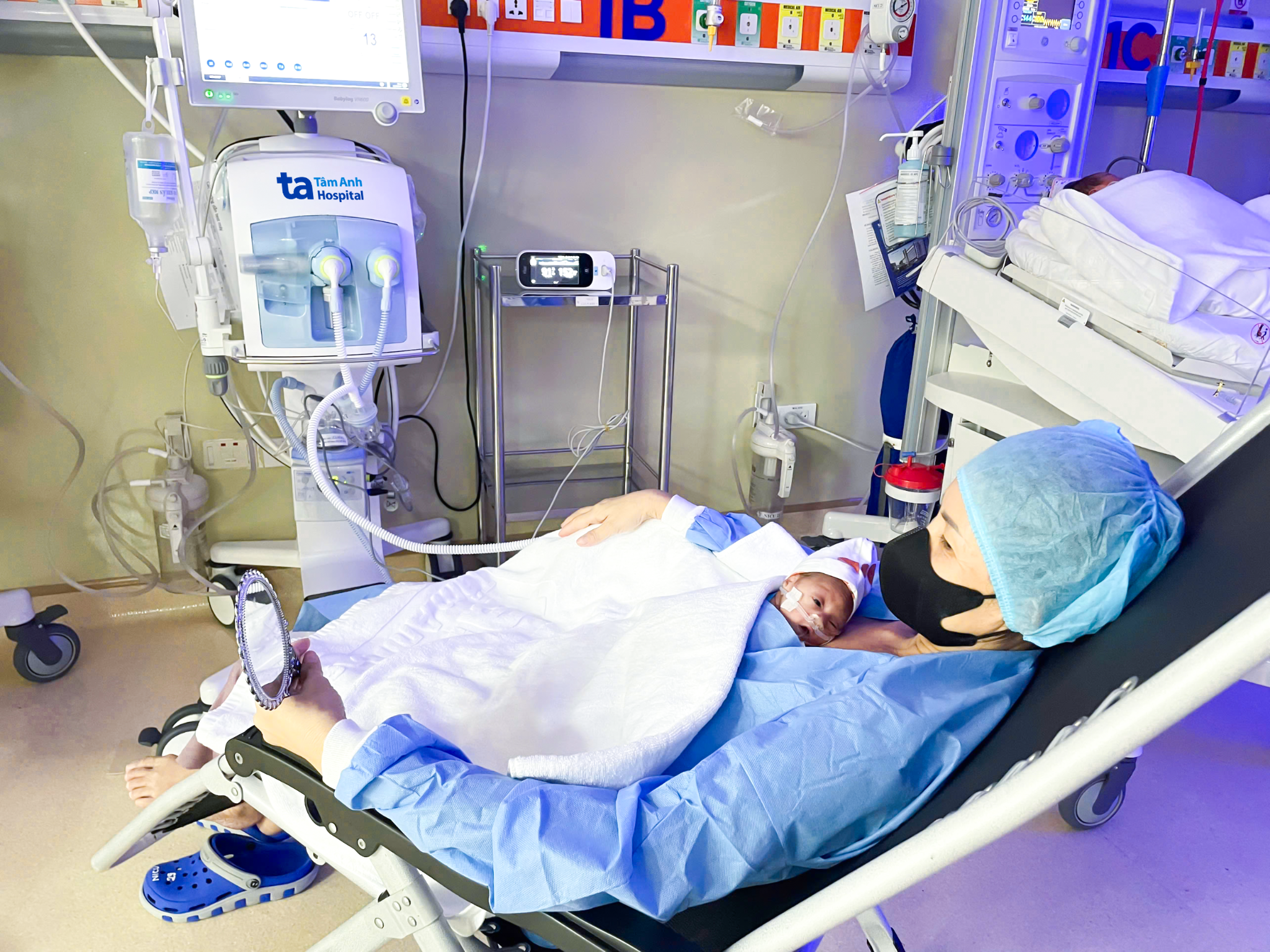 |
An extremely premature baby has skin-to-skin contact with a relative at the Neonatal Intensive Care Unit (NICU). *Photo: Tam Anh General Hospital* |
The mother must have stable health and not suffer from severe acute infectious diseases, such as: pneumonia, high fever, or dangerous infectious diseases. If the mother has underlying conditions like heart failure, respiratory failure, or uncontrolled hypertension, KMC should be carefully considered before proceeding. If the mother experiences musculoskeletal problems or severe postpartum pain, making it difficult to hold the baby continuously, support from medical staff or family members is necessary.
Mothers with postpartum depression or severe anxiety disorders may not be eligible to perform this method. In such cases, a suitable alternative caregiver (father or other relative) can still perform KMC with the baby.
Kangaroo Mother Care should only be performed when both mother and baby fully meet all medical criteria to ensure safety and effectiveness. For premature, low-birth-weight, or frail infants, this method is typically carried out in the Neonatal Intensive Care Unit (NICU) under the guidance of medical staff, to monitor the infant's condition throughout the process.
Therefore, your baby will be able to have Kangaroo Mother Care as soon as possible once their condition is stable, and the infant can absolutely have KMC with the father.
Dr. Nguyen Thi Kim Hoc
Neonatal Center
Tam Anh General Hospital, TP HCM
| Readers can send questions about children's diseases here to receive answers from doctors. |