Dizziness upon changing positions can stem from various causes, including benign paroxysmal positional vertigo (BPPV), peripheral vestibular disorders, low blood pressure, or cerebral ischemia. More serious underlying conditions like brain tumors, epilepsy, multiple sclerosis, or cerebellar stroke can also manifest as dizziness. It is important to distinguish dizziness from lightheadedness, which might result from dehydration, low blood sugar, anemia, or psychological factors such as stress and anxiety.
Symptoms often accompanying positional dizziness include a spinning sensation, loss of balance, blurred vision, lightheadedness, nausea, and vomiting. Patients may also experience cold sweats, fatigue, a rapid heart rate, and difficulty concentrating. In cases of cerebral ischemia or Meniere's disease, additional symptoms such as tinnitus, hearing loss, and headaches may occur.
If your mother experiences dizziness when changing positions, she should immediately sit or lie down in a safe spot to reduce the risk of falling. Taking deep, steady breaths, keeping her head still, and closing her eyes if necessary can help reduce the spinning sensation. She should avoid standing up or moving her head suddenly. If she must stand, she should do so slowly, step by step. Additionally, she should drink enough water and rest in place, perhaps lying on her side in the most comfortable position. Driving should be avoided to ensure safety. If dizziness is accompanied by nausea, patients can use anti-nausea medication prescribed by a doctor, but should not use it for extended periods without medical supervision.
Your mother should consult an ear, nose, and throat (ENT) doctor for accurate assessment and diagnosis if dizziness recurs frequently, appears suddenly, is severe, or persists without clear cause, especially when accompanied by vomiting, loss of balance, or hearing loss. An ENT specialist can perform diagnostic tests and canalith repositioning procedures; symptoms often improve after one to two sessions.
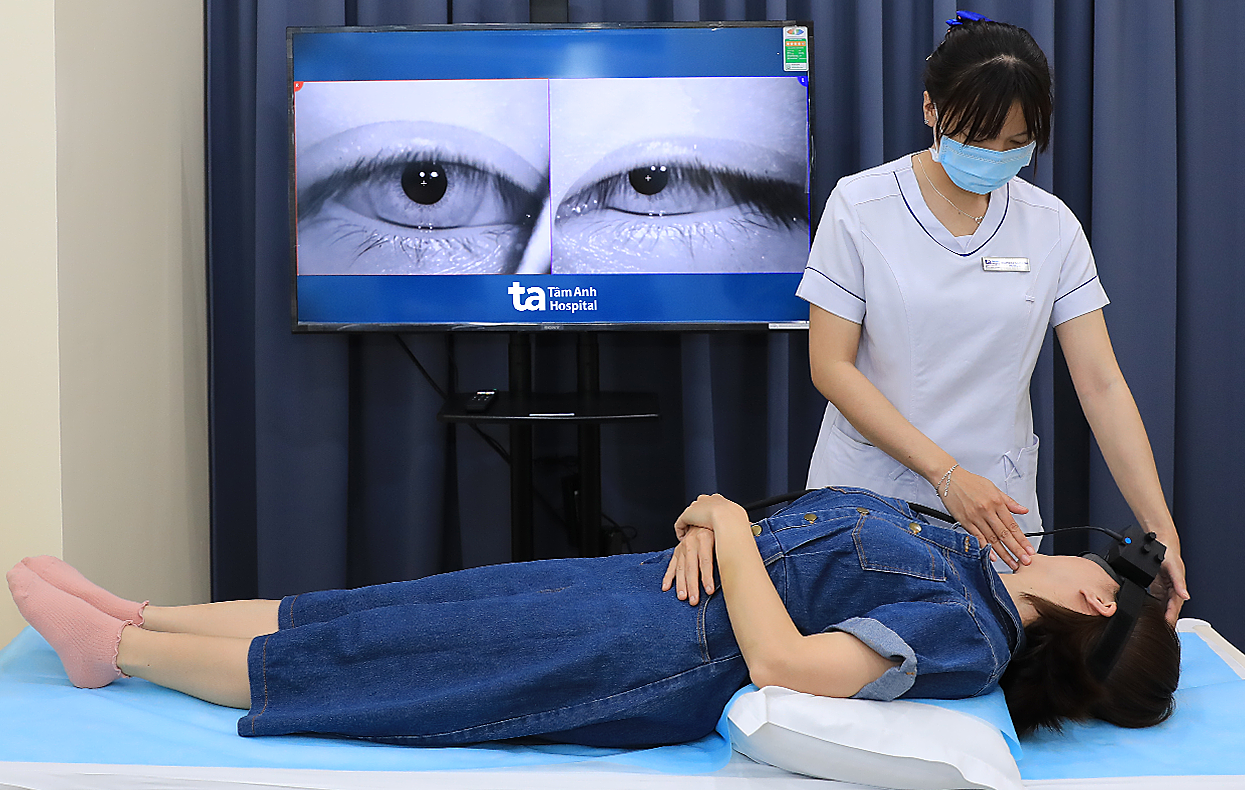 |
A nurse examines a patient experiencing dizziness using the Interacoustics vestibular function testing system. *Illustration: Tam Anh General Clinic District 7* |
The Interacoustics vestibular function testing system integrates artificial intelligence (AI) with videonystagmography (VNG) technology, utilizing 18 pre-programmed measurement methods. This system accurately diagnoses the cause of dizziness, classifies, and assesses disease severity in a single examination. This technology also assists doctors in performing preliminary evaluations and ruling out other causes, such as acoustic neuromas (cranial nerve 8 tumors), cerebral infarction, or cerebral vascular occlusion.
Master of Science, Doctor, First Degree Specialist Truong Tan Phat
Head of Ear, Nose, and Throat Unit
Tam Anh General Clinic District 7
| Readers can submit questions about ear, nose, and throat conditions here for a doctor's response. |