Ho Chi Minh City Department of Health Director Tang Chi Thuong announced this on 20/5, following the city's issuance of a plan for free periodic health check-ups for residents, as directed by the government.
The plan involves mobilizing the entire healthcare system in Ho Chi Minh City, including public hospitals, private hospitals, general clinics, medical centers, and ward, commune, and special zone health stations. This means residents will not need to flock to a few large hospitals; instead, they can get checked at their nearest local healthcare facility. Local health stations and medical centers will expand their roles beyond vaccinations and disease management to include periodic health check-ups, monitoring chronic disease risks, and reminding patients for follow-up appointments.
Concurrently, general hospitals will reorganize their examination departments, allocating separate areas for health check-ups and disease screening. The check-up process is expected to be separate from the usual patient flow to prevent overcrowding and expedite examinations for residents. Doctors will focus on early detection of non-communicable diseases such as hypertension, diabetes, cardiovascular diseases, chronic respiratory illnesses, or risk factors in their initial stages.
To reduce the burden on general hospitals, specialized hospitals will also provide personnel support to lower-level facilities. Residents showing abnormal signs during screening can receive more in-depth consultations from specialists in cardiology, ophthalmology, otolaryngology, dentistry, obstetrics and gynecology, or oncology.
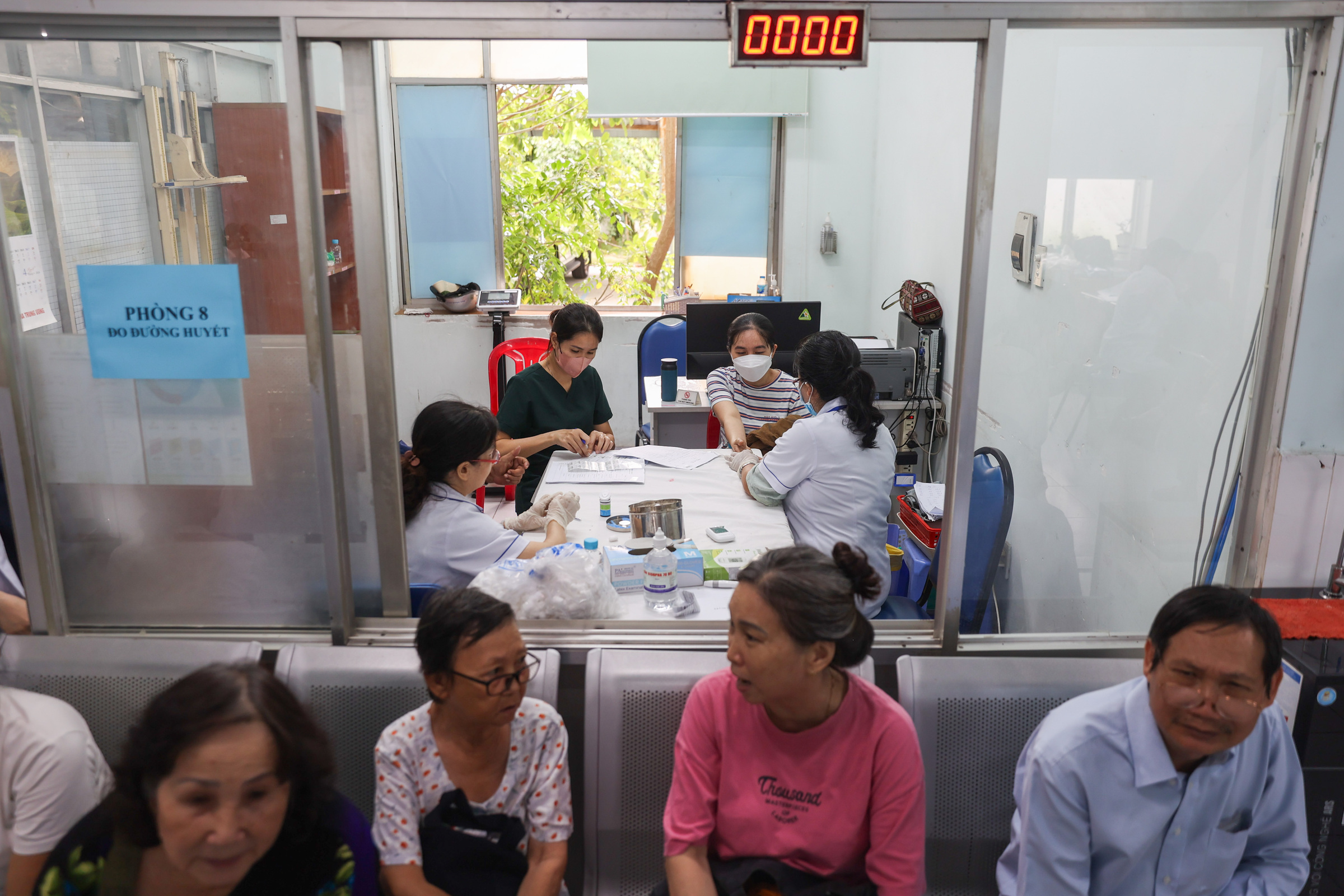 |
Residents receiving examinations at Tang Nhon Phu ward health station during the free check-up program in 4/2026. *Photo: Quynh Tran*
Ho Chi Minh City's healthcare sector also plans to bring services closer to residents through mobile examination teams at residential areas, factories, businesses, and schools. Workers can receive check-ups at their workplaces, students at their schools, while the elderly or high-risk groups will be integrated into community health care programs.
According to healthcare leaders, the program's goal is not merely a one-time free examination but aims to help residents develop the habit of regular health check-ups. Examination results will be updated to an electronic health book integrated into the VNeID application, allowing residents to easily look up, monitor their health, and schedule follow-up appointments when needed.
It is expected that all medical examination history and health indicators for Ho Chi Minh City residents will be integrated into a single Ho Chi Minh City Digital Citizen Application, enabling quick access without the need for physical records or multiple applications.
Le Phuong