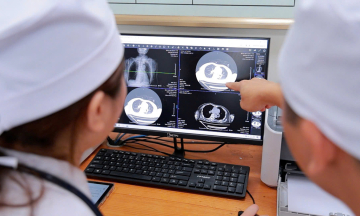
Polysomnography (PSG) is a technique that monitors and records various physiological activities of the body during sleep to assess sleep quality and detect related disorders. It is considered the "gold standard" for diagnosing many sleep-related conditions.
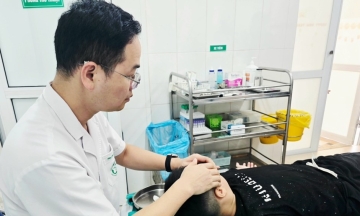
This non-invasive and painless method involves technicians attaching electrodes and sensors to the patient's body. These devices simultaneously monitor brain activity, heart rate, breathing rate, eye movements, blood oxygen saturation, and snoring sounds.
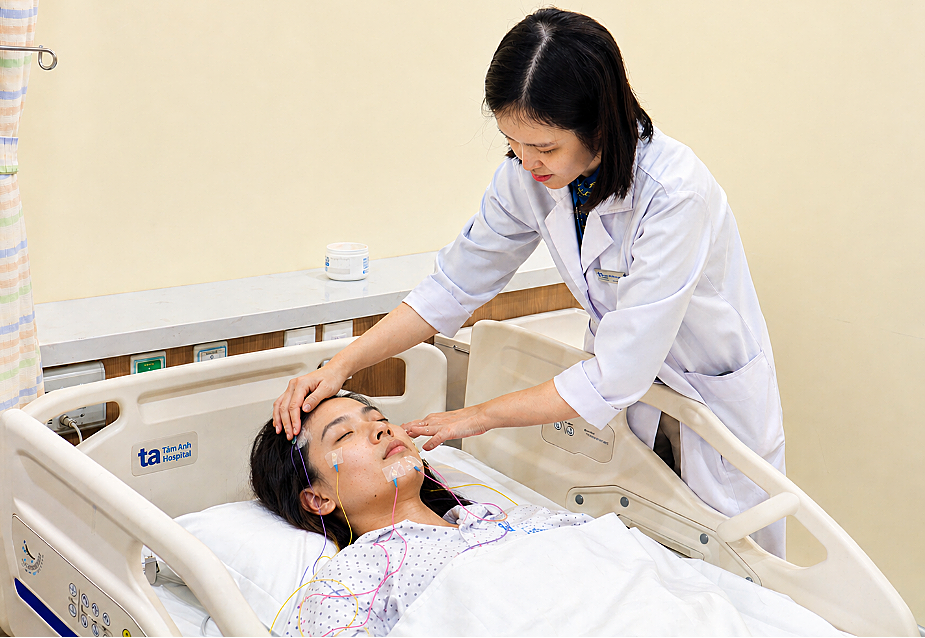 |
A doctor attaches electrodes for a patient undergoing polysomnography. *Photo: Tam Anh General Hospital*
Polysomnography is typically indicated for individuals with chronic insomnia, difficulty falling asleep, frequent nighttime awakenings, snoring, suspected sleep apnea, or unusual manifestations such as nightmares, sleepwalking, sleep talking, seizures, and continuous leg movements. The results help doctors diagnose various conditions, including obstructive sleep apnea syndrome, sleep-related breathing disorders, chronic insomnia, restless legs syndrome, and sleep-related epilepsy.
In your case, Hoang Minh, the doctor may suspect sleep apnea syndrome. This condition is common among individuals who snore persistently, are overweight or obese, or experience frequent daytime sleepiness. Patients may have brief episodes of breathing cessation during sleep, leading to oxygen deprivation in the brain. This can cause fatigue, reduced concentration, and headaches upon waking. If left untreated, the condition increases the risk of hypertension, cardiac arrhythmias, myocardial infarction, and stroke.
The polysomnography technique is typically performed overnight at a hospital or specialized clinic. Patients sleep in a quiet, private room, where the system automatically records parameters throughout their sleep. In some cases, home monitoring with specialized equipment may be prescribed.
Today, new generation polysomnography systems offer stable signal recording, high accuracy, and rapid data analysis. Some devices also integrate infrared cameras to monitor unusual behaviors during sleep, enabling doctors to comprehensively assess complex sleep disorders.
Master, Doctor Hoang Chau Bao Dinh
Head of Sleep Unit
Neuroscience Center
Tam Anh General Hospital, TP HCM
| Readers can submit questions about neurological diseases here for doctors to answer. |