Recently, authorities uncovered numerous large-scale production facilities using chemicals to falsify beef released into the market. Fraudulent individuals used sow meat as the base ingredient, mixing it with industrial salt, sodium metabisulfite, pig blood, and coloring agents. After a careful marination process designed to deceive consumers visually, unscrupulous traders packaged, froze, and sold the products to people under the guise of genuine goods.
Dr. Bui Hoang Bich Uyen, from the Department of Nutrition at Xuyen A General Hospital, TP HCM, warned that the chemicals used in this counterfeiting process pose unforeseen health hazards to humans.
Specifically, sodium metabisulfite and synthetic coloring agents can cause allergies, leading to a range of respiratory issues, neurological disorders, or behavioral problems with repeated exposure. More dangerously, the long-term accumulation of these toxic substances can directly trigger cancer.
In contrast, legitimate producers always adhere to strict regulatory limits when using food additives to ensure safety.
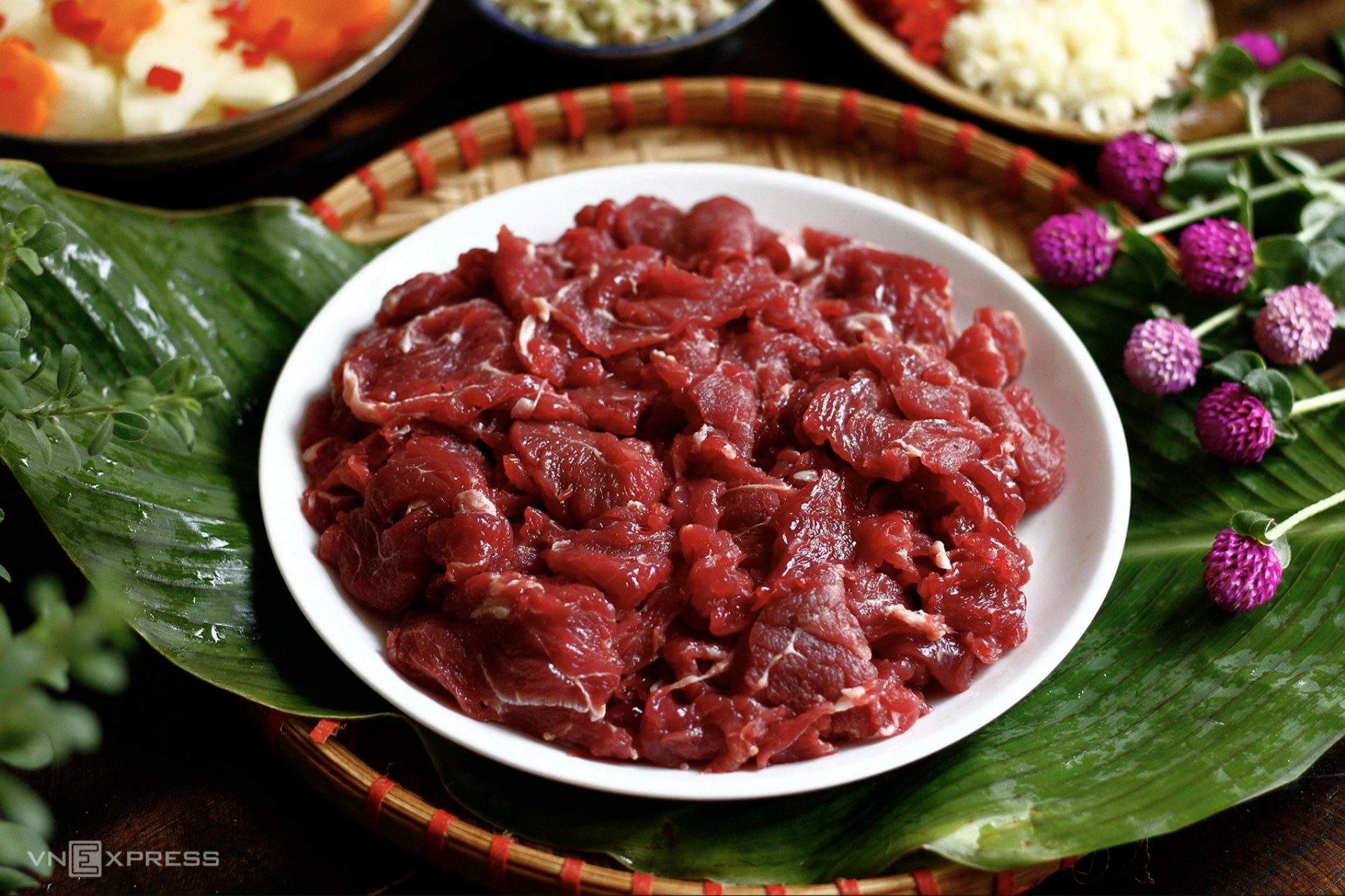 |
Real beef has a bright or dark red color, with absolute consistency from outside to inside. Illustration: Bui Thuy.
To protect their families, homemakers can expose this trick directly at the market through touch, sight, water tests, and identifying smell and taste. For the first step, buyers simply press firmly and rub a finger across the surface of the meat. Chemically treated products immediately transfer dye or blood from the outside onto the hand, while feeling soft, with large, short fibers, and lacking elasticity. In contrast, genuine beef retains its natural red color deep within the muscle, has fine, smooth fibers, is pliable, and feels slightly sticky to the touch.
Visually, observant customers will notice that genuine products have a consistent bright or dark red color from outside to inside, accompanied by a characteristic pale yellow fat layer. Meanwhile, counterfeit goods appear bright red on the outer layer but are pale inside, revealing opaque white pork fat or beef fat intentionally added by unscrupulous traders. If still suspicious, buyers should ask market vendors to cut a small piece and immediately soak it in a glass of clean water. The water soaking fake products quickly turns dark red, while the meat itself gradually loses color.
Regarding smell and taste, genuine products always have a natural, slightly earthy smell and retain a rich, sweet flavor when cooked. In contrast, counterfeits only emit a false beef smell on the outer layer due to blood marination, which quickly dissipates. When cooked, this type of meat tastes bland, or even has a strong antibiotic odor, likely from long-raised sow meat.
The doctor recommends that people prioritize choosing food with clear origins from supermarket chains, stores, or reputable sales points. Customers should avoid market stalls selling unusually cheap meat or displaying unnaturally bright red cuts. Shoppers should select whole cuts, asking vendors to slice them directly instead of buying pre-sliced or marinated items, as unscrupulous traders can easily mix waste products into these.
My Y