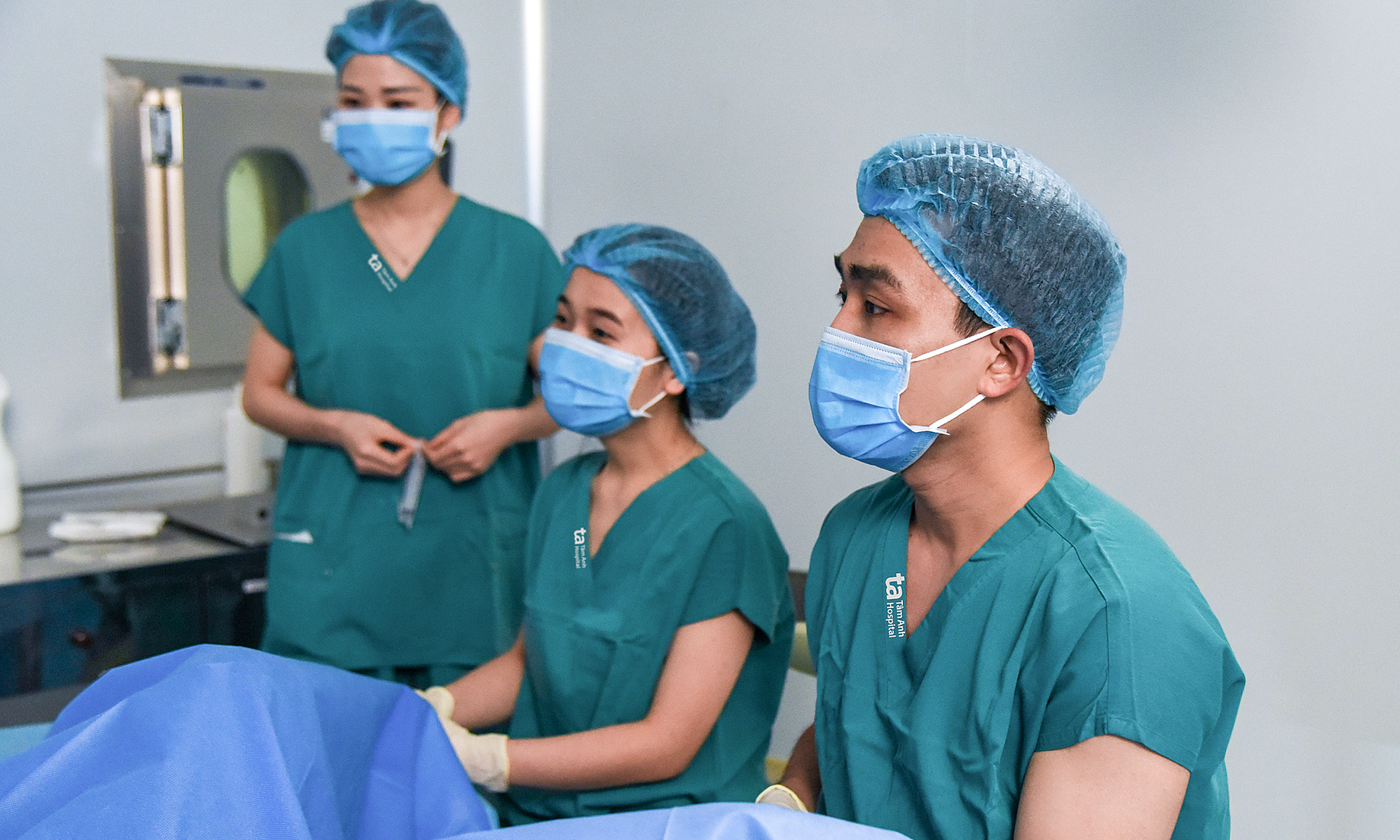
Each time her sinusitis recurred, Ms. Vien took medication, and symptoms temporarily subsided. This time, the pain flared up from her jaw to the left side of her face, prompting her to visit Tam Anh General Clinic, District 7 for an examination. Doctor Vu Thanh Dat, a dentistry specialist, discovered that her tooth 26 had a large cavity, with its crown almost completely fractured, suggesting pulp necrosis.
A facial CT scan revealed an inflammatory lesion beneath the tooth root that had destroyed the periapical bone, forming a direct fistula to the maxillary sinus. The sinus lining was swollen and thickened due to continuous bacterial invasion from the tooth root.
Doctor Dat explained that because upper jaw tooth roots are close to the sinus floor, prolonged infection can cause bacteria to spread to the sinuses, leading to persistent inflammation.
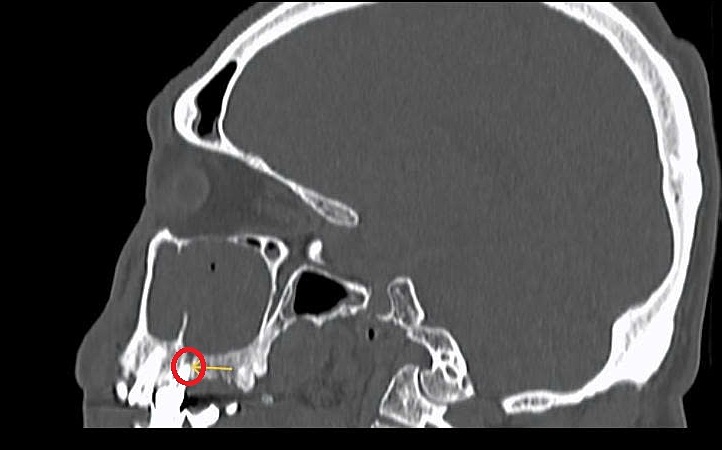 |
CT scan showing the location of the infection at tooth root 26 (red circle) invading the maxillary sinus. *Photo: Tam Anh General Hospital* |
The consulting team decided to extract Ms. Vien's tooth, drain the pus, and clean all inflamed tissue around the tooth root. The doctor used an ultrasonic tooth extraction device for precise tissue dissection, minimizing trauma and reducing the risk of damaging sinus structures. This ultrasonic technology made the procedure gentler, without swelling or pain, supporting a rapid recovery post-surgery.
After the extraction, the doctor curetted the inflamed granulation tissue and treated the area adjacent to the sinus floor to completely eliminate the bacterial source.
Following the intervention, facial pain significantly decreased. From the second day post-surgery, the patient slept well, ate better, and symptoms of nasal congestion and facial heaviness improved.
 |
Doctor Dat instructing Ms. Vien on post-operative oral care. *Photo: Tam Anh General Hospital* |
According to Doctor Dat, sinusitis caused by dental issues is common but often misdiagnosed as regular sinusitis due to non-specific symptoms. Many cases involve prolonged but ineffective treatment because the dental infection source persists. The condition is prone to recurrence if only sinusitis medication is used without thoroughly addressing the infection's cause.
The doctor advises individuals with prolonged unilateral sinusitis, dull facial pain, bad breath, or a history of tooth decay to visit the Dentistry and Ear, Nose, and Throat (ENT) departments for diagnosis and timely intervention to prevent complications.
Thao Vy
*Patient's name has been changed
| Readers can submit questions about ear, nose, and throat conditions here for a doctor's response. |