Foamy urine can be a harmless occurrence, but persistent, dense foam, especially when accompanied by other symptoms, may indicate underlying kidney issues. Doctor Duong Minh Tuan from the Department of Endocrinology and Diabetes at Bach Mai Hospital explains when to be concerned and what diagnostic steps are necessary.
Temporary foamy urine often results from a strong urine stream, urgent urination, or concentrated urine due to insufficient water intake or holding urine for too long. Residual cleaning agents in the toilet bowl can also cause foam. In these cases, the foam appears briefly and quickly dissipates.
However, if foamy urine is frequent, dense, and slow to dissipate, and particularly if it is accompanied by morning eyelid swelling, leg swelling, high blood pressure, diabetes, blood in the urine, or significant fatigue, a medical examination is advisable. These symptoms collectively suggest a potential problem with kidney function.
The kidneys are responsible for filtering blood and retaining vital substances such as albumin and protein. When the kidney's filtration barrier is damaged, protein can leak through and exit into the urine, making it more prone to foaming. This condition is known as proteinuria.
It is important to note that while proteinuria can cause foamy urine, not all instances of foamy urine indicate proteinuria. Conversely, proteinuria does not always manifest as foamy urine. Foamy urine serves as a suggestive sign related to proteinuria but is not sensitive or specific enough for a definitive diagnosis. Proteinuria can also temporarily increase after a fever, dehydration, strenuous exercise, or infection, without indicating chronic kidney damage.
For an accurate diagnosis, doctors typically order several basic tests, including:
A complete urinalysis to check for abnormal protein or red blood cells.
Urine albumin-to-creatinine ratio to detect early kidney damage.
Blood creatinine and estimated glomerular filtration rate (eGFR) to assess kidney filtration function.
Blood pressure measurement and blood sugar checks if risk factors are present.
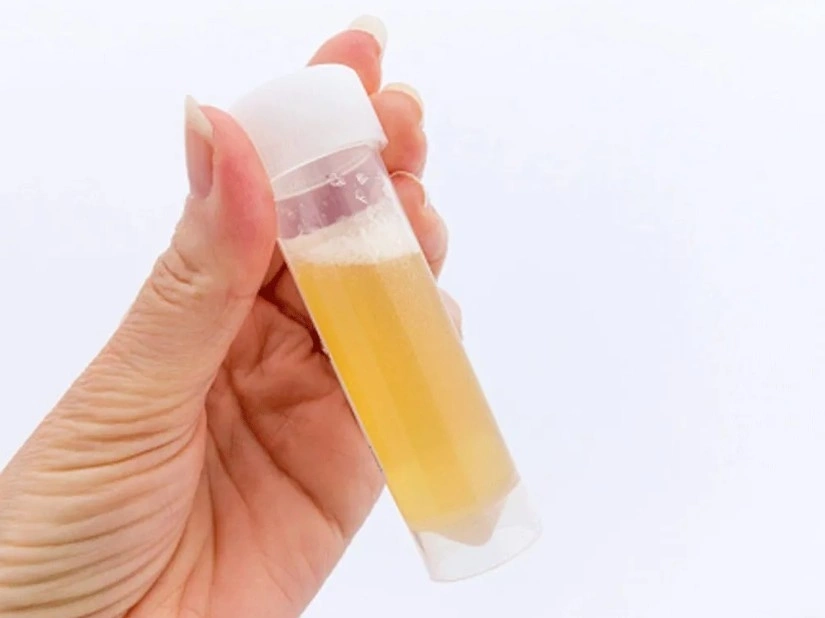 |
Illustration: Mcurefertility |
Doctor Duong Minh Tuan
Department of Endocrinology and Diabetes, Bach Mai Hospital