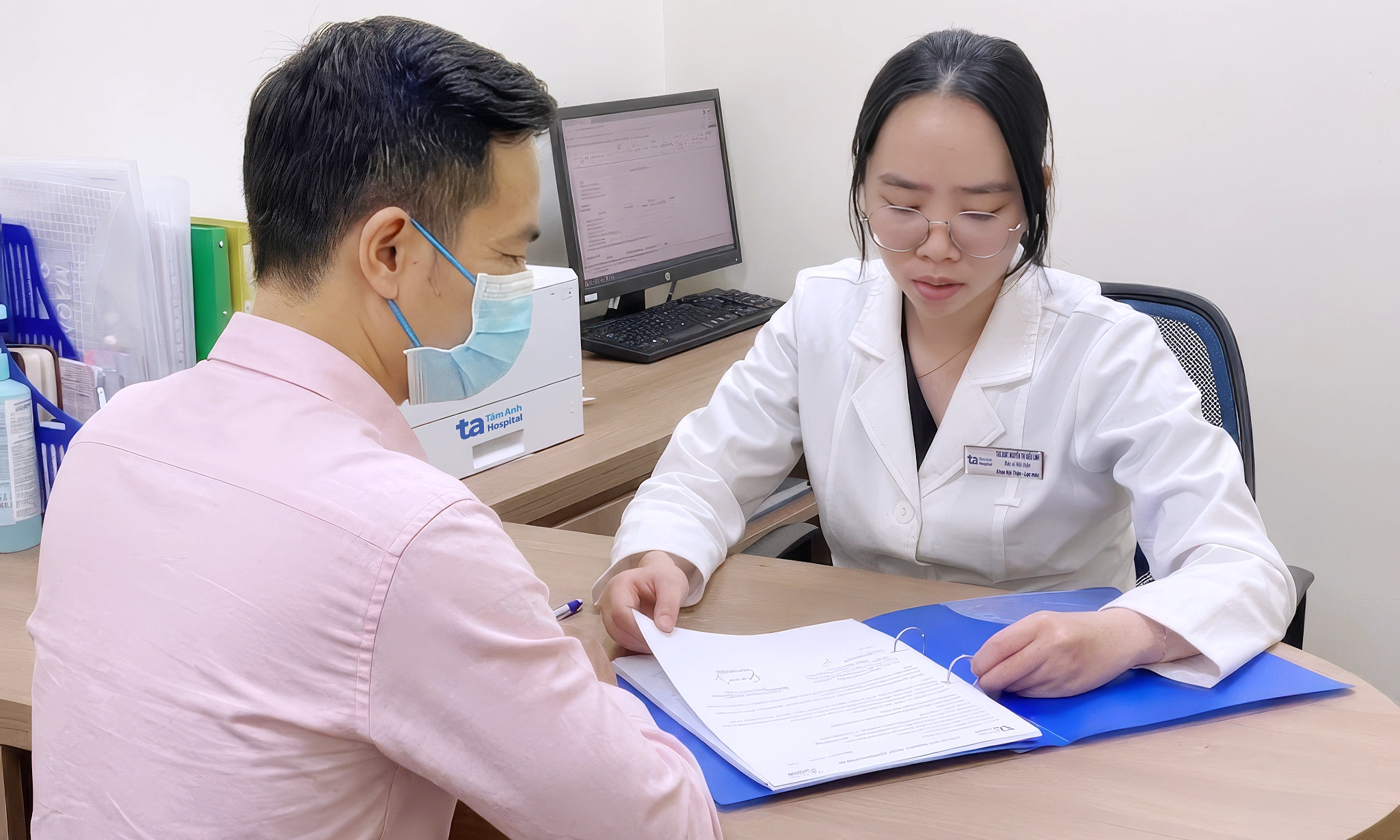
Doctors at the Center for Nuclear Medicine and Oncology, Bach Mai Hospital, are currently treating a 47-year-old male patient diagnosed with two simultaneous squamous cell carcinomas in the esophagus and oropharynx. This rare and dangerous condition, if not detected early, is known as "multiple primary cancers." This phenomenon occurs when the mucosa of the upper respiratory and digestive tracts is exposed to harmful factors for an extended period, leading to the appearance of multiple independent primary tumors.
Associate Professor, Doctor Pham Cam Phuong, Director of the Center, reported that the patient experienced progressively worsening difficulty swallowing, poor appetite, and lost 5 kg in just one month. He has consumed alcohol heavily for many years, approximately 300 ml daily, and has not yet stopped drinking.
Digestive endoscopy revealed a prolonged, ulcerative, and proliferative lesion in the patient's esophagus, covering over 50% of its circumference. This lesion bled easily and caused esophageal narrowing. Biopsy confirmed it as squamous cell carcinoma. During an ear, nose, and throat examination, doctors discovered an additional tumor in the oropharyngeal region. Histopathological results indicated this was also an invasive keratinizing squamous cell carcinoma. A PET/CT scan showed intense metabolic activity in both the lower one-third of the esophagus and the left tonsil, as well as the base of the tongue, accompanied by suspicious bilateral neck lymph nodes suggesting metastasis.
The patient was diagnosed with stage III esophageal squamous cell carcinoma and stage IVA oropharyngeal cancer. Currently, the patient is undergoing combination chemotherapy to control the disease and improve symptoms.
Squamous cell carcinomas of the head and neck region and the esophagus share many risk factors, notably alcohol and tobacco. GLOBOCAN's 2022 data reported that Vietnam records over 180,000 new cancer cases annually. Esophageal cancer is among the diseases with a high incidence rate and is often detected at a late stage due to its subtle initial symptoms. Many patients only seek medical attention when experiencing difficulty swallowing, painful swallowing, or rapid weight loss, by which time the disease has typically advanced.
Doctors advise the public, especially middle-aged men with habits of alcohol consumption and smoking, to pay attention to signs such as progressively worsening difficulty swallowing, persistent sore throat, hoarseness, a sensation of obstruction, unexplained weight loss, and abnormal neck lymph nodes.
Upon experiencing these symptoms, individuals should seek specialist examination for endoscopy and other necessary tests. For those already diagnosed with head and neck or esophageal cancer, doctors recommend screening the entire upper respiratory and digestive tract to detect any second lesions early.
Lifestyle changes play a crucial role in preventing oropharyngeal and esophageal cancers. It is essential to minimize alcohol consumption, avoid smoking, maintain a healthy diet, and undergo regular health check-ups, especially for high-risk groups.
Cancer is not a "death sentence" if detected early. However, when the disease is in an advanced stage or appears simultaneously in multiple locations, as in the case above, treatment becomes complex, costly, and significantly impacts quality of life. Early examination can help timely detection and increase the chances of effective treatment.
Le Nga