Bell's palsy, also known as peripheral facial nerve paralysis, often results from inflammation and swelling of the facial nerve within a narrow bone canal. Doctor of First-Degree Specialization Nguyen Huu Khanh, from the Center for Neuroscience at Tam Anh General Hospital, Ho Chi Minh City, explains that this risk tends to increase during hot weather due to several contributing factors.
A common trigger is the sudden temperature difference between the hot outdoor environment and an air-conditioned room. When moving from intense sun into a cold room, especially if an air conditioner or fan blows cold air directly onto the face, the blood vessels supplying the facial nerve can constrict abnormally. This reduces blood flow, making the nerve vulnerable to damage and swelling, which ultimately leads to facial paralysis.
Hot weather also provides an ideal environment for certain viruses to thrive, including the herpes simplex virus – an agent linked to many cases of 7th cranial nerve paralysis. When the body experiences fatigue, dehydration, and a weakened immune system due to prolonged heat, these viruses can reactivate and cause inflammation of the facial nerve.
Common habits during hot periods, such as showering late at night, bathing immediately after heavy sweating, or having a fan or air conditioner blow directly on the face while sleeping, can cause localized chilling of the nerve region. These temperature changes disrupt nerve transmission, leading to symptoms such as facial distortion, inability to fully close one eye, tearing, or numbness on one side of the face.
According to Doctor Khanh, facial nerve paralysis typically has a sudden onset. However, most patients can recover well if the condition is detected and treated early. Conversely, delayed treatment may lead to long-term complications such as facial muscle contracture and persistent facial asymmetry.
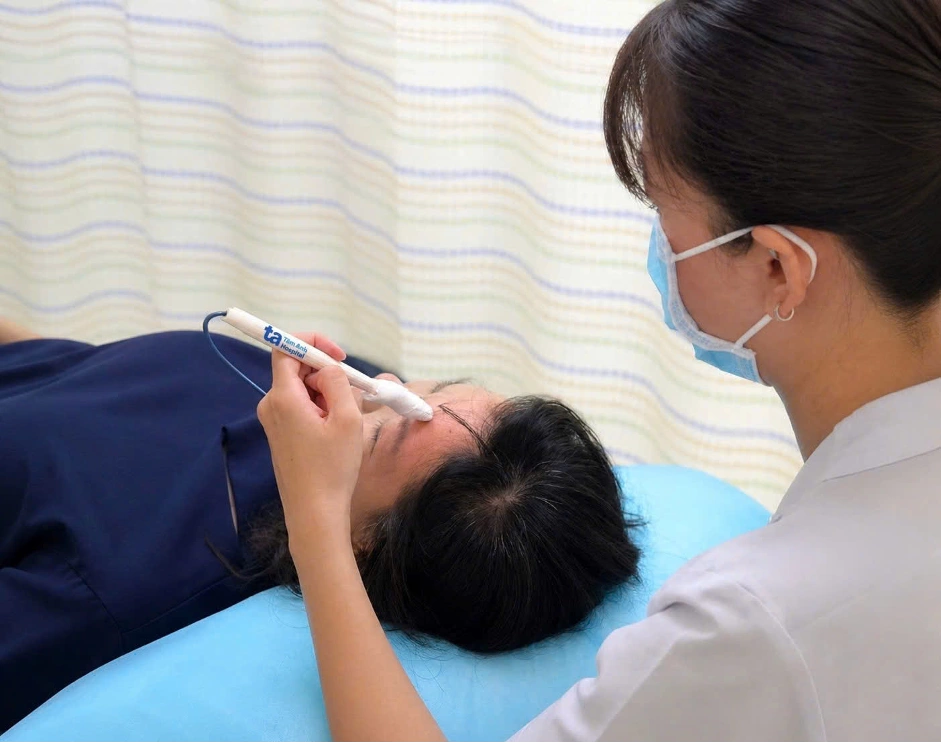 |
Patients with 7th cranial nerve paralysis receive electro-stimulation to stimulate facial muscles, maintain muscle tone, and restore movement. Photo: Tam Anh General Hospital |
Treatment protocols often involve anti-inflammatory medications to reduce nerve inflammation, swelling, and compression. Doctors may also prescribe antiviral drugs if a viral cause is suspected. Patients must protect the paralyzed eye with artificial tears and an eye patch during sleep to prevent corneal damage. Physical therapy, including facial muscle exercises, mild electro-stimulation, and proper massage techniques, contributes to functional recovery. It is important for patients not to attempt self-acupuncture or strong massage.
To prevent facial nerve paralysis, Doctor Khanh advises limiting sudden temperature changes and avoiding direct cold drafts on the face, especially during sleep. After working outdoors in the sun, individuals should rest to allow their body temperature to stabilize before showering. Maintaining adequate hydration, a balanced diet, and sufficient sleep are also crucial for boosting immunity.
If symptoms such as facial distortion, one-sided facial muscle weakness, difficulty closing an eye, trouble speaking, or food spilling from the mouth appear, patients should seek immediate medical attention at a neurological specialist clinic. Prompt diagnosis and treatment are essential to prevent long-term complications.
Trong Nghia
| Readers can submit questions about neurological conditions here for doctors to answer. |