


Dr. Phan Thi Hong Hai, from the Pediatrics Department at Tam Anh General Hospital Hanoi, reported that Lam was alert, showed no signs of respiratory distress, and had good lung ventilation. The initial diagnosis was viral fever and acute pharyngitis. Treatment involved symptom management, fever reduction, and close monitoring.
In the following days, Lam's high fever persisted, with a poor response to antipyretics. His cough gradually worsened, sputum appeared, crackles were heard in his lungs, and his appetite decreased. Doctors ordered specialized tests, which confirmed bronchopneumonia due to co-infection with metapneumovirus and H. influenzae bacteria.
According to Dr. Hai, lower respiratory tract infections resulting from viral and bacterial co-infection are common in children. The typical mechanism involves a virus attacking first, damaging the respiratory mucosa and weakening local immunity. This creates favorable conditions for bacteria to invade, proliferate, and spread to the lower respiratory tract, leading to bronchiolitis and pneumonia. The combination of these two agents often prolongs the illness and intensifies symptoms.
In Lam's case, metapneumovirus directly attacked the respiratory epithelium after invasion, causing inflammation. This allowed H. influenzae bacteria, which commonly reside in the nasopharynx, to proliferate. If not detected and treated promptly, children face risks such as respiratory failure, lung abscess, and pleural effusion.
Doctors adjusted the treatment regimen for the patient. In addition to fever reduction and fluid replacement, the child received intravenous antibiotics to control the infection, combined with bronchodilator nebulization. Lam's condition gradually improved; his fever broke 48 hours after the regimen change, his cough decreased, his appetite improved, and he no longer experienced vomiting. After 5 days of treatment, with good lung ventilation, the child was discharged from the hospital.
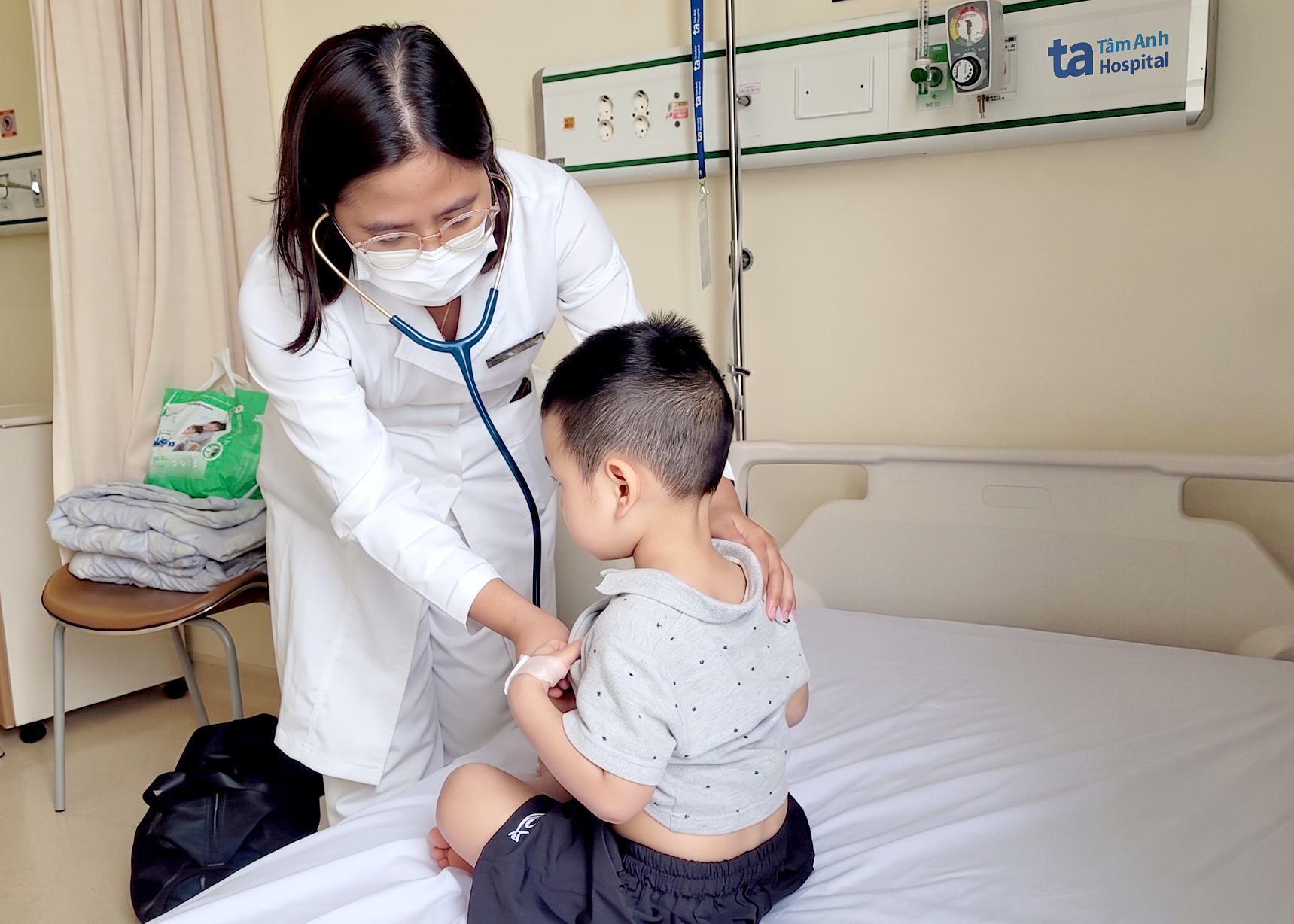 |
Dr. Hai examines Lam before his discharge. Photo: Hai Au |
Dr. Hai examines Lam before his discharge. Photo: Hai Au
Dr. Hai noted that changes in temperature and humidity during seasonal transitions create favorable conditions for viruses and bacteria to thrive. Currently, respiratory syncytial virus (RSV), influenza, Covid-19, and metapneumovirus are still circulating.
Parents should consider the risk of severe viral progression or co-infection if their child experiences a fever lasting over three days, an increasing cough, poor appetite, fatigue, or a poor response to fever-reducing medication. Parents should not administer antibiotics to their children without a prescription. Children should be taken to the hospital early if they exhibit signs such as: rapid breathing, chest indrawing, wheezing, lethargy, refusing to eat, or frequent vomiting.
To prevent respiratory illnesses, parents should prioritize maintaining personal hygiene for their children, including frequent hand washing, proper nose and throat cleaning, and ensuring adequate nutrition. Children should receive vaccinations on schedule, wear masks when outdoors, and limit contact with individuals showing signs of illness.
Trinh Mai
| Readers can submit questions about neonatology here for doctors to answer |


