


The patient was admitted to Tam Anh General Hospital Ho Chi Minh City, located about one km from the airport, with a fever of nearly 40 degrees C, blood pressure of 170/115 mmHg, difficulty breathing, and muscle spasms in his limbs.
Doctor Pham Phong Luan, Specialist Level one, from Cardiology Department one, Cardiology Center, stated that blood lactate levels increased to 9 mmol/L (normal is below 2 mmol/L), indicating the patient was in shock due to hypoperfusion and dehydration. Elevated CK enzyme levels suggested rhabdomyolysis related to heatstroke and dehydration. Doctors diagnosed the patient with acute hypertension and heatstroke.
Heatstroke occurs when the body's core temperature rises excessively due to exposure to high temperatures or prolonged activity in hot, stuffy environments. Numerous factors can cause heatstroke, including hot surroundings, strenuous activity, wearing thick clothing that hinders sweat evaporation, dehydration from insufficient water intake, and excessive alcohol consumption, which impairs the body's ability to regulate temperature.
In recent days, Ho Chi Minh City has experienced average temperatures of 35-37 degrees C. Doctor Huynh Thanh Kieu, Master of Science, Specialist Level two, Head of Cardiology Department one, Cardiology Center, Tam Anh General Hospital Ho Chi Minh City, noted that Mad had a history of hypertension but did not take his medication regularly. The crowded airport environment, combined with the sultry weather, created favorable conditions for an acute hypertensive crisis. Furthermore, despite his body losing fluids, he did not replenish water promptly and instead drank coffee — these factors contributed to the development of heatstroke.
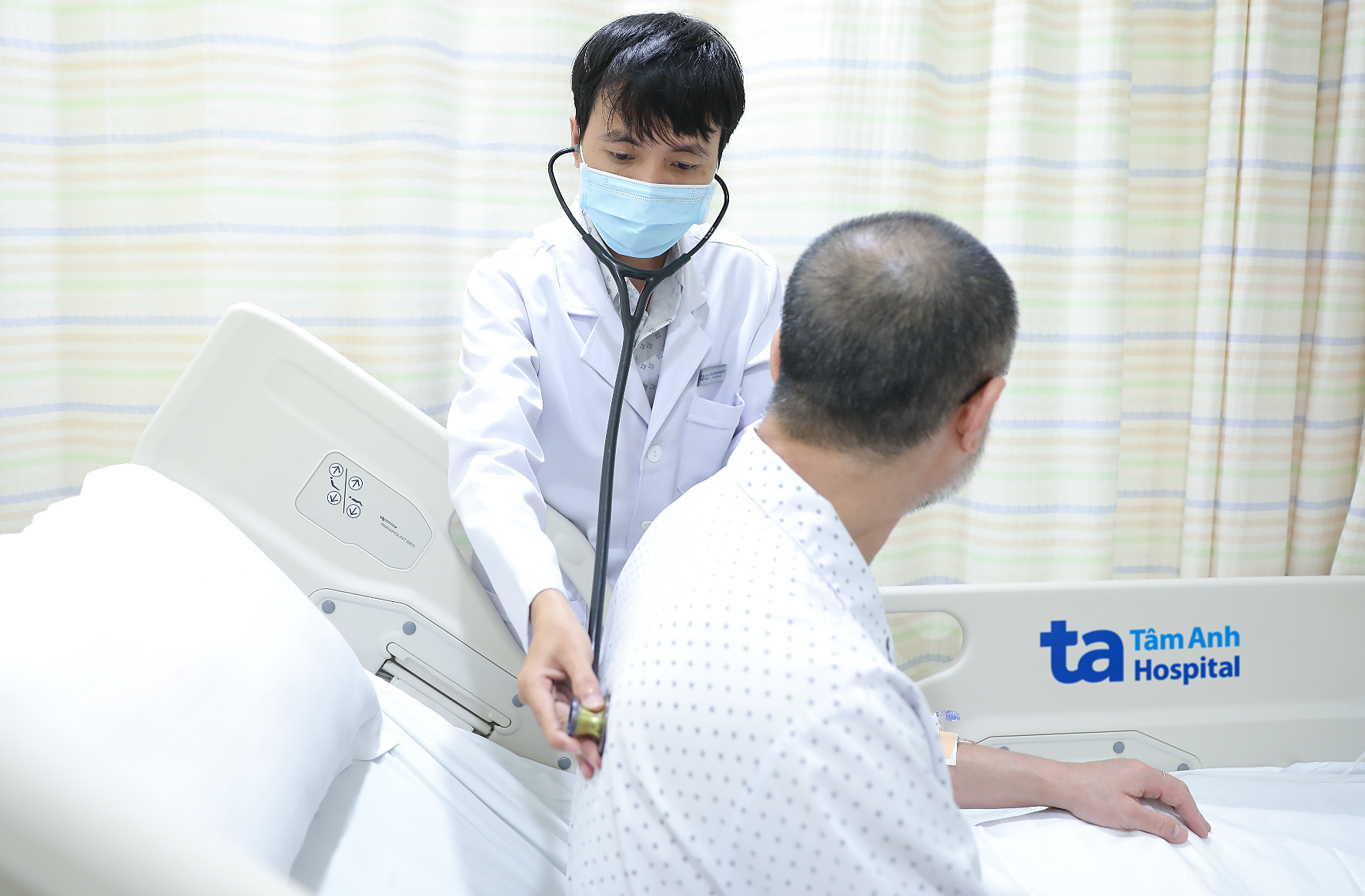 |
Doctor Luan checks the patient's health before discharge. Photo: Tam Anh General Hospital |
Mad received oxygen support, fluid replenishment, antihypertensive medication, and was encouraged to drink plenty of water. After a few hours, his blood pressure stabilized at 120/85 mmHg, he became conscious, his difficulty breathing subsided, muscle spasms stopped, and his body temperature returned to normal. Timely emergency treatment prevented damage to target organs such as the heart, brain, and kidneys, and he was discharged after three days.
Doctor Kieu advises individuals to wear light, breathable clothing to help cool the body, cover up, and apply sunscreen when outdoors to prevent heatstroke. It is also important to drink plenty of water to avoid dehydration and maintain a stable body temperature. People should acclimatize to hot weather over several weeks before engaging in prolonged activities and limit outdoor exposure during intense heat from 10h to 16h.
If symptoms of heatstroke appear, such as a high body temperature (40 degrees C or higher) or changes in mental state or behavior (confusion, agitation, slurred speech, delirium, seizures, coma), immediate medical attention is necessary.
Thu Ha
*Patient's name has been changed
| Readers can send cardiology questions here for doctors to answer |


