


When stem cells are stored at -196 degrees Celsius in a liquid nitrogen environment, almost all metabolic activity ceases. This allows cells to be preserved for extended periods without normal aging. However, because cells are living and highly sensitive entities, their quality can still be affected if the preservation process is not strictly controlled.
For instance, if the temperature fluctuates during storage, cell viability may decrease. The initial cooling phase, if not executed with proper technique, can also impact cell survival. The thawing step is the most sensitive phase; if not done correctly, cells die very quickly. In fact, most losses often occur during thawing rather than during long-term storage.
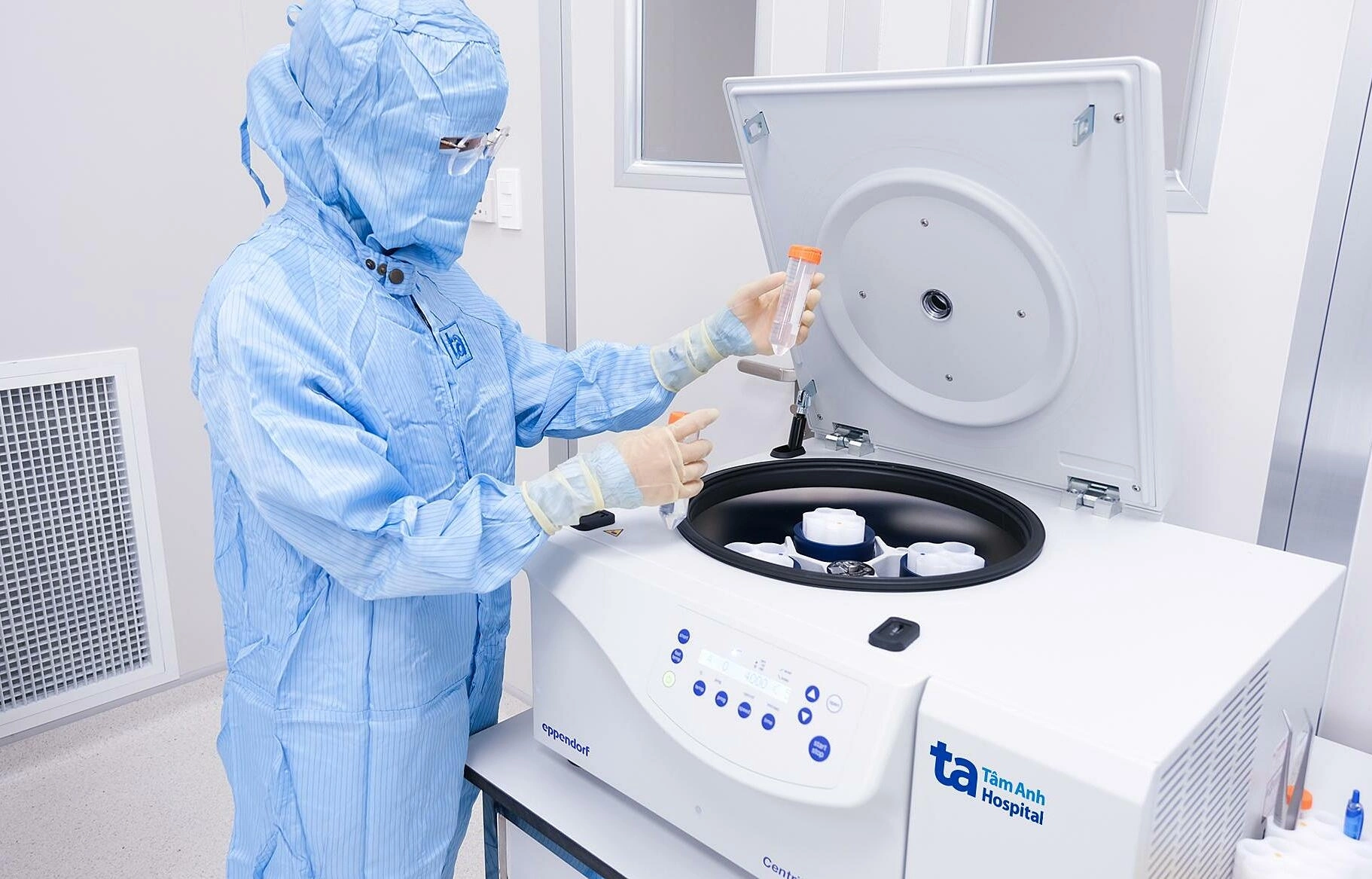 |
Advanced centrifuge equipment helps reduce mechanical impact on cells during processing, enhancing cell viability and quality. Photo: Tam Anh Stem Cell Center |
During stem cell storage and preservation, cells are cooled using an automated system with pre-programmed settings and continuous monitoring to ensure optimal viability.
In addition to systems that monitor nitrogen levels and temperature in storage tanks, Tam Anh General Hospital also equips a real-time automatic alert system. This system can be set to record temperatures every one to 10 minutes and immediately send notifications to responsible personnel if any abnormality is detected, allowing for timely intervention before the quality of stored samples is affected.
The stem cell bank also uses dedicated test samples to monitor the stability of the entire system without affecting the actual stored samples. Periodically, these samples are evaluated based on viability, cell morphology, adhesion capability, and differentiation potential to ensure that storage conditions remain stable and cell quality is maintained at a high level.
Doctor Tham Thi Thu Nga
Lab Head - Stem Cell Center
Tam Anh General Hospital System
| Readers can submit questions about obstetrics and gynecology here for doctors to answer |


