A previously healthy young man suddenly experienced weakness in his limbs on 10/4, collapsing. Upon admission to the hospital, the weakness and paralysis worsened on his right side. He also lost the ability to urinate independently, despite remaining conscious and able to communicate.
Initially, given the acute paralysis symptoms, the emergency department team suspected a brain stroke. However, clinical examination results and magnetic resonance imaging (MRI) of his brain and cervical spine revealed the cause: an epidural hematoma in the C3-C5 spinal region, compressing the cervical spinal cord and leading to sudden paralysis.
Doctors immediately transferred the patient to the Spine Department, part of the Institute of Orthopedics and Traumatology. Recognizing this as a rare, rapidly progressing condition with a high risk of severe neurological sequelae, doctors performed emergency surgery that same night. The operation to remove the hematoma and decompress the spinal cord concluded at 2:30 AM.
Following surgery, the patient received intensive care for the first 24 hours due to spinal cord edema. Once his vital signs stabilized, doctors extubated him and transferred him back to the Spine Department. His motor function improved significantly, with lower limb muscle strength increasing to 3/5 by the second day. By the seventh day, his left side had almost fully recovered, and his right side also improved significantly, reaching 3/5.
 |
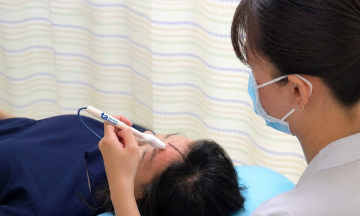
Doctors at Military Hospital 175 check the patient's motor function. Photo: Hospital provided
Doctor Huynh Thanh Binh, Head of the Spine Department at Military Hospital 175, stated that spontaneous spinal epidural hematoma is a condition where sudden bleeding causes acute spinal cord compression. Without timely diagnosis and treatment, the injury can progress to spinal cord edema and myelomalacia, leading to severe sequelae. Early decompression surgery to remove the hematoma is optimal, releasing the spinal cord and facilitating neurological recovery.
According to Doctor Binh, the "golden window" for treating spinal epidural hematoma is 6 to 12 hours from symptom onset. If surgery is performed early, most cases can achieve nearly full recovery. Conversely, if treatment extends beyond this golden window, especially for cases with clear spinal cord compression, the risk of permanent disability is very high.
After surgery, the patient continued medical treatment combined with bedside physical therapy under expert guidance. His condition is now stable, and he has been discharged to continue rehabilitation exercises to regain full motor function.
Le Phuong