Eng English
China 中国人

Eng English
China 中国人
  • News
  • World
  • Business
  • Entertainment
  • Sports
  • Law
  • Education
  • Health
  • Lifestyle
  • Travel
  • Science
  • Digital
  • Automobiles
  • Trở lại Thể thao
  • Health
Tuesday, 6/10/2026 | 09:01 GMT+7

How to treat drug-resistant epilepsy?

My 12-year-old child has been diagnosed with drug-resistant epilepsy; how should it be treated? (Phuong Tuan, Ha Noi)

Drug-resistant epilepsy is a condition where seizures persist despite the patient having undergone treatment with two antiepileptic drug regimens without achieving long-term seizure control. For a 12-year-old child, this condition can significantly impact brain development, learning abilities, and social skills, which are still maturing at this age. Recurrent seizures can disrupt schooling, diminish concentration, memory, and knowledge acquisition, thereby affecting a child's overall development. This condition also makes it challenging for children to participate in sports and recreational activities.

It is crucial to take your child to a specialized neurological hospital for a thorough examination. Doctors will evaluate the medications already used, including dosage, treatment duration, adherence to the regimen, and any side effects. If the medication is not suitable for the type of seizure, the dosage is insufficient, or the patient is not taking medication consistently, the doctor may adjust the current treatment, combine it with other antiepileptic drugs, or change the entire regimen.

If your child is accurately diagnosed with drug-resistant epilepsy, doctors may recommend specialized subclinical tests. These could include brain magnetic resonance imaging (MRI), positron emission tomography (PET), or single-photon emission computed tomography (SPECT) to locate the seizure-generating focus within the brain.

Several advanced methods are available for treating drug-resistant epilepsy:

Surgery is an option when the child has structural lesions, such as focal cortical dysplasia or vascular malformations, directly linked to the seizure-generating area, and if surgical access is safe. Surgery can help reduce the frequency or control seizures without risking damage to vital brain functions.

Doctors perform surgery on a patient with drug-resistant epilepsy. *Illustration: Tam Anh General Hospital*

Deep brain stimulation (DBS) may be indicated for patients with drug-resistant epilepsy. This procedure involves implanting electrodes into the brain through small holes in the skull. These electrodes connect to an electrical pulse generator placed under the skin in the chest area, which sends electrical pulses to specific brain regions. This helps regulate abnormal signals and reduce the frequency of seizures.

Vagus nerve stimulation (VNS) is another procedure where an electrical pulse-generating device is implanted under the skin in the left chest. An electrode from this device connects to the left vagus nerve in the neck. The device emits regular electrical pulses to modulate brain electrical activity, thereby reducing seizure frequency in individuals with drug-resistant epilepsy.

Families should establish a scientific daily routine for the child, ensuring sufficient and consistent sleep. It is important to avoid factors that could trigger seizures. Emergency medical attention is required if a seizure lasts longer than 5 minutes, if multiple seizures occur consecutively without the child regaining consciousness, or if the child experiences difficulty breathing or injury during a seizure.

ThS.BS Vu Thi Hinh

Department of Neurology - Stroke

Tam Anh Hanoi Hospital

Tam Anh Cau Giay Polyclinic

Readers can ask questions about neurological diseases here for doctors to answer.
By VnExpress: https://vnexpress.net/dieu-tri-dong-kinh-khang-thuoc-the-nao-5128825.html
Tags: seizures drug-resistant epilepsy

News in the same category

Morning symptoms many people overlook warn of kidney failure risk

Morning symptoms many people overlook warn of kidney failure risk

Eyelid swelling in the morning that lasts for two continuous weeks is a warning sign of declining kidney function, which could progress to chronic disease requiring dialysis.

5 unusual eye symptoms that require early examination

5 unusual eye symptoms that require early examination

Persistent eye pain, blurred vision, redness, or seeing "floaters" could indicate internal eye damage, risking vision impairment and requiring timely treatment.

Why do I want 'intimacy' but lose interest during sex?

Why do I want 'intimacy' but lose interest during sex?

I have sexual desire, even strong arousal, but when we actually start, I lose interest. Why? (Huy, 38, Ha Noi)

Three habits that increase the risk of vitamin D deficiency

Three habits that increase the risk of vitamin D deficiency

Limited sun exposure, covering skin, and a diet poor in vitamin D can make it difficult for the body to maintain sufficient levels of this nutrient.

'Fiesta Tour' brings reproductive health knowledge to schools

'Fiesta Tour' brings reproductive health knowledge to schools

The "Fiesta Tour" program equips students nationwide with knowledge about reproductive health and safe sex.

Laser treatment for red chin scars

Laser treatment for red chin scars

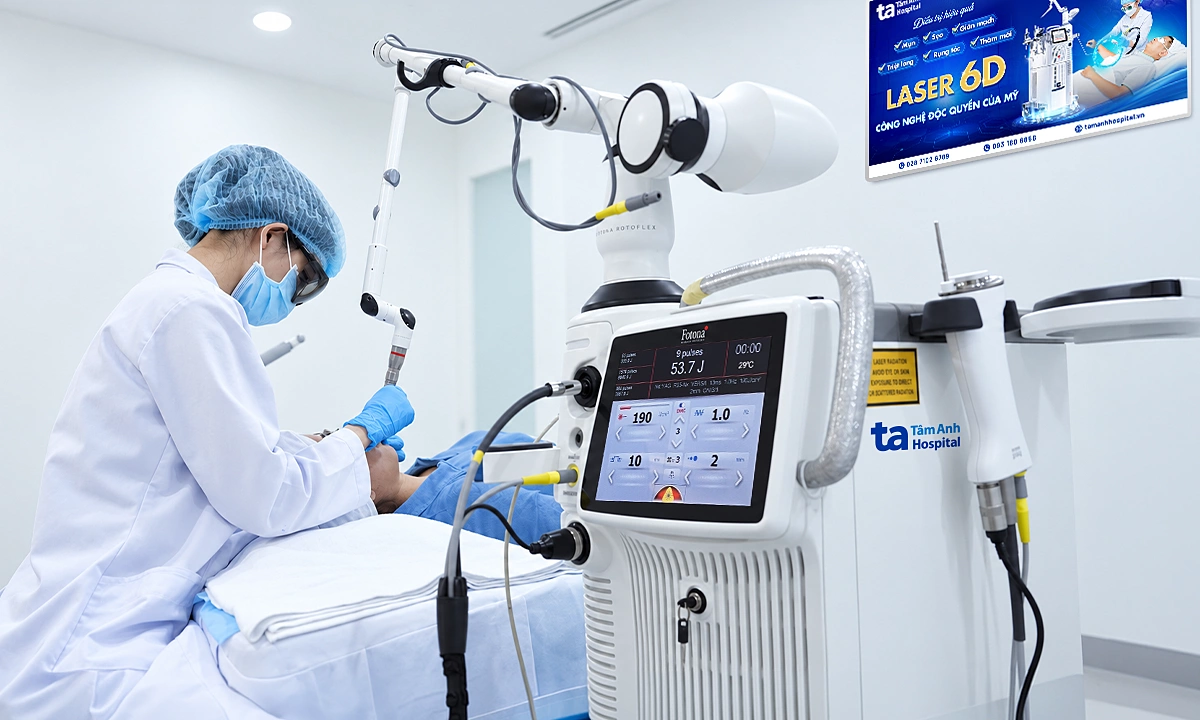
Ms. Thu, 24 years old, had a red scar near her lip. Doctors treated it with 6D laser to improve its color and skin structure.

Foamy urine indicates chronic kidney disease

Foamy urine indicates chronic kidney disease

Mr. Tan, 59, developed foamy urine, leading doctors to diagnose chronic kidney disease.

4 ways to reduce the risk of blocked blood vessels

4 ways to reduce the risk of blocked blood vessels

Healthy eating, managing cholesterol, blood sugar, and weight can help reduce the risk of plaque formation and blocked blood vessels.

15-year-old diagnosed with hemorrhoids

15-year-old diagnosed with hemorrhoids

Tien, 15, discovered hemorrhoids a year ago; they have since increased in size, and doctors diagnosed her with both internal and external hemorrhoids.

Seemingly harmless post-meal habits can cause blood fat to spike

Seemingly harmless post-meal habits can cause blood fat to spike

Many people routinely lie down or sit motionless for hours after dinner, a habit that, over time, can negatively impact metabolism and elevate blood fat levels, especially when combined with an unhealthy diet.

Eng English
China 中国人
  • News
  • World
  • Business
  • Entertainment
  • Sports
  • Law
  • Education
  • Health
  • Lifestyle
  • Travel
  • Science
  • Digital
  • Automobiles
FPT Tower, 10 Pham Van Bach Street, Dich Vong Ward,
Cau Giay District, Hanoi, Vietnam
Email: contacts@vnportal.net
Tel: 028 7300 9999 - Ext 8556
Advertise with us: 090 293 9644
Register
© Copyright 2026 vnnow.net. All rights reserved.
Terms of use Privacy policy Cookies