Master, Doctor Vu Thi Thuy Trang, a specialist in dermatology - aesthetic dermatology at Tam Anh General Hospital, Ho Chi Minh City, noted that Ms. Thu had a red scar approximately 2 cm long with a relatively flat surface. The scar was located near her mouth and chin, an area of continuous movement during speaking, eating, and expressing emotions. This constant tension and pulling affected the scar tissue's restructuring process.
Red scars are often associated with changes in the vascular system and the inflammatory process during the healing phase. While red scars can gradually fade over time, some cases persist for many months. The severity and duration of a scar depend on its location, depth of injury, individual constitution, and healing process.
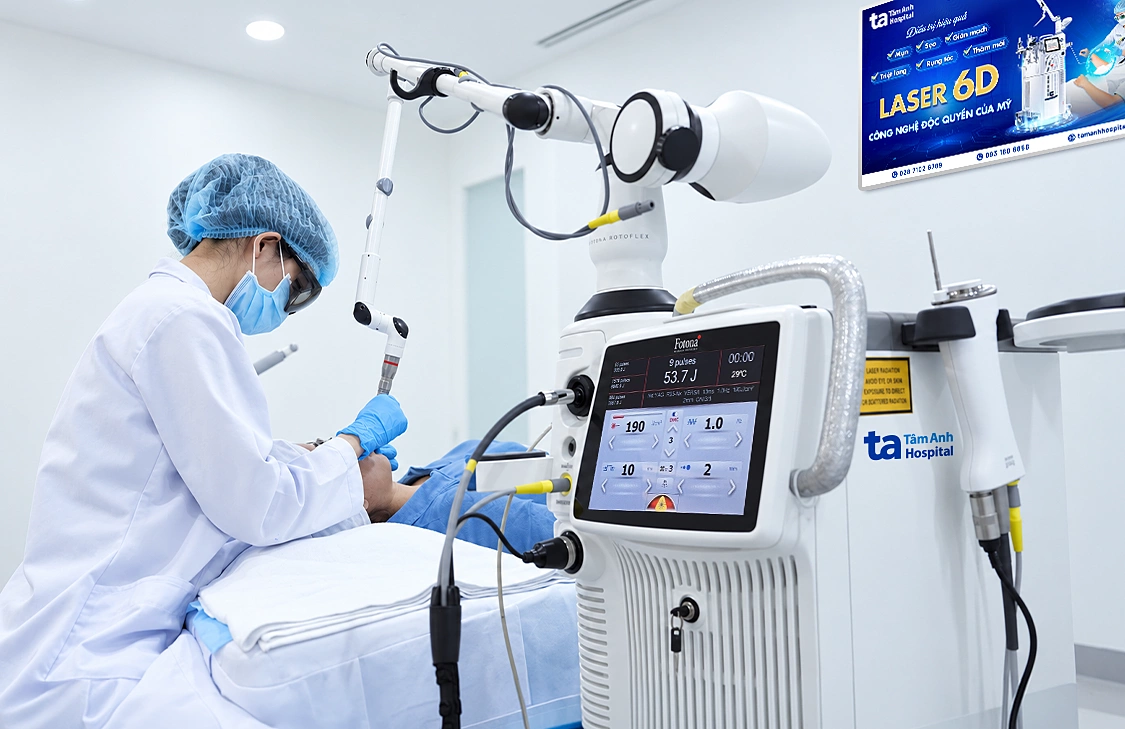 |
The doctor uses a 6D laser to treat Ms. Thu's red scar. Photo: Tam Anh General Hospital |
The doctor uses a 6D laser to treat Ms. Thu's red scar. Photo: Tam Anh General Hospital
After assessing the scar's color, thickness, flatness, and degree of fibrosis, the doctor prescribed Ms. Thu 4-6 sessions of 6D laser treatment, one session per month.
This technology combines two wavelengths. The Nd:YAG 1064 nm laser can penetrate deeper into the skin with suitable pulse modes, affecting the vascular system in the dermis and creating a controlled thermal effect that supports scar tissue restructuring. The Er:YAG laser, which strongly absorbs energy from water in tissue, primarily acts on the surface, refreshing and improving the quality of the damaged skin area in a controlled manner.
Ms. Thu's nearly one-year-old scar was treated in stages. After each session, the doctor evaluated the redness, surface, and skin response to adjust the method and parameters accordingly. They also controlled the energy and interval between sessions to limit irritation and pigmentation disorders.
After three treatments, the scar's redness significantly reduced, and the skin surface improved. She received instructions on sun protection, moisturizing, avoiding friction, not picking at scabs, and not using scar treatment products with unknown ingredients.
Doctor Trang noted that persistent red scars after accidents, even if not raised or sunken, can still affect aesthetics. Patients should visit a dermatology - aesthetic dermatology specialist at a hospital to have the scar characteristics evaluated before choosing an appropriate treatment method for the scar type. This helps improve color, surface, and limits abnormal scar progression.
Minh Huong
*Character's name has been changed
| Readers can submit questions about dermatological and aesthetic skin conditions here for doctors to answer. |