Master. Doctor Nguyen Anh Duy Tung, a Nutrition and Dietetics Specialist at Tam Anh General Hospital, District 7, reported that the patient's visceral fat increased, and muscle mass decreased. His LDL-C was 220 mg/dL, and total cholesterol was 320 mg/dL, indicating high blood lipids. A carotid artery ultrasound revealed a slight increase in carotid artery intima-media thickness to 0,9 mm (normal is 0,6-0,7 mm) and an atherosclerotic plaque that had not yet caused obstruction.
Atherosclerosis is the accumulation of fats, cholesterol, and other substances in the artery walls, leading to the formation of atherosclerotic plaques. Prior to this, Huy had no underlying health conditions and was healthy. Huy stated he had been on a keto diet for one year, losing approximately 3 kg in the first four months, which led him to believe the diet was suitable.
The keto diet is characterized by very low carbohydrate intake, high fat consumption, and moderate protein. This dietary approach helps the body shift from using sugar to burning fat for energy.
Doctor Tung explained that the keto diet is only appropriate for specific medical indications and is not recommended for long-term weight loss. Huy's prolonged and incorrect application of the diet increased blood lipids, causing cholesterol to accumulate in his artery walls and leading to atherosclerosis.
 |
Huy was guided to measure body composition using an InBody 770 machine. Photo: Tam Anh General Hospital
The doctor developed a treatment regimen to manage elevated blood lipids, advising the patient to transition to a diet rich in healthy fats, supplement fiber from green vegetables and fresh fruits, and limit red meat and processed foods. The doctor prescribed statin medication for Huy to inhibit LDL cholesterol synthesis in the liver, accelerate its elimination, and reduce the risk of further plaque formation.
After three months of treatment, Huy's body indices improved, and the atherosclerotic plaque showed no signs of further progression.
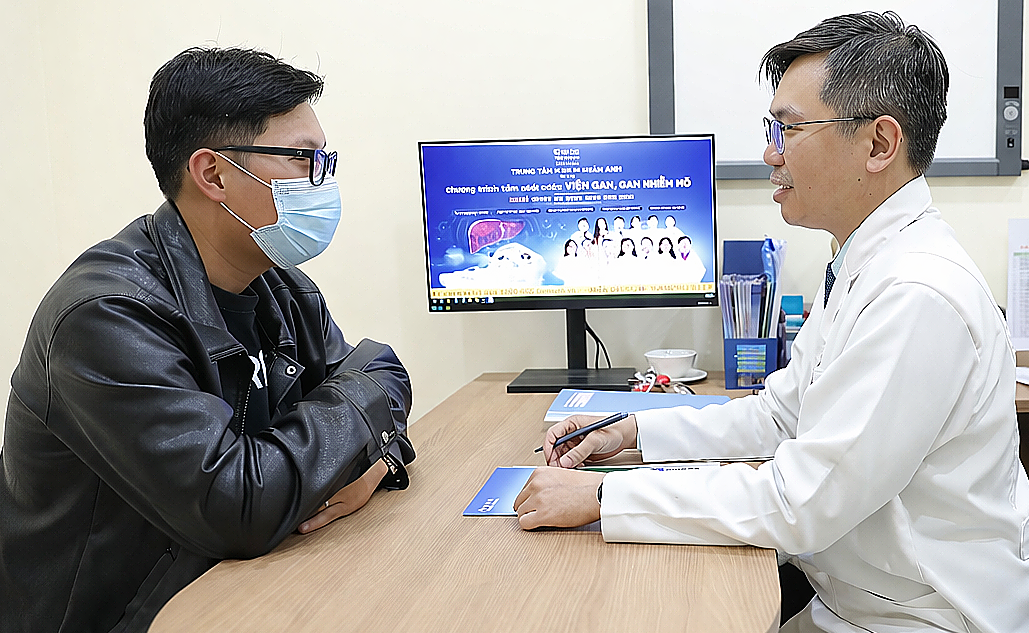 |
Doctor Tung advised Huy on building a nutrition plan to help reduce blood fat. Photo: Tam Anh General Hospital
To effectively manage weight, the doctor recommended adopting a diet with a composition of 20-25% fat and 50-55% carbohydrates, prioritizing fiber, and dividing meals into smaller portions. Individuals aiming for weight loss need to maintain a balanced lifestyle, exercise 30-60 minutes daily for at least five days a week, and then gradually increase intensity as their body adapts. It is advisable to chew food slowly and thoroughly, and to avoid eating while working, watching television, using a phone, or reading.
Quoc An
*Patient's name has been changed
| Readers can submit nutrition questions here for doctors to answer. |