According to Master of Science, First Degree Specialist Doctor Tran Nguyen Anh Thu, a dermatologist and aesthetic skin specialist at Tam Anh General Hospital, Ho Chi Minh City, high temperatures and humidity weaken the skin's natural protective barrier. This makes the skin vulnerable to ultraviolet rays, sweat, dirt, and microorganisms, increasing the risk of various dermatological conditions.
Sunburn and hyperpigmentation
Ultraviolet (UV) rays cause immediate and cumulative damage to the skin during hot weather. Intense sun exposure leads to redness, sunburn, and deeper damage to the dermis. Over time, UV radiation breaks down collagen, accelerating aging, causing hyperpigmentation, and increasing the risk of skin cancer.
To prevent this, individuals should avoid going outdoors during peak sun hours. It is important to use broad-spectrum sunscreen and wear protective clothing such as jackets, wide-brimmed hats, and sunglasses when outside.
Heat rash and dermatitis
Hot weather increases sweat production to regulate body temperature. When sweat becomes trapped in covered areas like the neck, back, chest, or armpits, it clogs sweat glands, leading to heat rash. This condition appears as tiny red bumps, accompanied by itching, stinging, and discomfort, particularly during physical activity or heavy sweating.
To manage heat rash, keep skin dry and wear loose-fitting clothing made from absorbent materials like cotton. After sweating, shower and dry the body promptly to prevent prolonged skin dampness. Avoid tight clothing or non-breathable fabrics, which can worsen heat rash.
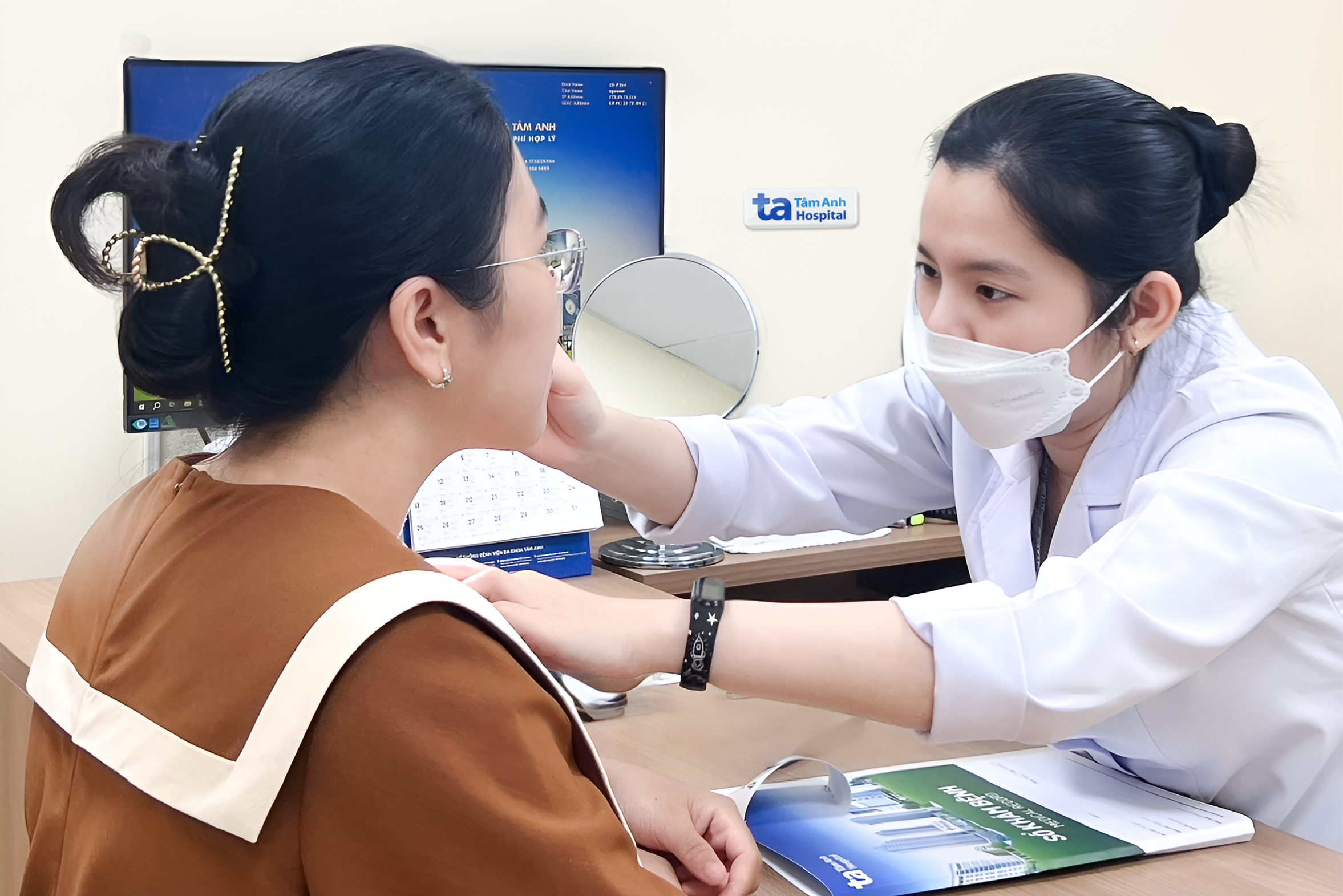 |
Doctor Thu examines a woman's skin. *Illustration: Tam Anh General Hospital* |
Folliculitis
According to Doctor Thu, a combination of sweat, excess oil, and dirt creates an ideal environment for bacterial growth, leading to folliculitis. This condition manifests as red bumps, sometimes with small pustules around hair follicles, causing mild itching or pain.
Daily skin cleansing with gentle products is essential, especially after physical activity or heavy sweating. Shower promptly after exercise to prevent sweat from lingering on the skin. Ensure clothes are clean and completely dry before wearing, opting for breathable, absorbent fabrics. Avoid vigorous rubbing or scrubbing irritated skin to prevent further damage to hair follicles.
Acne
High temperatures stimulate sebaceous glands, leading to increased oil production, clogged pores, and acne formation. Over-washing or using unsuitable products can disrupt the skin's natural moisture balance, causing more oil secretion and worsening acne.
Doctor Thu recommends cleansing the skin approximately hai times daily, prioritizing gentle products suitable for your skin type. Adequate moisturizing helps stabilize the skin's protective barrier, limits oil secretion, and reduces acne risk.
Contact dermatitis and sun allergy
Some individuals may experience skin redness, itching, or rashes after sun exposure or contact with environmental factors during summer. These symptoms can indicate contact dermatitis or photoallergy.
In such cases, avoid contact with the irritant and consult a specialist for proper diagnosis and treatment. Do not self-medicate.
Fungal infections
A hot, humid environment provides ideal conditions for fungal growth, especially in covered areas like the groin, between toes, and armpits. Affected individuals may develop red, itchy, and scaly patches, causing persistent discomfort.
Maintaining personal hygiene, thoroughly drying the body after bathing, and avoiding damp clothing are crucial measures to prevent fungal infections.
Doctor Thu advises everyone to drink enough water and maintain a healthy lifestyle. If unusual symptoms such as persistent itching, rashes, inflamed acne, or non-improving skin lesions appear, consult a dermatologist promptly for examination and treatment.
Minh Huong
| Readers can submit questions about dermatological conditions here for a doctor's response. |