The patient, a delivery driver, was on his route when he suddenly experienced dizziness, blurred vision, and lightheadedness. Losing control of his vehicle, he crashed into the back of a car ahead.
On 27/5, Doctor Pham Thanh Bang from the Emergency Department at the National Hospital for Tropical Diseases reported that the patient was admitted feeling very tired and nauseous, with injuries causing deformity to his right thigh and foot. Doctors diagnosed heatstroke and heat exhaustion, along with injuries from losing steering control due to elevated body temperature. The patient's clothing was loosened, his body cooled, fluids were administered, and he was moved to an air-conditioned, well-ventilated environment to lower his temperature.
After about 30 minutes, the patient regained consciousness, and his blurred vision and dizziness subsided. The injuries to his right thigh and foot were stabilized, and he was transferred to the Surgery Department for further treatment.
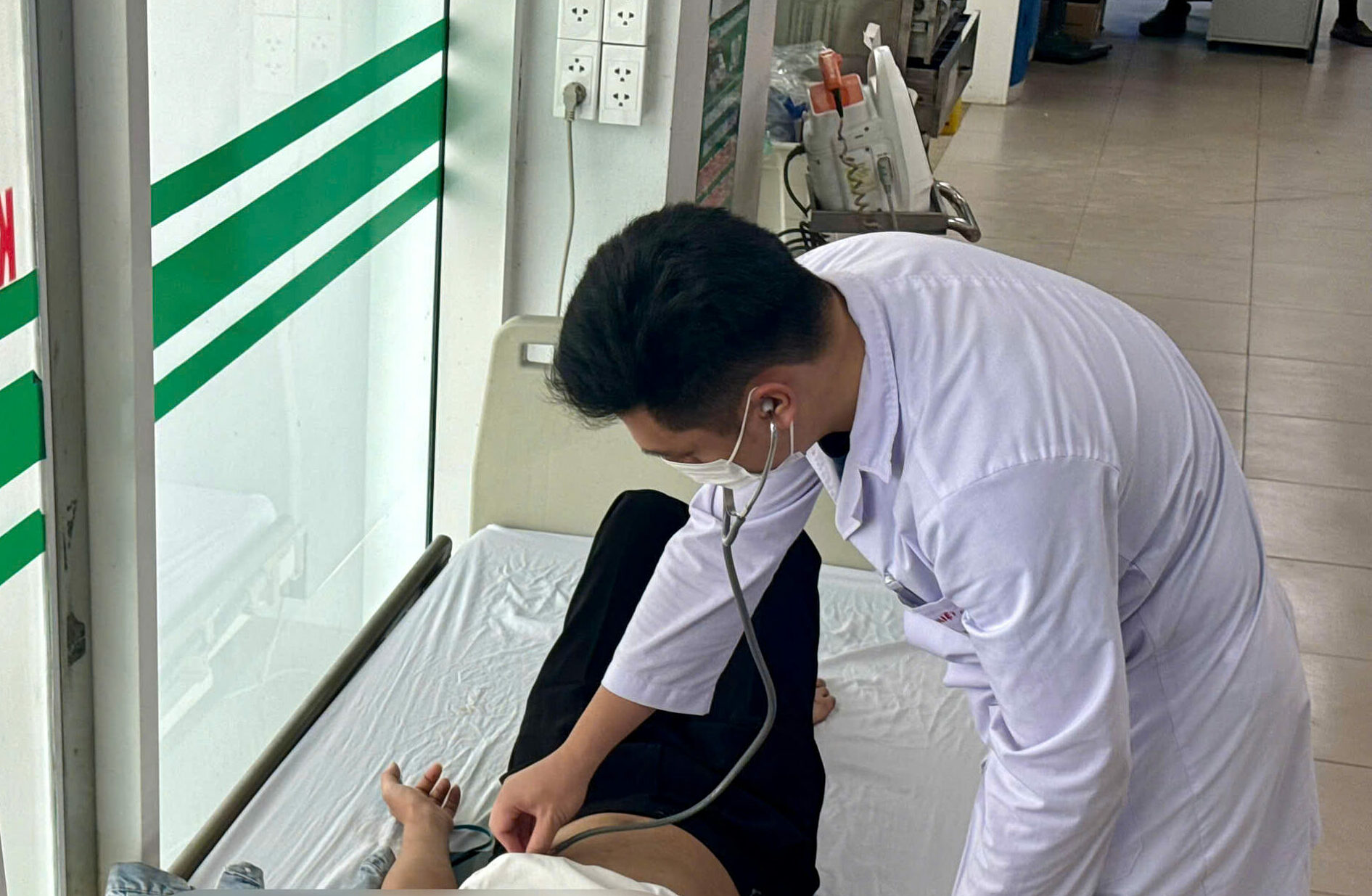 |
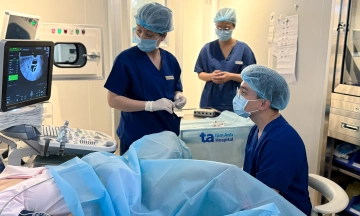
Doctors examine the patient. Photo: Hospital provided |
Heatstroke and heat exhaustion are common emergencies during the summer. They occur when the body's temperature rises beyond its ability to regulate, often from working or moving for extended periods in hot weather. Symptoms can include severe fatigue, profuse sweating, dizziness, nausea, rapid heartbeat, and even altered consciousness.
"If not treated promptly, heatstroke and heat exhaustion can worsen, leading to low blood pressure, neurological disorders, altered consciousness, agitation, delirium, seizures, and coma," the doctor stated.
According to doctors, the first one hour after heatstroke or heat exhaustion occurs is considered the "golden hour" for intervention. High-risk individuals include young children, the elderly, those performing high-intensity outdoor labor, people wearing inappropriate clothing, or those not drinking enough water.
Doctors advise wearing loose-fitting, light-colored clothing and a wide-brimmed hat in hot weather. It is important to drink water frequently, even before feeling thirsty, and to limit continuous work outdoors for too long. Breaks of 10-15 minutes are recommended after every 45 minutes to one hour of outdoor activity.
If someone shows signs of heatstroke or heat exhaustion, quickly move them to a cool, shaded area or an air-conditioned room. Loosen or remove some clothing, clear their airway, and apply cool compresses to the neck, armpits, and groin to gradually lower their temperature. Provide water or electrolytes if the person is conscious.
Avoid moving the patient into an abruptly cold environment, as this can negatively affect the body's temperature regulation. If symptoms like delirium, agitation, restlessness, lethargy, seizures, or unconsciousness appear, seek immediate medical attention.
Thuy An