The Guangzhou Anti-Smuggling Bureau recently cracked down on a major smuggling operation in Guangzhou, Foshan, and Shenzhen, arresting 26 suspects.
According to allegations, these criminal gangs smuggled more than 100,000 blood samples from pregnant women, generating over 30 million yuan in illicit profits. The criminal activity spanned 23 provinces and cities, making it the largest and most widespread case of its kind uncovered by authorities.
Authorities stated that initial leads regarding this operation emerged in 2022, coming under the customs agency's radar. A task force comprising 265 personnel was established, conducting years of investigation to identify suspects and track their entry and exit information.
Investigators described the gang's methods as "highly professional and secretive," forming a closed "underground industrial chain" that included: online recruitment, rapid sample collection, transit storage, and cross-border smuggling.
The suspects first advertised "non-invasive fetal gender identification" and "genetic disease screening" services on social media platforms. They used phrases such as "accurate genetic testing" and "safe and risk-free" to attract clients. "Through social media, the suspects sought pregnant individuals needing fetal gender identification. Subsequently, brokers in China negotiated prices with the pregnant women," a representative from the investigating agency explained.
Once an agreement was reached, an overseas laboratory instructed clients to express mail blood samples to a designated address. There, gang members specialized in collecting the samples. Following collection, the process of disguising the samples for cross-border transport began.
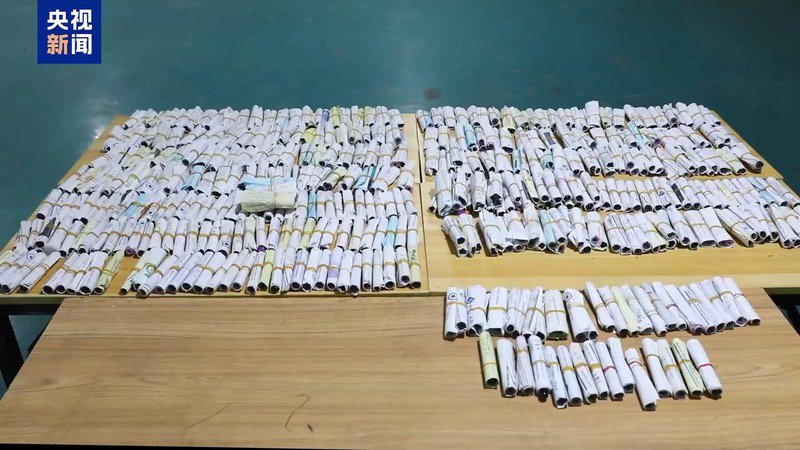 |
Blood samples taped to a suspect's body, discovered by police. Photo: Sina Finance |
Blood samples taped to a suspect's body, discovered by police. Photo: Sina Finance
To evade detection, smugglers used adhesive tape to secure test tubes containing pregnant women's blood samples to their abdomens and inner thighs, or concealed them in specially designed compartments within suitcases. One suspect, surnamed Chu, identified as a ringleader in this smuggling operation, organized accomplices to transport over 4,000 blood samples from pregnant women out of the country using these methods from 4/2024 to 8/2025.
Authorities have not yet disclosed the destination of these blood samples.
Investigators found that a branch of the criminal enterprise, operating in Guangzhou, was "particularly brazen" and led by a kingpin named Ly. To mask their illegal activities, they rented office space and purchased office equipment in a creative technology park, masquerading as a legitimate media company.
This gang intentionally fragmented various aspects of their business, warehousing, and logistics operations. Related personnel did not communicate with each other or know each other's strongholds, aiming to evade detection. Ly, with a prior criminal record, possessed "experience" in resisting investigations and had prepared to flee two days before the case was exposed. On the day of his arrest, Ly was carrying a suitcase containing a passport, permits for travel to Hong Kong and Macau, USD cash, and personal belongings. He was apprehended at the port while attempting to leave the country.
According to police, the immense profits drove the criminals' recklessness in this case. Ly, for instance, accumulated over 7 million yuan (26 billion VND) in illicit gains in less than 5 months.
 |
Blood samples stored and transported under inadequate conditions, resulting in breakage, leakage, and many samples containing pathogens. Photo: Sina Finance |
Blood samples stored and transported under inadequate conditions, resulting in breakage, leakage, and many samples containing pathogens. Photo: Sina Finance
According to the Prosecutor's Office, the smuggling of pregnant women's blood samples not only violates legal boundaries but also poses a serious threat to national biosecurity and public health. Blood samples from pregnant women contain critical human genetic information, and their import and export are strictly prohibited by the state.
China strictly forbids non-medical fetal gender identification, and the export of blood samples requires approval from the human gene resource management department. The transport of blood is subject to stringent regulations and strict standards regarding temperature control, preservation methods, and overall process management. The smuggled blood samples completely failed to meet these requirements; many cases involved sample leakage and broken test tubes, with some samples containing infectious pathogens, leading to the risk of disease spread, authorities noted.
The Criminal Code stipulates that those who commit the crime of smuggling genetic resources can face imprisonment for three to seven years.
Hai Thu (According to Sina, The Paper)