The Ministry of Justice announced Decision 3458 on 10/12, outlining the use of civil status data and providing guidelines for connecting to and utilizing this data to replace physical documents in administrative procedures.
Under this decision, numerous common civil status documents will no longer require physical submission if the relevant information exists within the electronic civil status database. This initiative aims to free citizens from the burden of photocopying and carrying multiple personal documents for administrative tasks.
Specifically, the electronic civil status database now contains exploitable data that can replace various documents in administrative applications. These include: birth certificates, copies, and extracts of birth certificates; marriage certificates, copies of marriage extracts, and marital status certificates; and death extracts, death certificates, and copies of death extracts.
Other civil status documents eligible for this digital replacement include: extracts for changes, corrections, and additions to civil status records, along with re-determinations of ethnicity; extracts for the registration of parent-child recognition; adoption registration certificates; extracts for guardianship registration, termination of guardianship, and guardianship supervision registration; and entries into civil status books for births, marriages, divorces, and other civil status events.
The shared civil status data will encompass essential information such as full name, date of birth, gender, place of origin, and personal identification number for individuals registering births, deaths, marriages, or marital status confirmations.
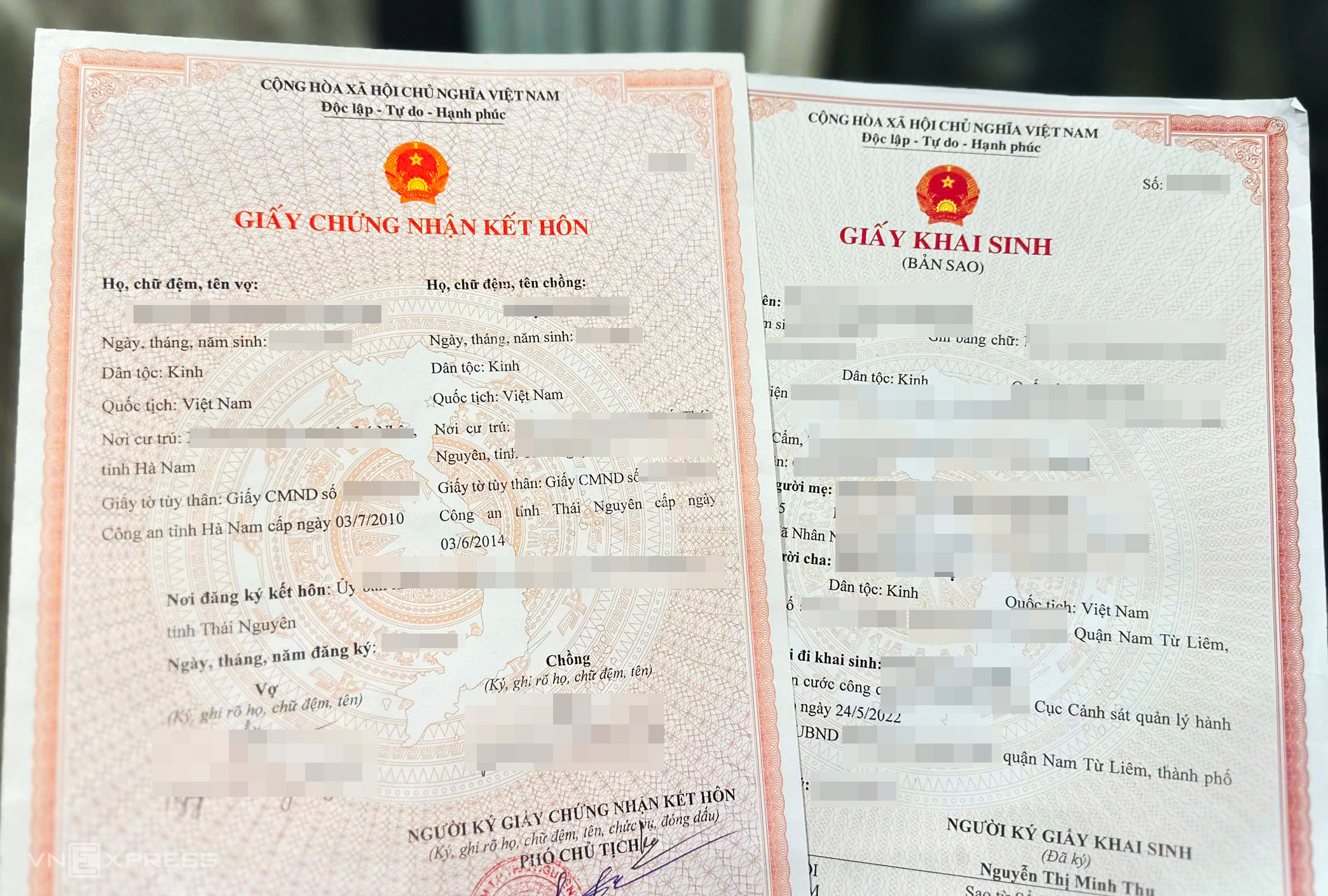 |
Physical marriage registration and birth certificate. Photo: Pham Du |
The decision's primary objective is to replace or reduce the required documents for administrative procedures by utilizing eligible digital data. It emphasizes the importance of information security, adherence to intellectual property rights related to data, and the protection of personal privacy during data exploitation.
For instance, when citizens engage in procedures like school registration, medical examinations, insurance claims, real estate transactions, or marriage registration, the receiving agency will now query the civil status database instead of requesting physical documents.
To facilitate this transition, the Ministry of Justice has mandated that all relevant agencies and local authorities review and restructure their administrative procedure processes. The Ministry has also issued comprehensive guidelines for connecting and sharing information between the electronic civil status database and ministerial and provincial administrative information systems, including an appendix detailing key considerations for implementation.
During practical implementation, situations may arise where the electronic civil status database lacks specific information or contains data inconsistent with a citizen's physical documents. In these cases, the receiving agency will direct citizens to contact the commune-level People's Committee where their civil status was originally registered or their current place of residence to update or correct the information.