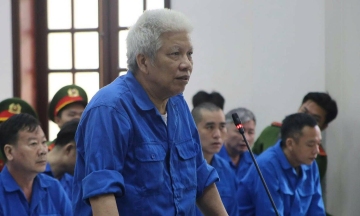
Phu Tho Provincial Police announced today that the Investigation Police Agency has initiated legal proceedings and restricted travel for Quan, 47, to investigate the charge of involuntary manslaughter under Article 128, Clause one of the Penal Code.
Court records show that around 10:00 AM on 10/6, Quan and a 32-year-old man purchased eight 200-liter metal drums for 1.7 million VND from a scrap business in Hoa Binh ward. Quan intended to use these drums as floats for a pond in front of his house.
After 1:00 PM on the same day, Quan used a welding machine to attach ears to the drum rims. The other man provided assistance.
Before welding, Quan unscrewed the caps of the drums. He then asked his assistant to wrap sealing tape around the caps to prevent water from entering when the drums were placed in the water. When they reached the fourth drum, the cap was already taped and closed. Quan did not check the contents inside. As he welded, the drum suddenly exploded.
The loud explosion caused ringing in Quan's ears, tore his shirt, and buried him under debris. Simultaneously, Quan found his assistant lying on the ground with a head injury and significant bleeding. The victim later died.
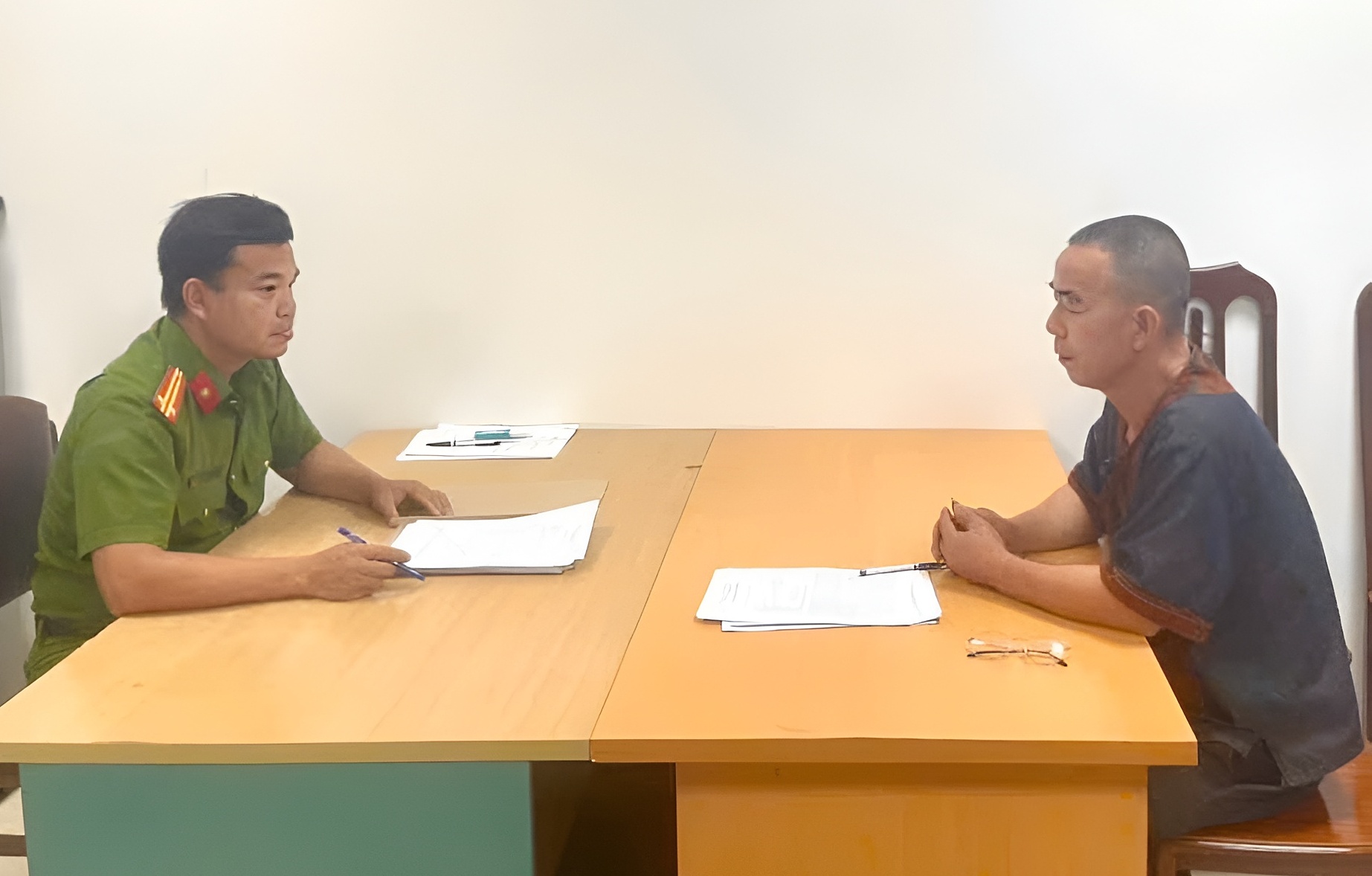 |
Le Hong Quan (left) at the investigation agency. Photo: Police provided |
Police determined the victim died from traumatic brain injury. The explosion occurred because sparks from the welding machine ignited solvent vapor inside the drum, causing a sudden pressure increase in the confined space. The exploded drum bore a chemical safety label for Isopropyl Alcohol.
Police concluded Quan's actions constituted "involuntary negligence." Despite not intending the tragic outcome, Quan used a heat source capable of generating sparks to weld a drum in a confined environment. This created a potential risk of residual flammable vapor, which Quan failed to check or take necessary safety measures against.
The suspect has compensated the victim's family with 100 million VND.
Following this incident, police warn the public to thoroughly inspect containers before welding or cutting. They advise identifying the substances previously stored inside and completely eliminating any risk of heat or sparks causing an explosion.