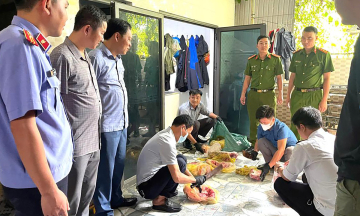
Yang Lei, from northeast China, shared his thrilling escape story after safely returning home.
 |
Yang Lei recounted his capture and daring escape to warn others about the dangers of scam centers. Photo: Baidu |
Yang stated that he and a group of ten tourists traveled near the Thailand-Myanmar border in mid-march for a trip. The local guide he hired lacked legal residency and attempted to bypass border controls, leading the entire group to encounter scammers in Myanmar.
All eleven members of the group, including the local guide, were sold to a crime boss for 20,000 USDT each.
The crime boss then resold them to a scam syndicate in Payathonzu town, Karen state in southern Myanmar, close to the Thai border.
Yang described the complex as "KK 2.0", referencing the notorious KK Park scam center in Myawaddy town. Just last year, the Myanmar military announced it had raided this area, seizing approximately 200 buildings and freeing over 2,000 individuals who had been captured and forced into online scam operations.
China and Thailand have also collaborated with Myanmar to launch crackdowns on scam centers. However, many "scam camps" persist.
Upon entering the camp, Yang's group was beaten as a form of discipline.
On his first night there, Yang recounted severely beating the guide for leading the group into danger. Yang's fighting skills, as a veteran who joined the military in 2002 and trained in mechanized infantry, seemed to catch the attention of the camp leader.
Seizing the Opportunity to Escape
The leader called Yang for a conversation and allowed him to call home, even though regulations typically permitted calls only for those who had worked over one year, and only once a month.
Yang did not call his family. Instead, he called the Chinese police.
He went to the back of the dormitory area, where guards patrolled infrequently, and noticed several sandbags and wooden planks at the base of the park's 6-meter wall.
As a well-trained soldier, Yang was able to scale the wall, grip the edge with his fingers, and jump over. Yang stated he was fortunate that the barbed wire on the wall was not electrified, and there were no other "scam camps" adjacent to that wall.
He escaped the camp wearing only a tank top, shorts, and Crocs sandals. Yang then checked a map application and found he was only 3 km from the border.
"But I could not run in that direction. There would be guards, and I would be taken back to the camp," Yang said.
Camp guards quickly discovered Yang's absence and released trained dogs to search the mountains. To evade capture, Yang relied on the wilderness survival skills learned during his military service to navigate and find water and food.
He ran into the mountains, using cow dung found in the grass for camouflage, masking his body odor and deceiving the tracking dogs. "I was too nervous and excited to feel any pain," he said, adding that he reached the border around 1 a.m. the next morning.
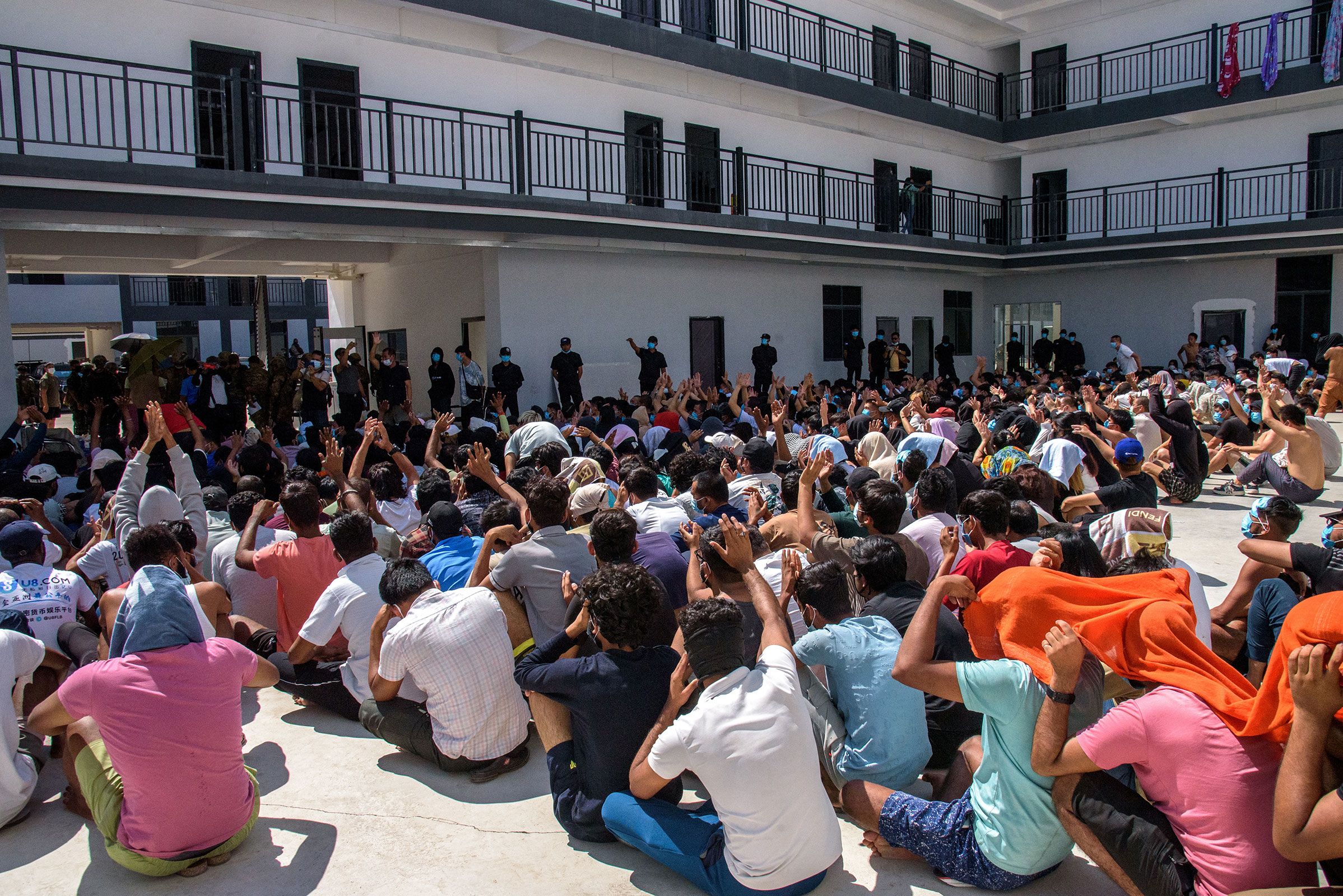 |
Thousands were rescued from scam centers in Myanmar in february 2025. Photo: CNN |
The border area was guarded by an armed man at this time, so Yang hid until 3 a.m., but the guard remained in position. Yang then grabbed a sturdy rope nearby, approached the guard, and successfully subdued him.
Yang arrived in Thailand around dawn the next morning.
During his escape, Yang had contacted his former comrade and some police officers via a chat application, checking his phone hourly.
Even in Thailand, he remained vigilant, hiding during the day and running at night. Yang said he only felt relieved after reaching the Chinese embassy in Thailand. Upon arrival, after two days of fleeing, his phone still had 17% battery.
After waiting half a month for his passport to be reissued, Yang returned to China.
Sharing his experience on social media, Yang hopes it will serve as a warning to others. He still experiences nightmares: "I dream of running in the mountains and eventually waking up drenched in sweat."
Hai Thu (According to SCMP, ST Headline)