Ana Walshe, 39, was an executive director at Tishman Speyer, a real estate company in Washington D.C. Each weekend, Ana would return to her home in Cohasset, Massachusetts, to reunite with her husband and their three sons, aged 2, 4, and 6.
On New Year's Eve 2022, Ana and her husband invited a close friend to their home for dinner. That was the last time Ana was seen.
Three days later, on the morning of 4/1/2023, Brian Walshe, 48, called his wife's superior to inquire about her whereabouts. The company stated Ana had not reported for work.
When the search for Ana began, Brian claimed his wife received an urgent work call and had to take an Uber to Logan Airport in Boston at 4:00 on 1/1/2023. He recounted how Ana kissed him and the children goodbye before leaving. The friend had departed at 1:30.
 |
Ana Walshe. Photo: Cohasset Police Department |
However, detectives from the Cohasset Police Department and Massachusetts State Police quickly uncovered inconsistencies in his story. There was no Uber data indicating a pick-up for Ana; her phone remained near the house until it was completely powered off; and most importantly, her name was not on any flights departing from Boston.
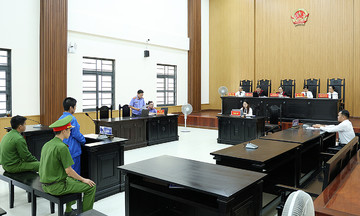
Brian Walshe was convicted of first-degree murder on 15/12 and sentenced to life imprisonment on 18/12 for the murder and dismemberment of his wife, Ana Walshe. The judge called Brian's decision to dismember his wife after killing her "barbaric" and imposed the maximum sentence. Brian also received 22 years in prison for misleading police and disposing of a body.
Prosecutors described Brian as a jealous husband who feared losing everything if his wife divorced him. At the time of the murder, Brian was awaiting sentencing in a federal fraud case involving the sale of fake paintings. He was under house arrest as the primary caregiver for his three young children.
Ana had a life insurance policy worth 2.7 million USD, with Brian as the beneficiary. Meanwhile, he owed nearly 500,000 USD in restitution for his fraud case. Prosecutors alleged Brian discovered his wife's months-long relationship with William Fastow. If Ana divorced him, Brian would lose financial support, their lavish home, and custody of his children. If his wife "disappeared", Brian would not only have money to pay off his debts but also a greater chance of avoiding prison in the fraud case, as he would be the sole caregiver for their three children.
Witnesses for the prosecution testified that the marriage between Brian and Ana was on the verge of collapse. Gem Mutlu, the close friend who attended the New Year's Eve party with the Walshes, testified that Brian mentioned earning only about 50,000 to 60,000 USD that night, while Ana earned 300,000 USD from bonuses. William Fastow, Ana's partner, stated Ana was "depressed" about being away from her children, and Brian could not move the children to Washington to be with her due to his fraud case. Close friend Alissa Kirby recounted having drinks with Ana on 29/12/2022, just three days before her disappearance. According to Alissa, Ana was on the verge of a breakdown from prolonged marital stress. Ana confided that she had not slept with Brian for over one year due to the pressure they both endured, primarily because of Brian's fraud case.
 |
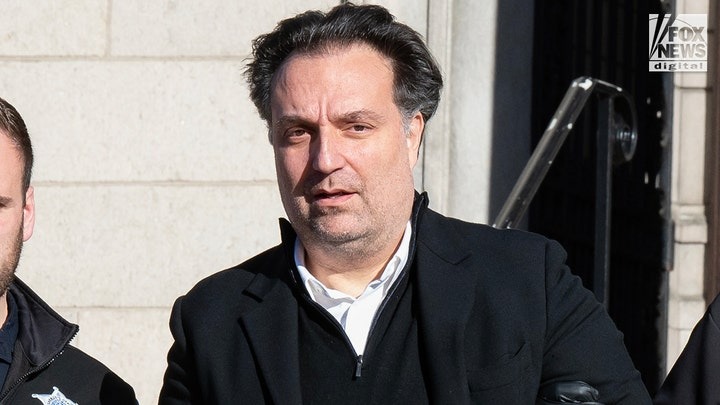
Brian Walshe leaving court after his sentencing on 18/12/2025. Photo: Fox News |
A few days after Ana was reported missing, Brian voluntarily handed over his son's phone and iPad to the police. Investigators discovered internet searches on the iPad about how to dispose of a body, clean up blood, and erase data from electronic devices. Investigators later realized that the searches were performed on Brian's laptop, which was synchronized with his son's iPad because they shared an Apple account. When questioned by police, Brian stated, "I didn't use that iPad, it's strange."
According to prosecutor's records, Brian's laptop search history on the morning of 1/1/2023 began at 4:48, the time he claimed his wife had just left. A series of searches followed: "best way to dispose of a body", "how long does a body take to smell?", "how long does DNA last?", "can identification be made from incomplete remains?", "how to handle a used cell phone". Around 11:30, Brian's laptop searched Google for "Patrick Kearney", the notorious serial killer known as the "Trash Bag Killer" for placing victims' bodies in trash bags.
On the afternoon of 2-3/1/2023, the computer continued to search for: "can I use bleach to clean blood from a wooden floor?", "how to dismember a body", "can you be charged with murder without a body?", "dumping a body in a dumpster", "body found at trash transfer station", "can police get your search history without your computer?".
Going back in time, police discovered internet access history on the laptop showing Brian had accessed pornography related to "cheating wife" on 27/12/2022, days before Ana went missing, as well as searching for information about divorce. During the investigation, it was revealed Ana was in a relationship with a real estate broker named William Fastow in Washington, where she worked. On 4/1/2023, Brian's computer searched for "William Fastow" online, and he then called Fastow, but no one answered.
Police traced Brian's movements by analyzing two iPhones seized during the investigation into Ana's disappearance. Both phones were believed to have been used by Brian. On 1-2/1/2023, Brian's phone pinged at various supermarkets and grocery stores. Security cameras at a Home Depot store recorded him wearing a mask and black gloves, spending hundreds of USD in cash on a large quantity of cleaning supplies and plastic tarps. On 3/1/2023, Brian visited three different apartment complexes in the southern suburbs of Boston. Surveillance video showed the family's Volvo SUV driving into the complex, after which a man resembling Brian disposed of heavy black trash bags in communal bins.
Police discovered location data showing Brian's phone had moved to the trash bins at his mother's apartment complex in Peabody on the morning of 5/1/2023. As the trash had already been collected, police had to search for evidence at a transfer station on 9/1/2023. Amidst tons of waste, investigators found 10 trash bags containing an axe, a hacksaw, blood-stained carpet fragments, gloves, protective suits covered in bodily fluids, and a Covid-19 vaccination card bearing Ana Walshe's name.
 |
Evidence found in the trash bags. Photo: Pool |
Forensic examiners found Brian's DNA on the inside of the gloves and protective suit, while Ana's blood and tissue were found on the outside and on the saw blade. In the basement of the Cohasset home, experts used Luminol chemicals to detect large bloodstains that had been thoroughly cleaned. Brian was accused of dismembering his wife at home and spending days cutting up the body, driving trash bags to six different bins in various cities and towns. However, because some trash bags had been crushed and incinerated, police could not find any body parts.
During jury selection, Brian unexpectedly pleaded guilty to misleading police and disposing of a body. He admitted to disposing of Ana's body but claimed he did not kill her, asserting she died mysteriously in her sleep. The defense lawyers maintained Brian was unaware of Ana's affair and was not a jealous person. They alleged Ana died after the New Year's celebration at home due to a "sudden, unexplained death". Finding his wife dead in bed on New Year's Day, Brian panicked, sought to conceal everything for fear of being blamed, and then lied to police when they investigated her disappearance. Defense lawyers argued that without a body, a murder could not be confirmed, and Brian was merely a distraught husband who exhibited strange behavior after his wife went missing.
Prosecutors asserted Ana was not missing but was murdered by Brian, who then disposed of her body to conceal evidence in a "systematic" plan. "A sudden death from natural causes is absurd. She was in very good health", the prosecutor said. Experts were not surprised by the trial's outcome, citing the overwhelming circumstantial evidence against Brian and the lack of defense evidence. "This is a rare case where a case relies solely on circumstantial evidence, without a body being found, yet there is so much evidence", said criminal defense attorney John W. Day.
Tue Anh (according to Fox News, Nypost, ABC, CNN)